


Lonewolf, Joseph – Large Black Seedpot with Mimbres Scorpions (1985)
$ 2,000.00
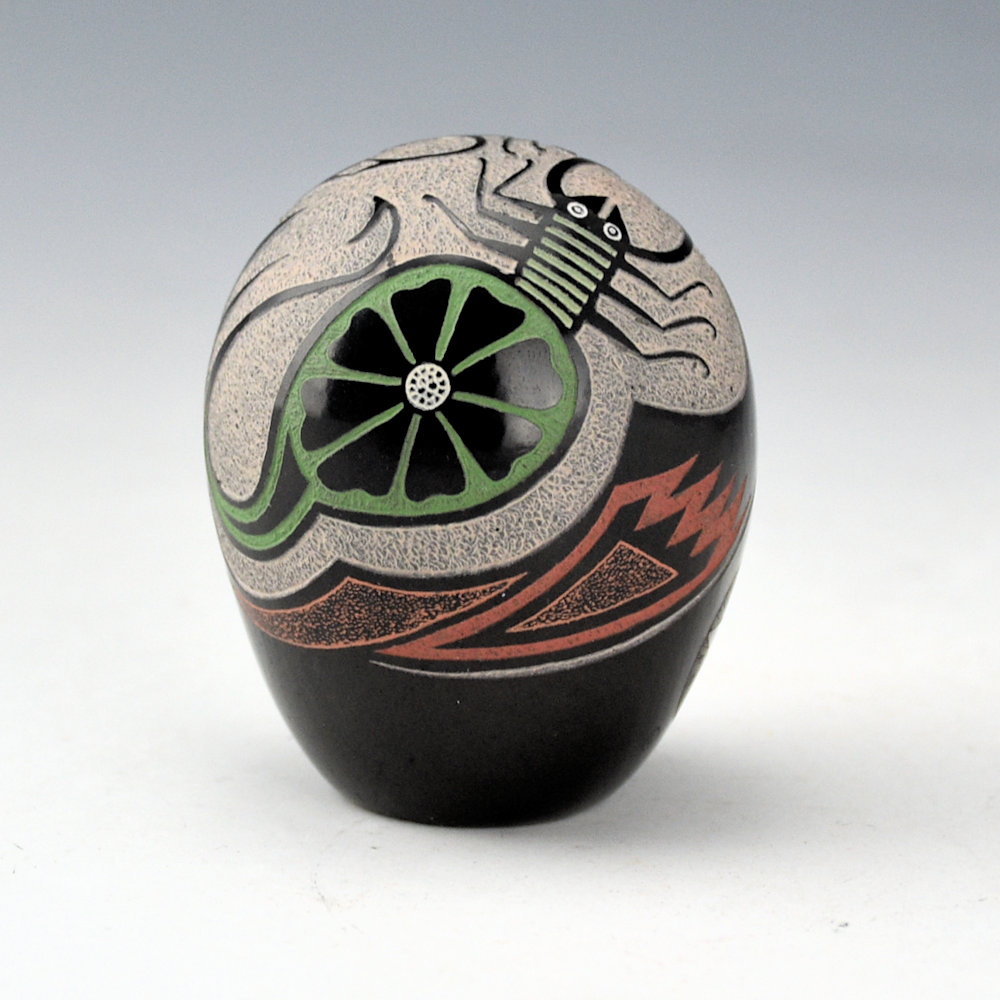
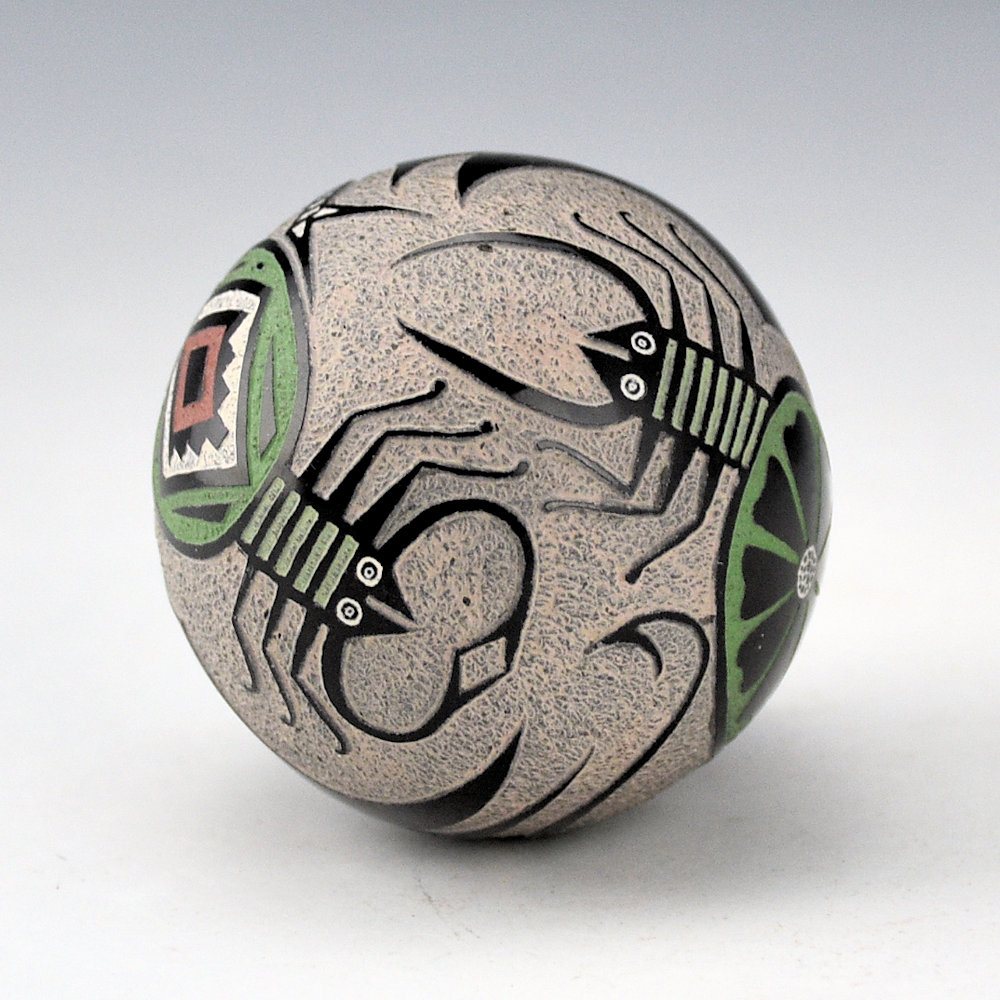
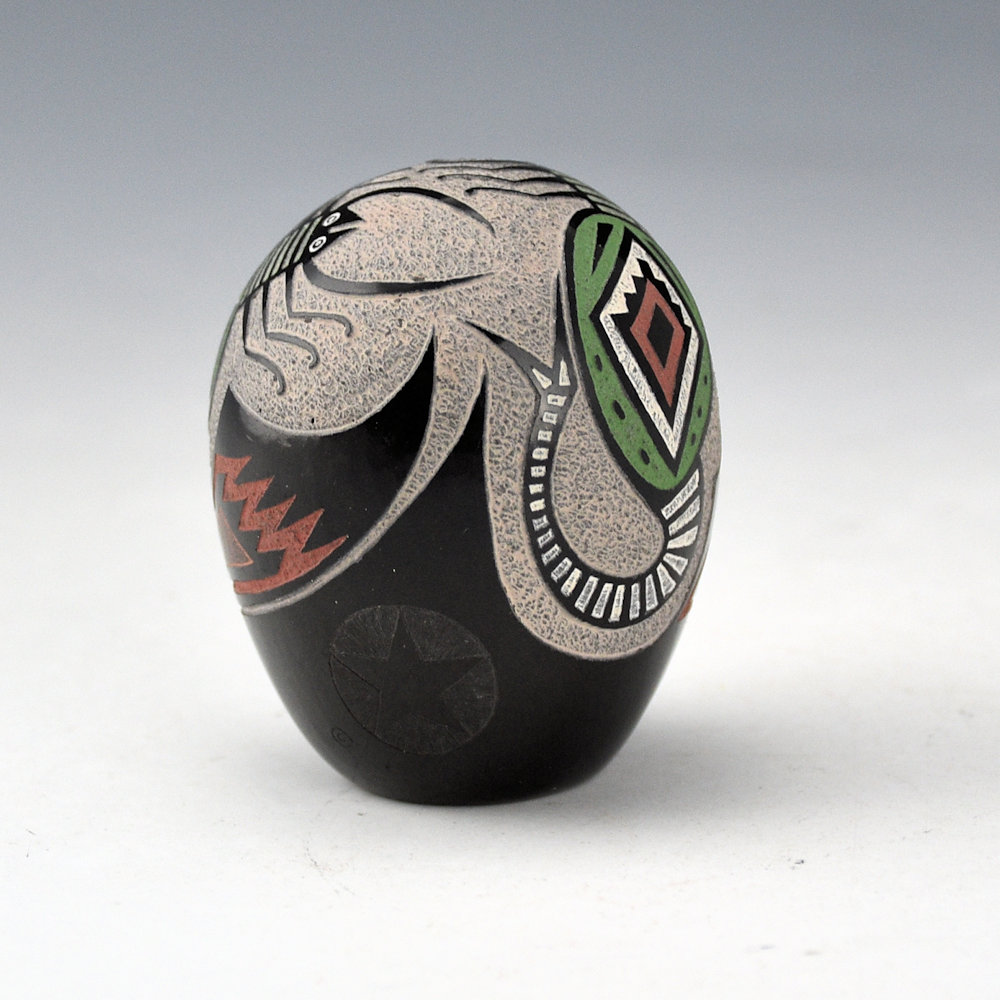
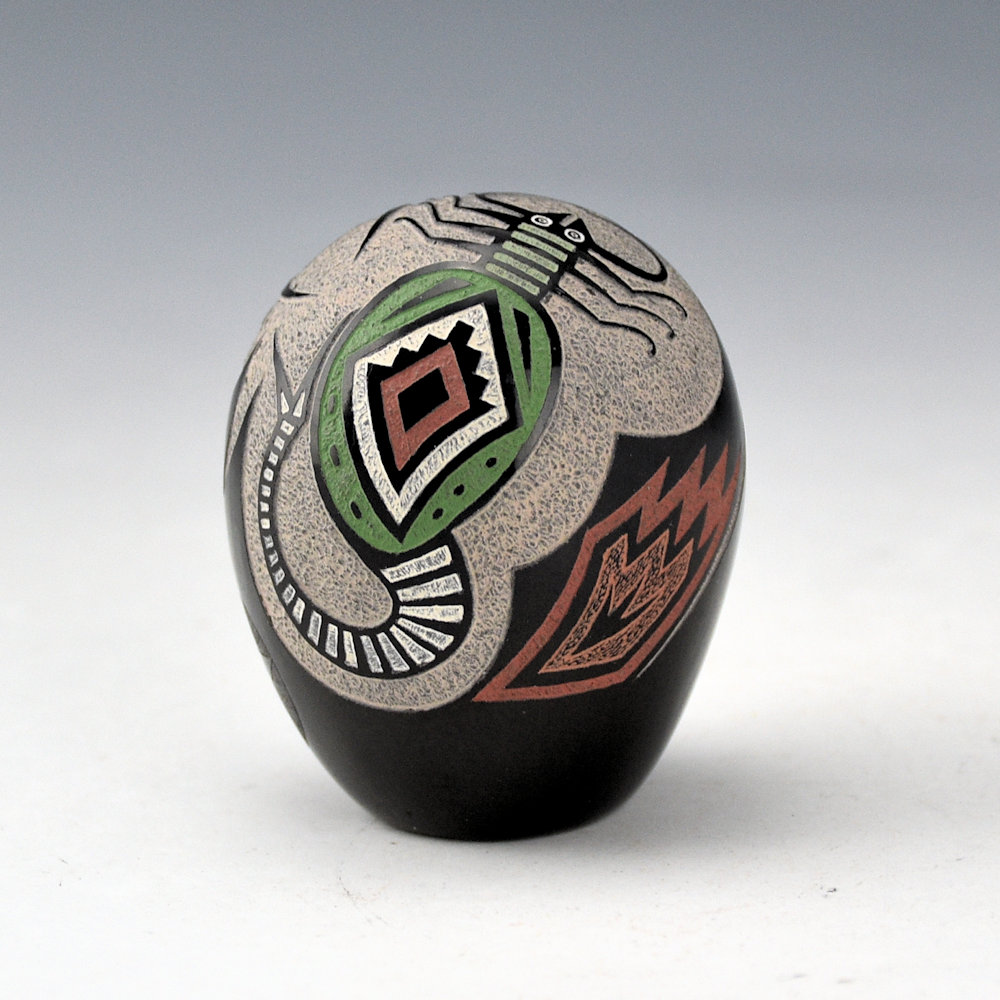
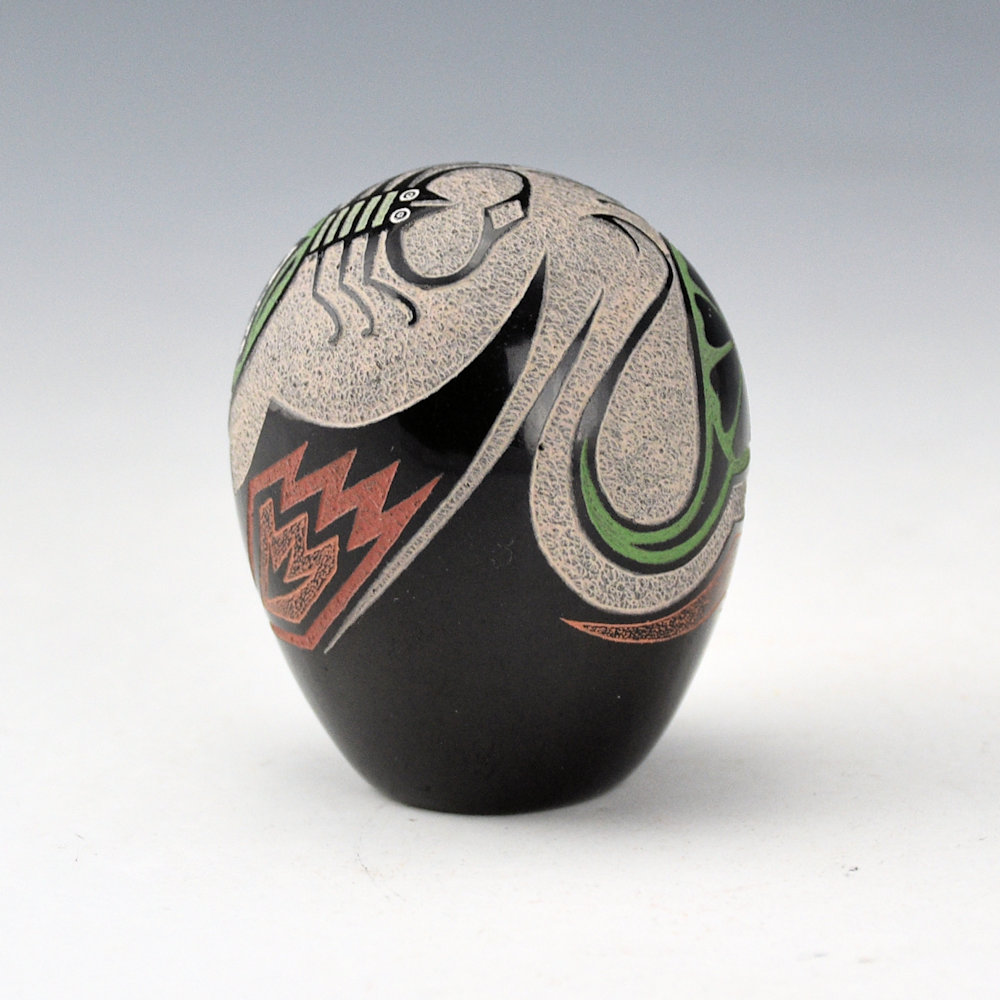
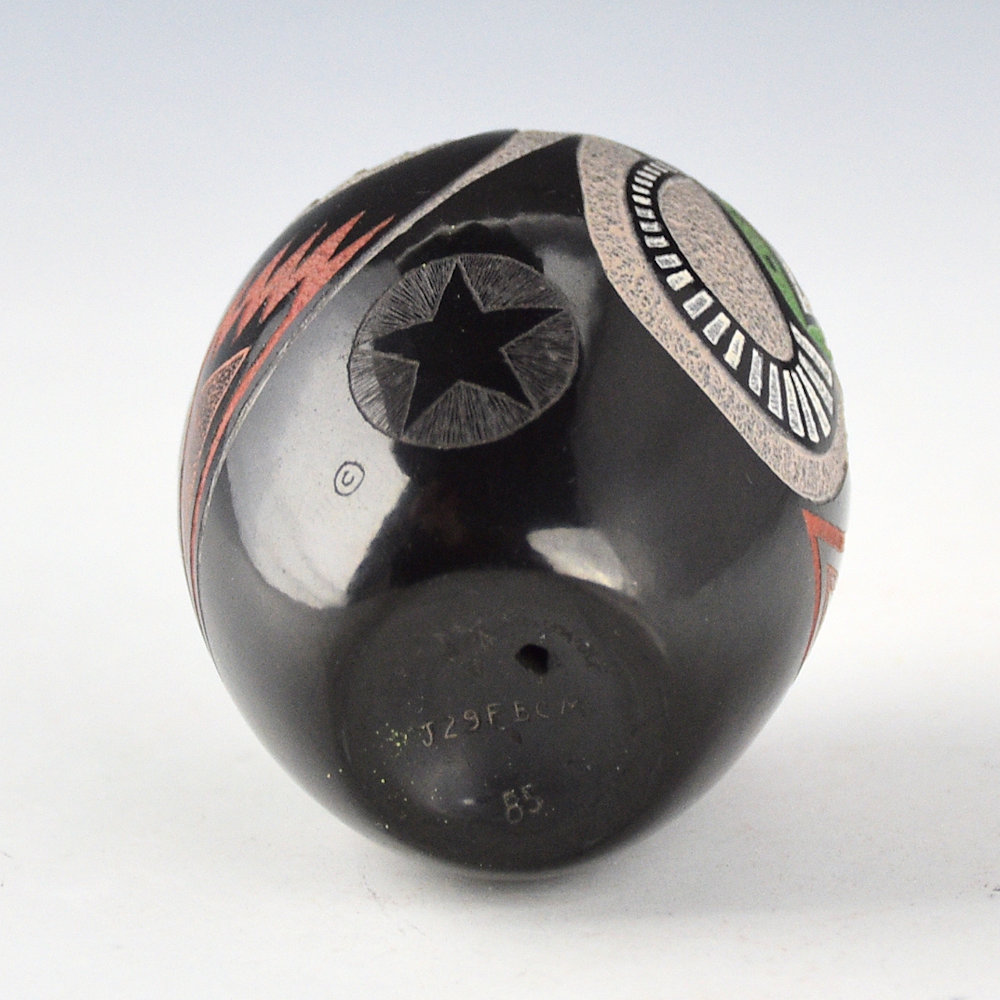
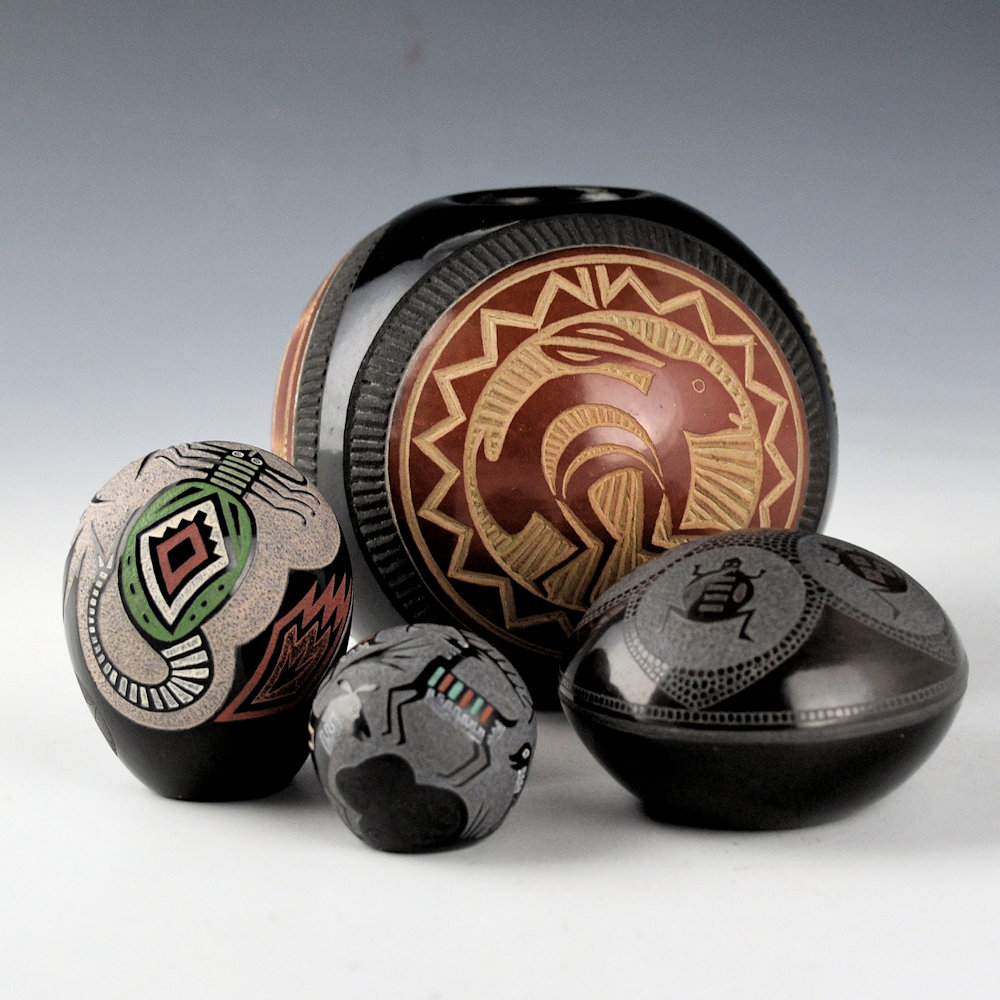
This is a complex larger seedpot by Joseph Lonewolf. The piece is fully polished and fired black and it is from 1985. The piece has two larger Mimbres scorpions that encompass the surface of the piece. They are highly polished and etched with designs on the bodies. Check out the last image to see what the scorpion design looked like on a piece of Mimbres pottery from the 1100s! Each scorpion is highlighted with green, white, and red clay slips. Check out the design area around the scorpions, as Joseph etched it to look like sand! Amazing! There are additional designs near the base of the seedpot. The piece has the yearly symbol for 1985. The seedpot is signed on the bottom in the clay, “Joseph Lonewolf”. It is in excellent condition with no chips, cracks, restoration, or repair.
I think what collectors saw and recognized was his special relationship with Clay Woman, the spirit who lives in the clay. His belief and respect for her allowed him to tap into his own creative energy, that inexplicable ‘groove’ that every artist seeks but only sometimes reaches. These two elements, Dad’s energy combined with Clay Woman to form these incredible pieces, so alive and realistic that you expected the images to walk right off the pots.” Rosemary Lonewolf ,Spoken Through Clay
Out of stock
This is a complex larger seedpot by Joseph Lonewolf. The piece is fully polished and fired black and it is from 1985. The piece has two larger Mimbres scorpions that encompass the surface of the piece. They are highly polished and etched with designs on the bodies. Check out the last image to see what the scorpion design looked like on a piece of Mimbres pottery from the 1100s! Each scorpion is highlighted with green, white, and red clay slips. Check out the design area around the scorpions, as Joseph etched it to look like sand! Amazing! There are additional designs near the base of the seedpot. The piece has the yearly symbol for 1985. The seedpot is signed on the bottom in the clay, “Joseph Lonewolf”. It is in excellent condition with no chips, cracks, restoration, or repair.
I think what collectors saw and recognized was his special relationship with Clay Woman, the spirit who lives in the clay. His belief and respect for her allowed him to tap into his own creative energy, that inexplicable ‘groove’ that every artist seeks but only sometimes reaches. These two elements, Dad’s energy combined with Clay Woman to form these incredible pieces, so alive and realistic that you expected the images to walk right off the pots.” Rosemary Lonewolf ,Spoken Through Clay
Brand
Lonewolf, Joseph (1932-2014)
Joseph Lonewolf
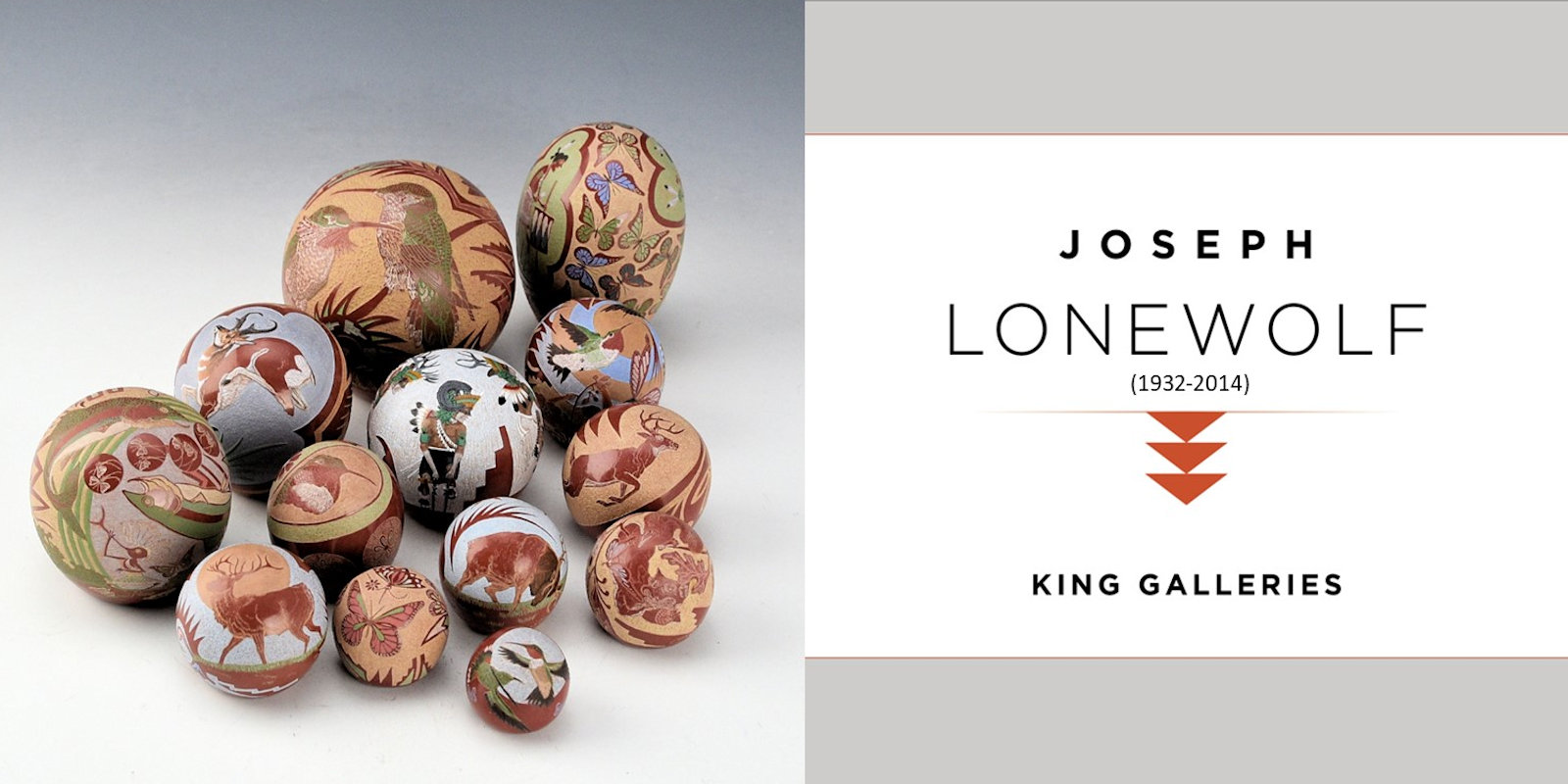
 Joseph Lonewolf was a son of noted potters Camilio and Agapita Tafoya and the brother of Grace Medicine Flower. In the early 1970s, Joseph revolutionized the world of Santa Clara pottery by incorporating his sgraffito (lightly etching the surface of the clay) and incised (more deeply cut into the clay) designs in his work.
When Joseph and his family gather clay, they do it with the utmost respect. Before the clay can be taken from Mother Earth, they must say a prayer, asking to take the clay and tell the clay mother that they will take her and make her into a beautiful pot. The clay is brought home, and water is added to turn the clay into a liquid form known as slip. The slip is then strained to take out any rocks or debris, and then the clay can be dried, kneaded, and used.
Joseph was awarded numerous awards throughout his career, and his work can be found in museums worldwide. He has been featured in multiple books, including "The Art of Clay." He received the prestigious New Mexico Governor's Award for Excellence in the Arts in 2009 and the SWAIA Lifetime Achievement Award.
Joseph Lonewolf was a son of noted potters Camilio and Agapita Tafoya and the brother of Grace Medicine Flower. In the early 1970s, Joseph revolutionized the world of Santa Clara pottery by incorporating his sgraffito (lightly etching the surface of the clay) and incised (more deeply cut into the clay) designs in his work.
When Joseph and his family gather clay, they do it with the utmost respect. Before the clay can be taken from Mother Earth, they must say a prayer, asking to take the clay and tell the clay mother that they will take her and make her into a beautiful pot. The clay is brought home, and water is added to turn the clay into a liquid form known as slip. The slip is then strained to take out any rocks or debris, and then the clay can be dried, kneaded, and used.
Joseph was awarded numerous awards throughout his career, and his work can be found in museums worldwide. He has been featured in multiple books, including "The Art of Clay." He received the prestigious New Mexico Governor's Award for Excellence in the Arts in 2009 and the SWAIA Lifetime Achievement Award.