


McHorse, Christine – 14″ Wide “Rain, Mountains, River” Large Bowl (1990s)
$ 7,700.00
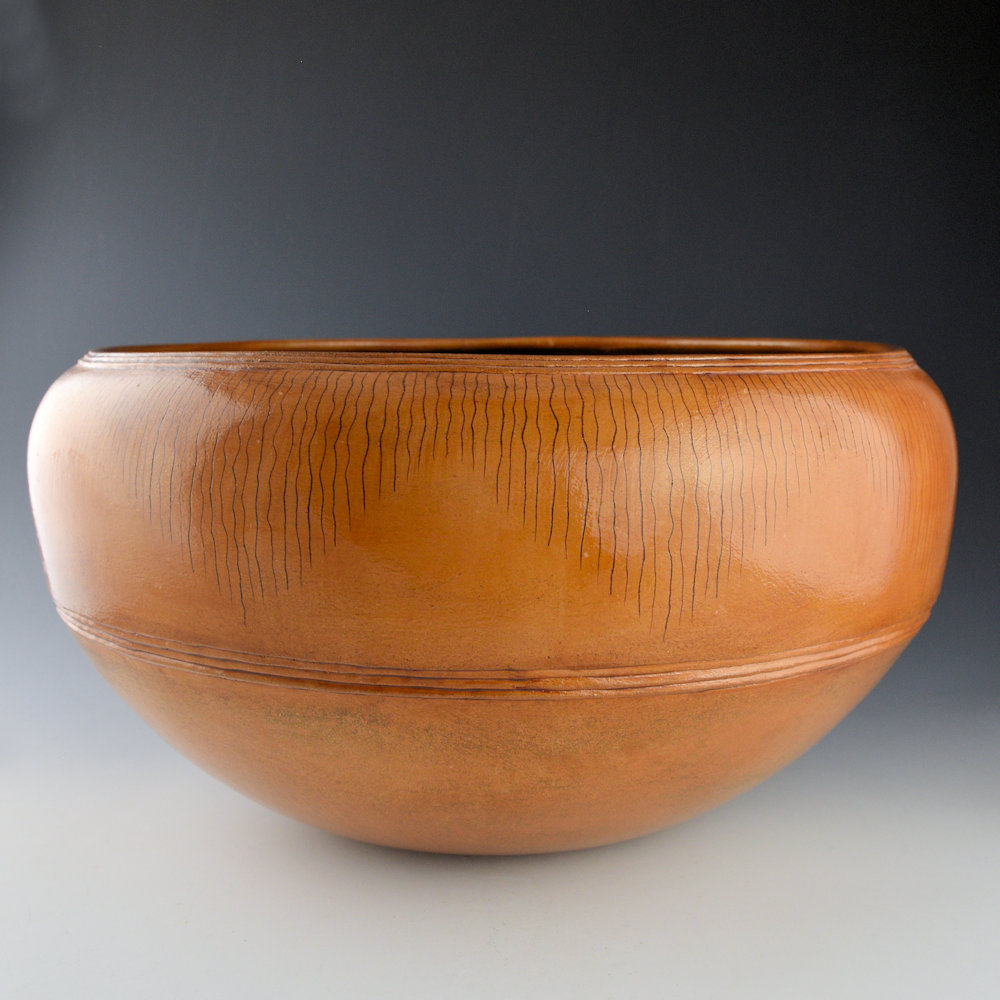
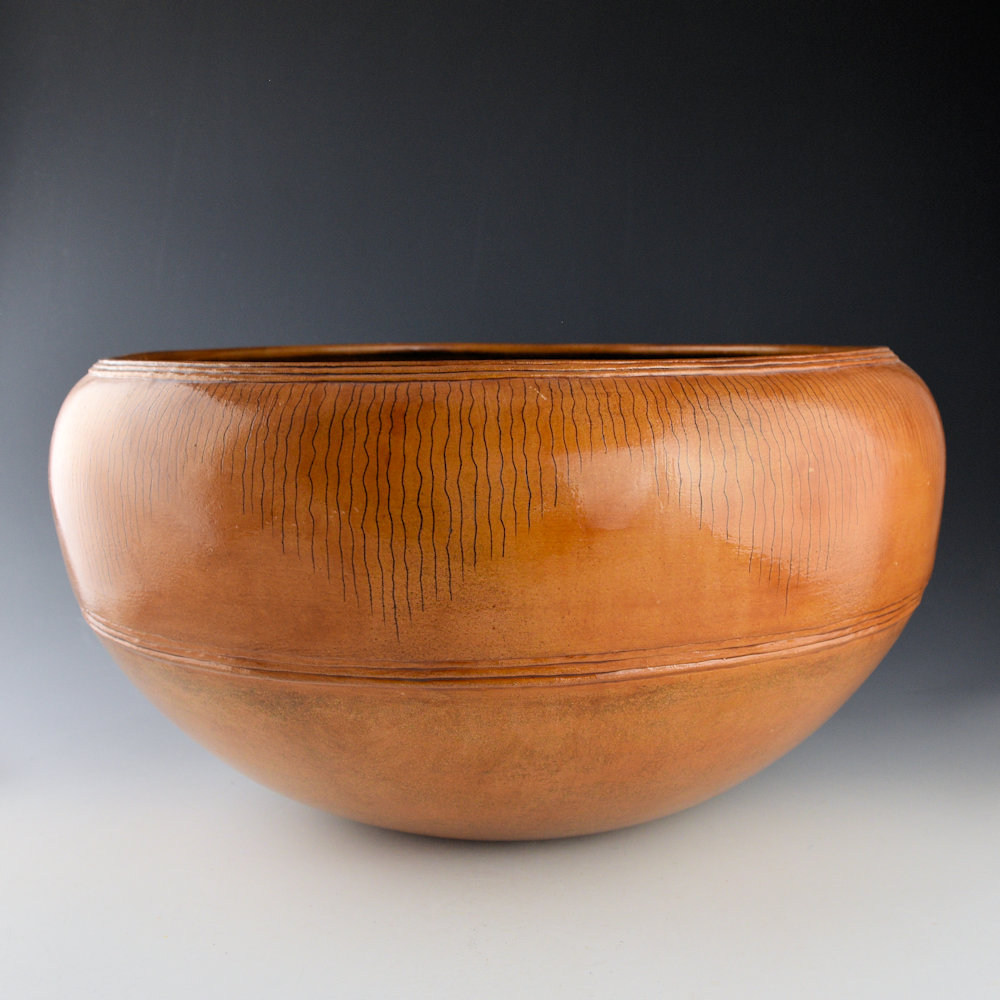
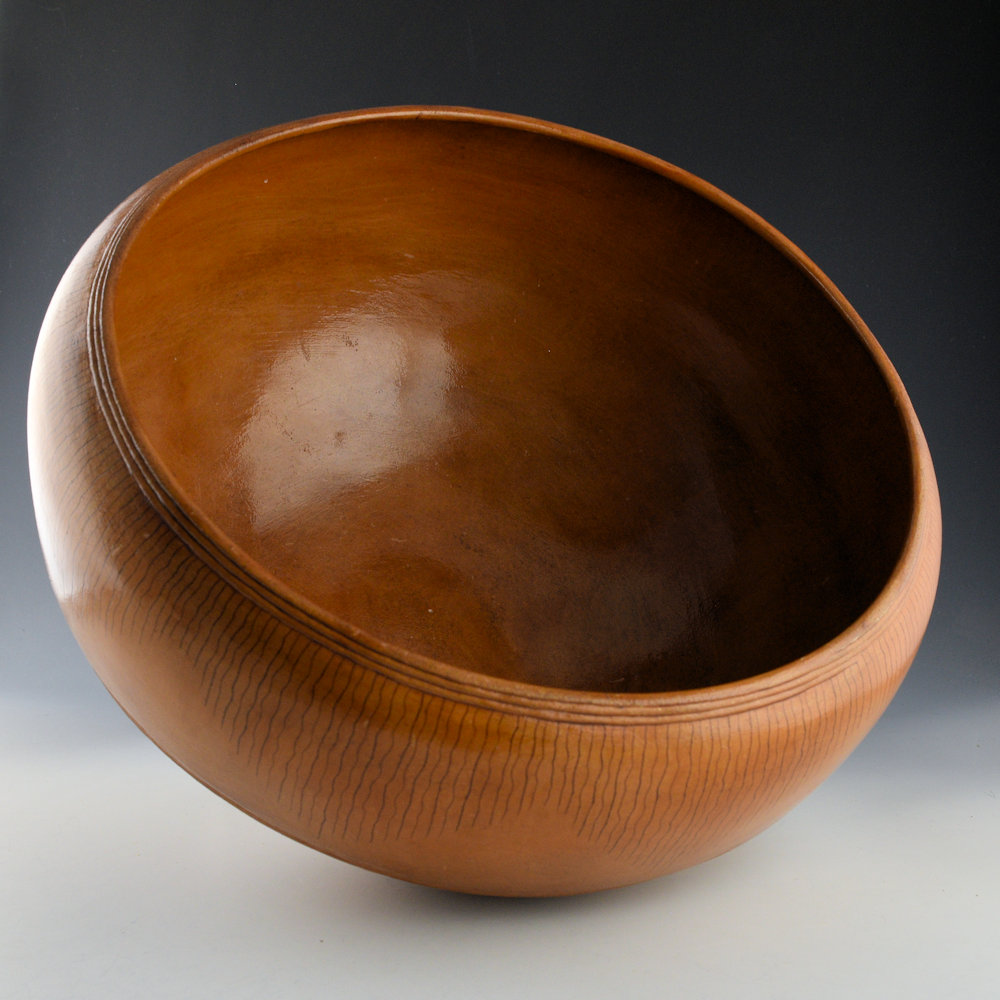
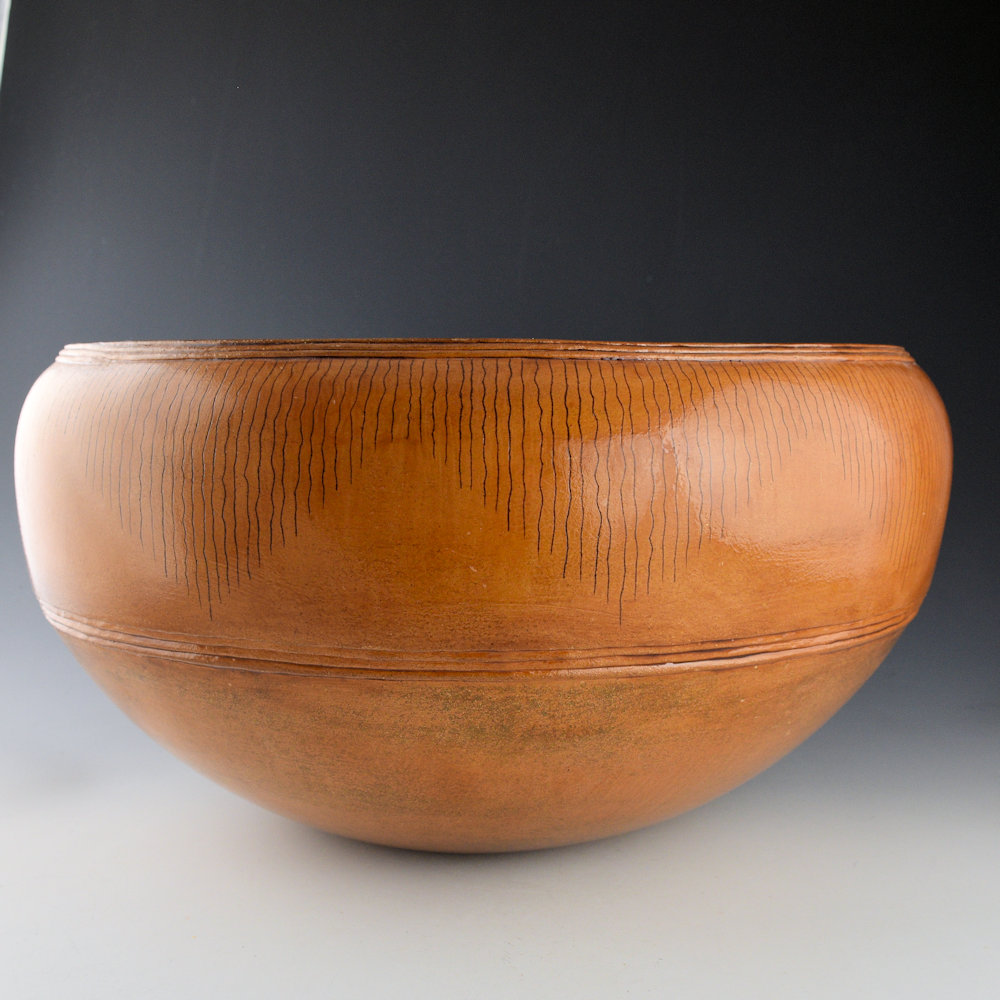
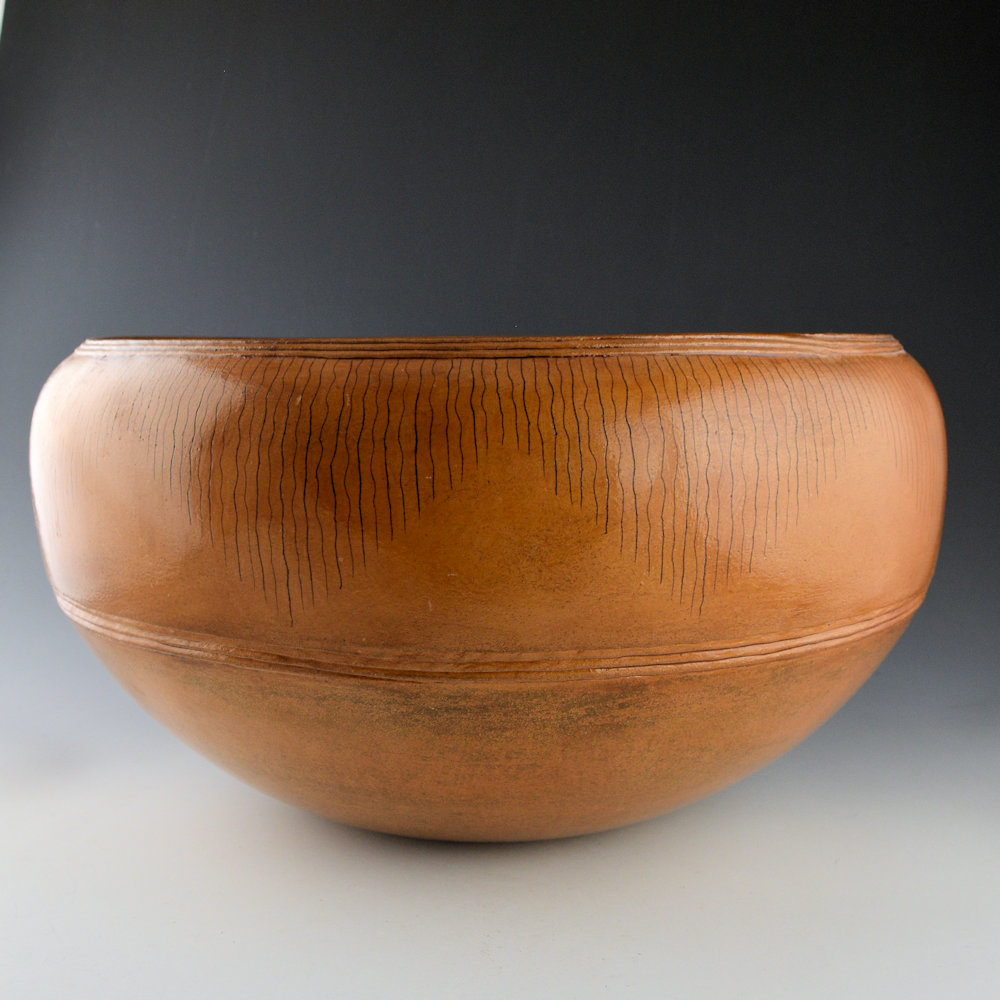
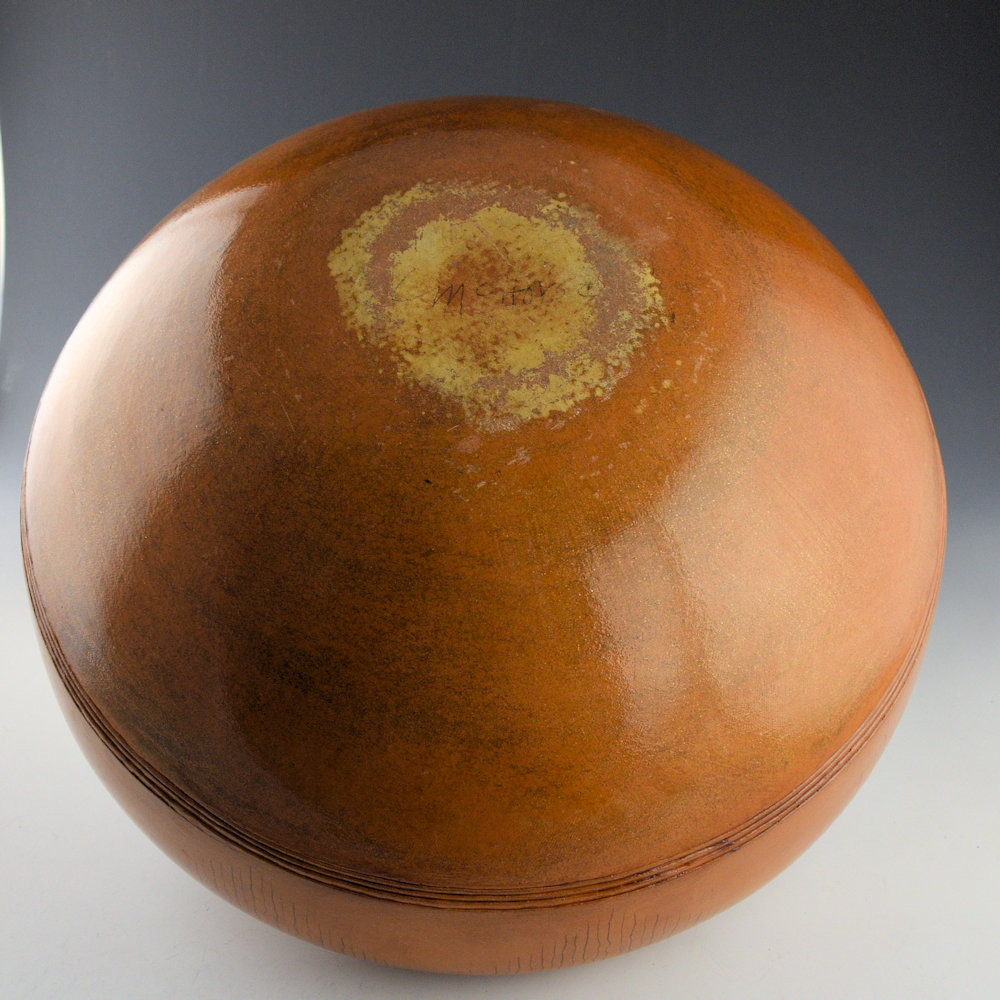
Christine McHorse was well known for her sculptural pottery. Each piece is coil-built and has very thin walls. This amazing bowl is 14 inches wide and very thin-walled. The bowl has carved bands around the neck and below the shoulder. Around the side of the bowl are lines representing rain. They are painted in a triangular manner, so the negative space becomes the mountains receiving the rain! Below, around the center, the three carved bands are a river below the mountains. There is such a subtle use of imagery and shape giving this piece a very powerful appearance. Interestingly, the area below the river, is a darker color than the rest of the bowl. What you can’t see is what has to be held. The bowl is VERY thin-walled! It was traditionally fired and then covered in pinon pitch, even on the inside. The bowl is so thoughtful in concept and creation, and yet there is a fascinating restraint, which is seen in Christine’s pottery, that make it a very important piece of her pottery when she was making more “classic’ Navajo pottery. It is signed on the bottom of the bowl, “C McHorse”. It is in excellent condition with no chips, cracks, restoration, or repair. Christine created more sculptural works with her pottery in the “Dark Light” exhibit, which has traveled nationally.
“I grew up in Morenci, Arizona, and in the summers I’d go to the Navajo Reservation and stay with my grandmother. My siblings and I would herd sheep for her during the summer. I didn’t really have any idea about Navajo pottery. When I started making pottery, I also started researching it in books and museums. The Navajo pottery that was written about, they were called “mud pots.” It had not developed to the sophisticated level of Pueblo pottery.
I get my own clay. I use natural clay that we dig from a clay pit near Taos. I’m Navajo, not Taos, and I respect the processes handed down to me. Joel’s grandmother recognized the fact that I was good with my hands and the clay. We do continue to gather and process our own clay. My family and I go once every four years or so and get a couple barrels full of clay. My work is slow and tedious. Most all of the clay goes to use so there is very little that is not used. It’s very satisfying to pull it out of the ground, process it yourself, and make the material that you build with. I process my clay to the point where I know how the clay should feel in my hands. Then I feel like I have some control of the process from the beginning to the end.” Christine McHorse, Spoken Through Clay
Out of stock
Christine McHorse was well known for her sculptural pottery. Each piece is coil-built and has very thin walls. This amazing bowl is 14 inches wide and very thin-walled. The bowl has carved bands around the neck and below the shoulder. Around the side of the bowl are lines representing rain. They are painted in a triangular manner, so the negative space becomes the mountains receiving the rain! Below, around the center, the three carved bands are a river below the mountains. There is such a subtle use of imagery and shape giving this piece a very powerful appearance. Interestingly, the area below the river, is a darker color than the rest of the bowl. What you can’t see is what has to be held. The bowl is VERY thin-walled! It was traditionally fired and then covered in pinon pitch, even on the inside. The bowl is so thoughtful in concept and creation, and yet there is a fascinating restraint, which is seen in Christine’s pottery, that make it a very important piece of her pottery when she was making more “classic’ Navajo pottery. It is signed on the bottom of the bowl, “C McHorse”. It is in excellent condition with no chips, cracks, restoration, or repair. Christine created more sculptural works with her pottery in the “Dark Light” exhibit, which has traveled nationally.
“I grew up in Morenci, Arizona, and in the summers I’d go to the Navajo Reservation and stay with my grandmother. My siblings and I would herd sheep for her during the summer. I didn’t really have any idea about Navajo pottery. When I started making pottery, I also started researching it in books and museums. The Navajo pottery that was written about, they were called “mud pots.” It had not developed to the sophisticated level of Pueblo pottery.
I get my own clay. I use natural clay that we dig from a clay pit near Taos. I’m Navajo, not Taos, and I respect the processes handed down to me. Joel’s grandmother recognized the fact that I was good with my hands and the clay. We do continue to gather and process our own clay. My family and I go once every four years or so and get a couple barrels full of clay. My work is slow and tedious. Most all of the clay goes to use so there is very little that is not used. It’s very satisfying to pull it out of the ground, process it yourself, and make the material that you build with. I process my clay to the point where I know how the clay should feel in my hands. Then I feel like I have some control of the process from the beginning to the end.” Christine McHorse, Spoken Through Clay
Brand
McHorse, Christine Nofchissey (1948-2021)
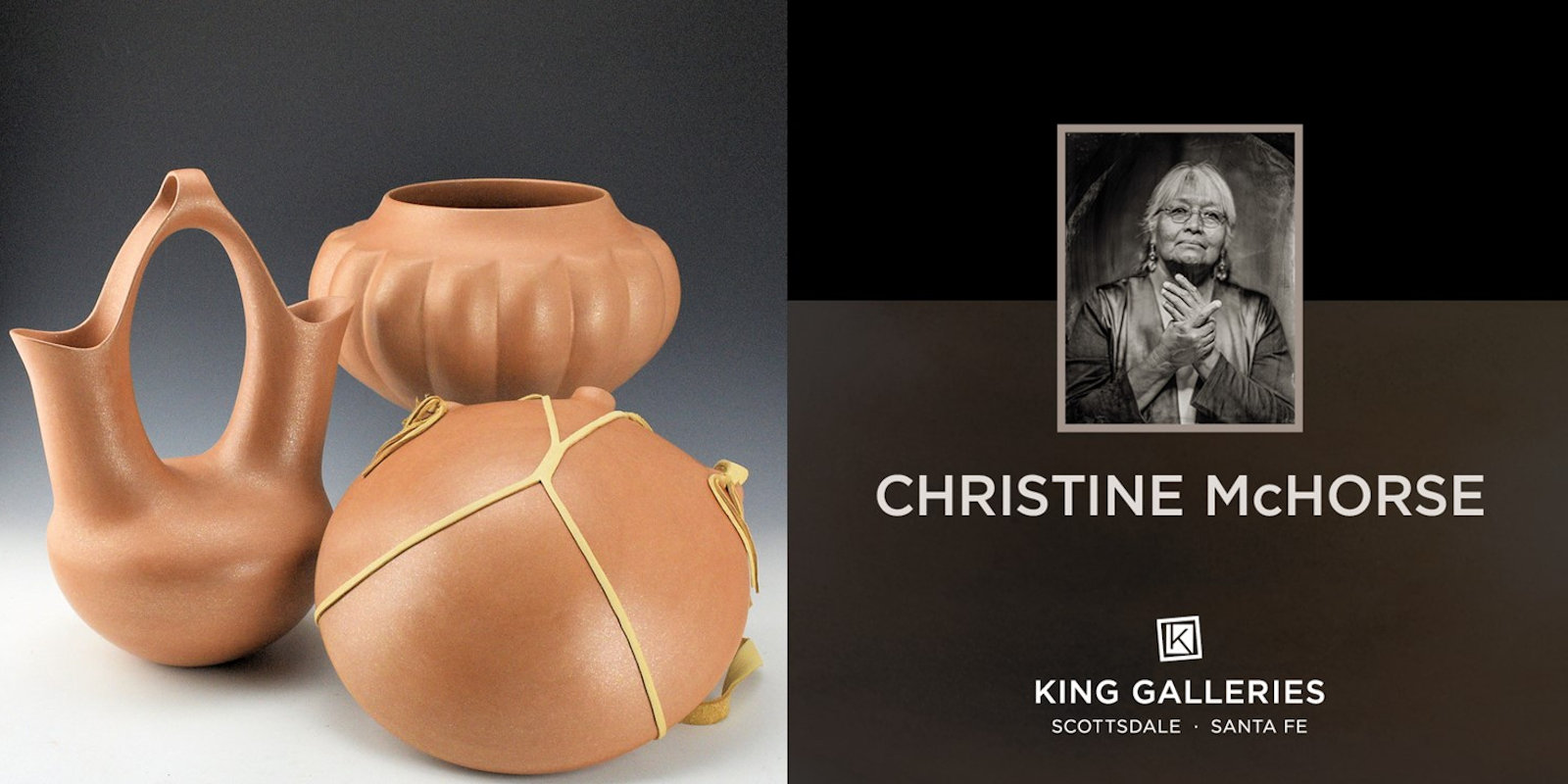 Christine McHorse has taken the traditional micaceous clay and transcended its utilitarian dimension and to create stunning sculptural vessels. Each piece is hand coiled from the micaceous clay near Taos, NM. Her work has a wonderful native aesthetic and vision yet a modern use of the clay to defy expectations. Christine is one of the only potters to win Best of Class at Santa Fe Indian Market for her clay work in both the pottery and sculpture categories. While Christine is Navajo, she learned to make pottery from her mother-in-law, Lena Archuleta (Taos). Her son Joel McHorse also learned to make pottery from Christine. She has received numerous awards at events such as Santa Fe Indian Market. Her work can also be found in museums such as the Heard Museum, the Denver Art Museum, the National Museum of the American Indian and others. She has also been featured in numerous book, including “Free Spirit”. It is not often that we get in contemporary pieces of her pottery and they certainly a delight to the eye!