


Polacca, Thomas – “Shalako Katsina” Tall Carved Jar (1991)
$ 1,800.00
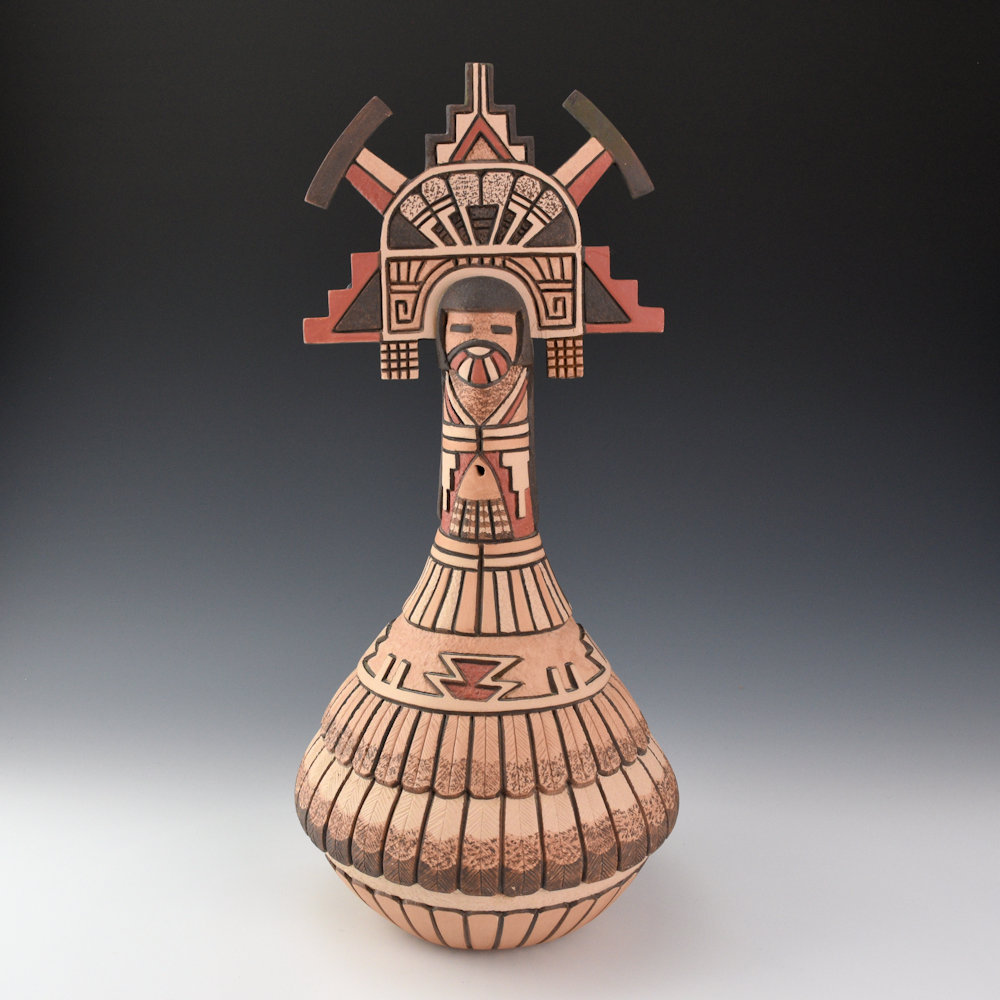
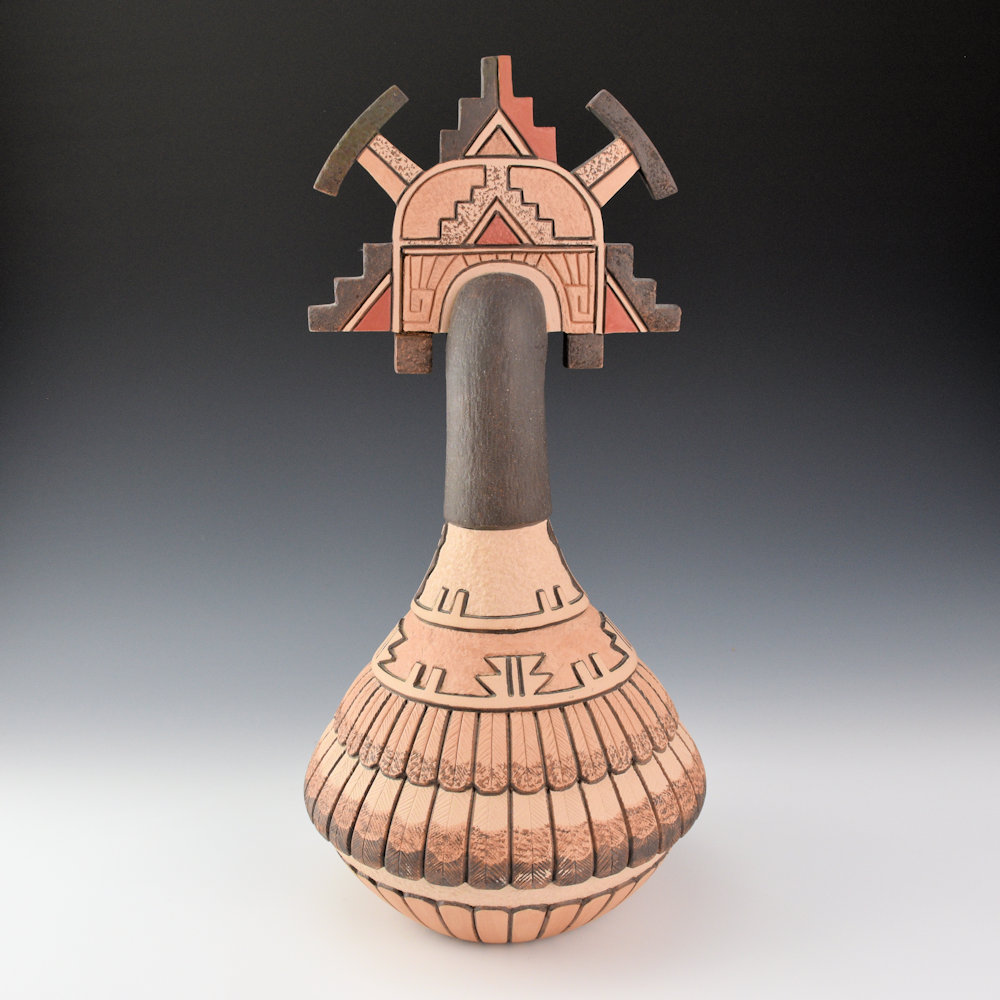
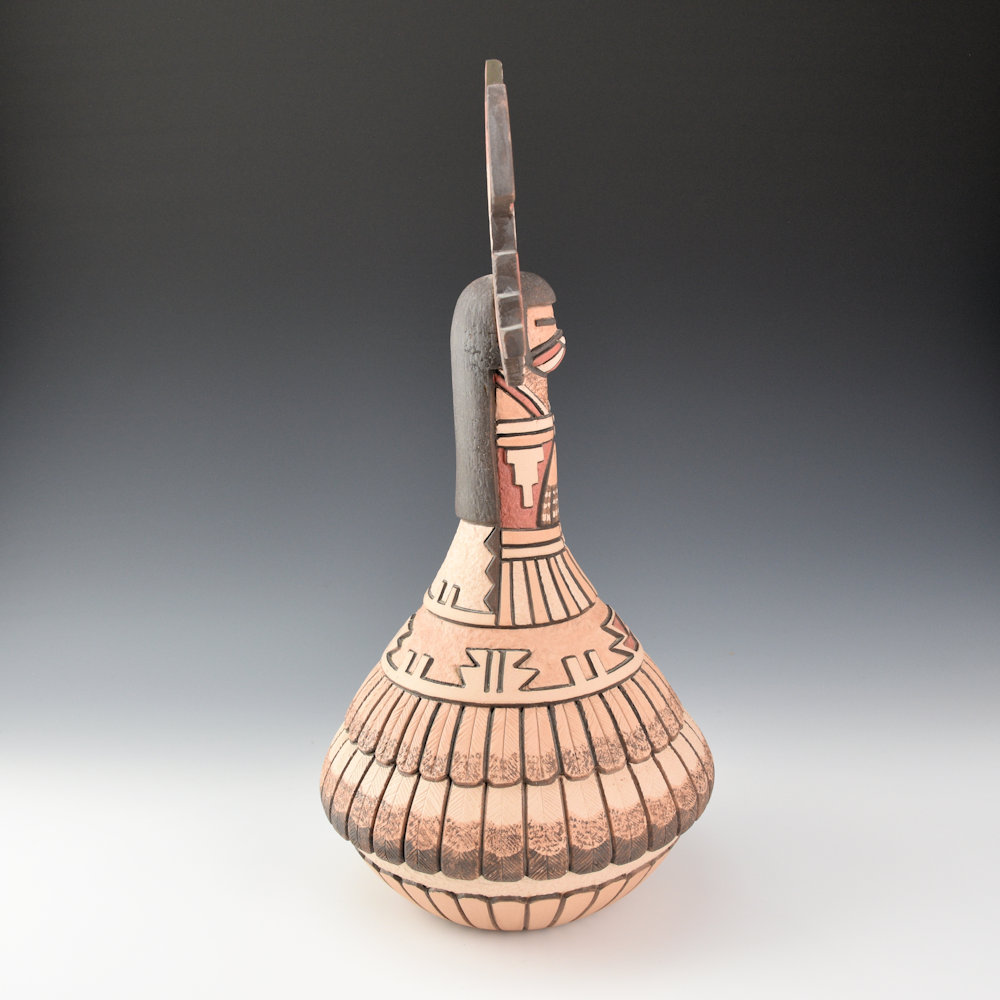
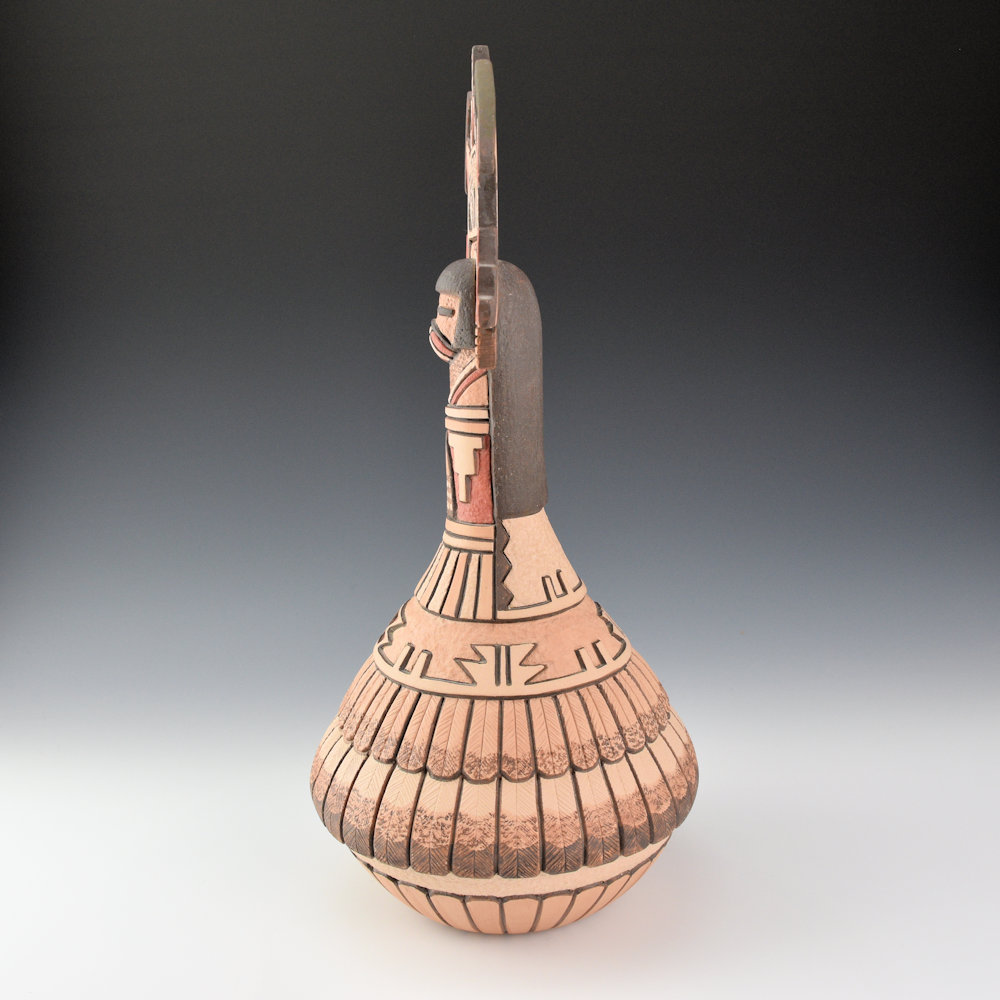
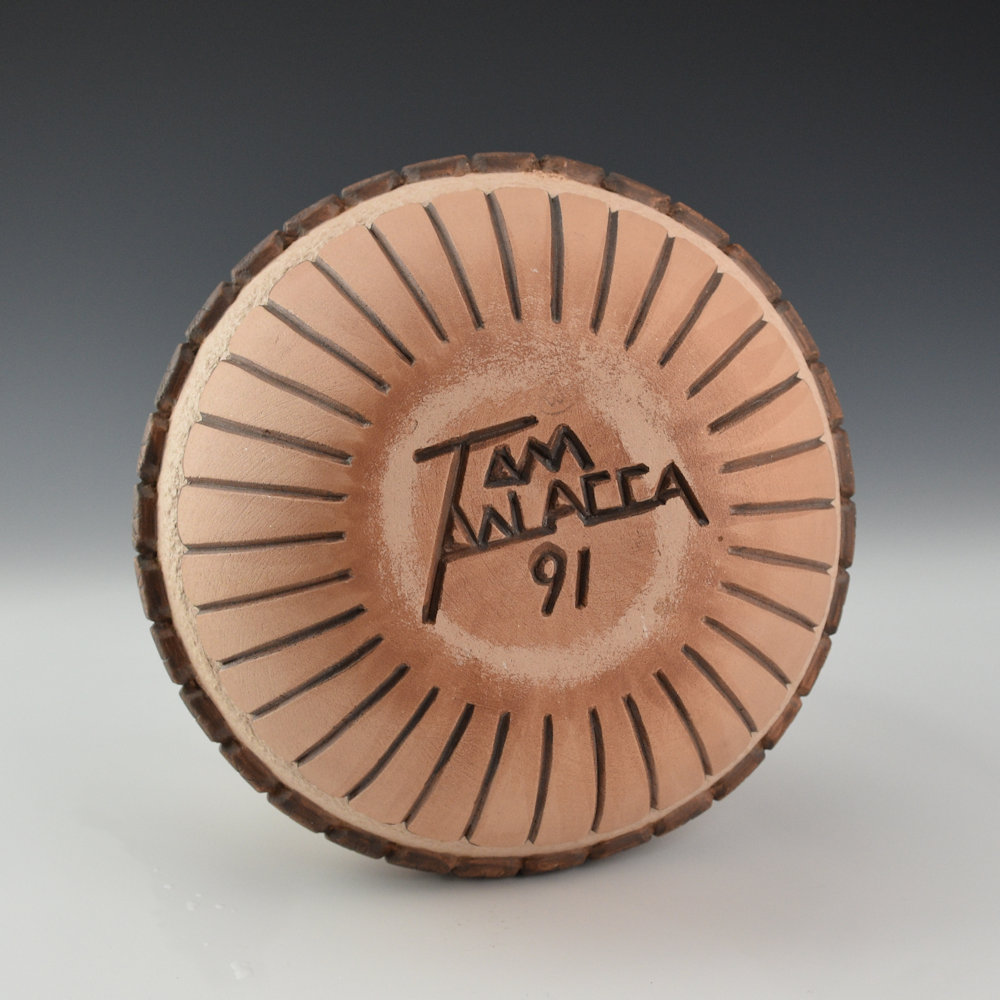
Thomas Polacca was a son of noted potter Fannie Nampeyo and a grandson of Nampeyo of Hano. He is considered among the first men to begin making pottery at Hopi in the 1970s. Interestingly, the men initially did not use the traditional Sikyatki designs but followed other directions in their pottery. This is one of his most famous forms. It is a tall jar in the shape of a Shalako Katsina. The figure is coil-built, carved, and painted with clay slips. The headdress (tablita) is deeply carved with designs on both sides. The neck has a carved shell pendants and below are carved feathers. It is a very complicated and tightly designs piece. The figure is painted with various clay slips and bee-weed. This piece captures the essence of early male potters at Hopi who were trying to create pieces in clay similar to wood katsina carvings. The way Thomas was able to construct his Butterfly Maiden was a creative change in Hopi-Tewa pottery. The piece is signed on the bottom in the clay, “Tom Polacca”. It is from 1991. It is in excellent condition with no chips, cracks, restoration, or repair.
About the Shalako Katsina
The Shalako Katsina, also known as Salako, is a powerful, towering being in Hopi and Zuni ceremonial traditions. Representing messengers of the gods and cloud spirits, they are revered for bringing moisture, rain, and fertility. At Hopi, the Shalako ceremony features a male (Shalako Taka) and female (Shalako Mana).
Out of stock
Thomas Polacca was a son of noted potter Fannie Nampeyo and a grandson of Nampeyo of Hano. He is considered among the first men to begin making pottery at Hopi in the 1970s. Interestingly, the men initially did not use the traditional Sikyatki designs but followed other directions in their pottery. This is one of his most famous forms. It is a tall jar in the shape of a Shalako Katsina. The figure is coil-built, carved, and painted with clay slips. The headdress (tablita) is deeply carved with designs on both sides. The neck has a carved shell pendants and below are carved feathers. It is a very complicated and tightly designs piece. The figure is painted with various clay slips and bee-weed. This piece captures the essence of early male potters at Hopi who were trying to create pieces in clay similar to wood katsina carvings. The way Thomas was able to construct his Butterfly Maiden was a creative change in Hopi-Tewa pottery. The piece is signed on the bottom in the clay, “Tom Polacca”. It is from 1991. It is in excellent condition with no chips, cracks, restoration, or repair.
About the Shalako Katsina
The Shalako Katsina, also known as Salako, is a powerful, towering being in Hopi and Zuni ceremonial traditions. Representing messengers of the gods and cloud spirits, they are revered for bringing moisture, rain, and fertility. At Hopi, the Shalako ceremony features a male (Shalako Taka) and female (Shalako Mana).
Brand
Polacca, Thomas (1935 - 2003)
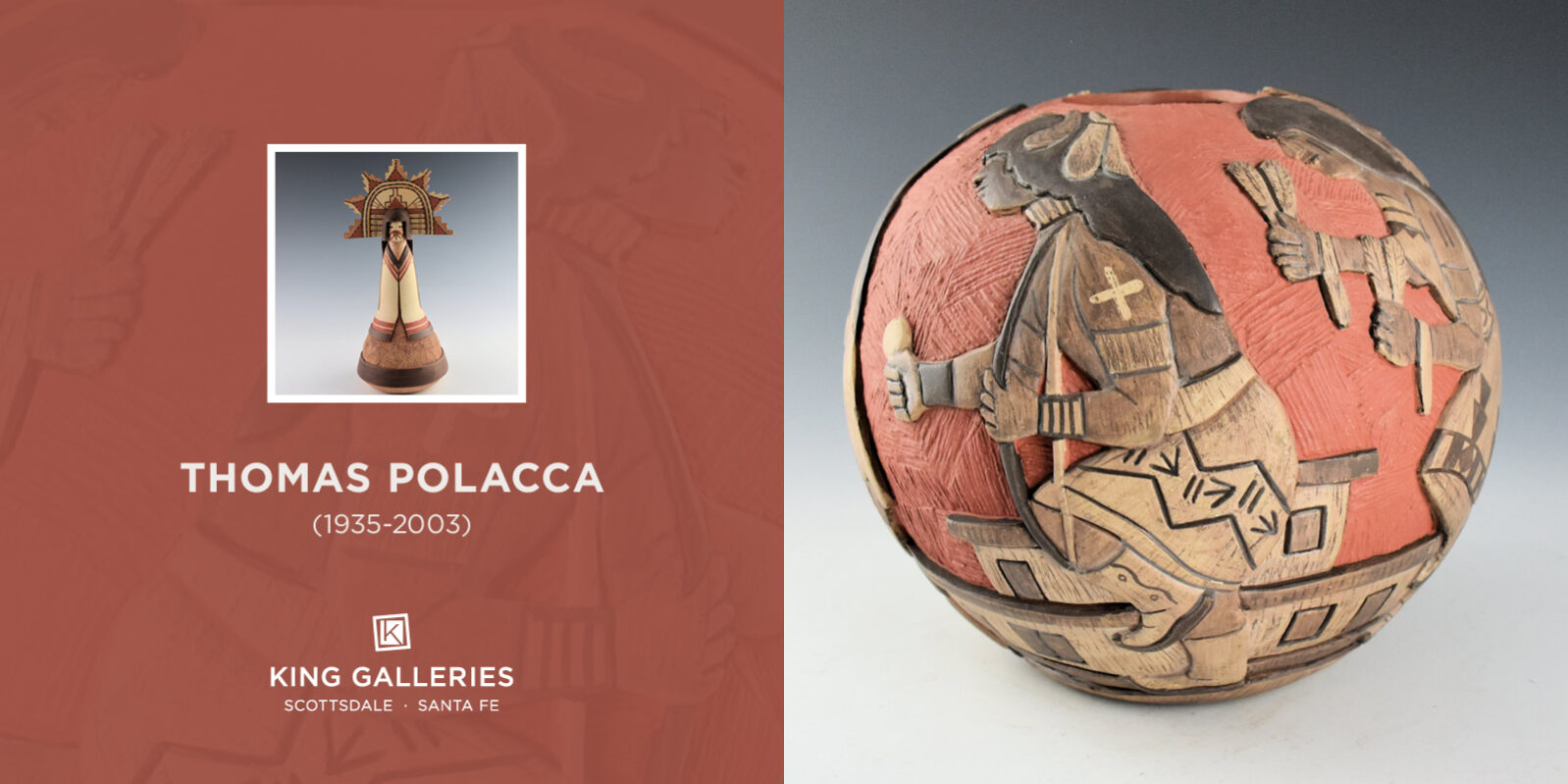 Thomas Polacca was a son of noted potter Fannie Nampeyo and a grandson of Nampeyo of Hano. Along with Wallace Youvella (the husband of his sister Iris), Thomas was one of the first Hopi men to make and design pottery in the 1970s. Wallace and Thomas told the story that they first tried making pottery with "traditional" designs. Still, there was resistance from the women, so they began to create a new style of Hopi pottery with carved designs, much like Hopi Katsinas. Thomas received wide acclaim for his pottery over the years, and his work is in numerous museums, such as the Heard, the Denver Art Museum, and others.