

Tafoya, SaraFina – 17″ Tall Water Jar with Bear Paws (1910-15)
$ 22,000.00
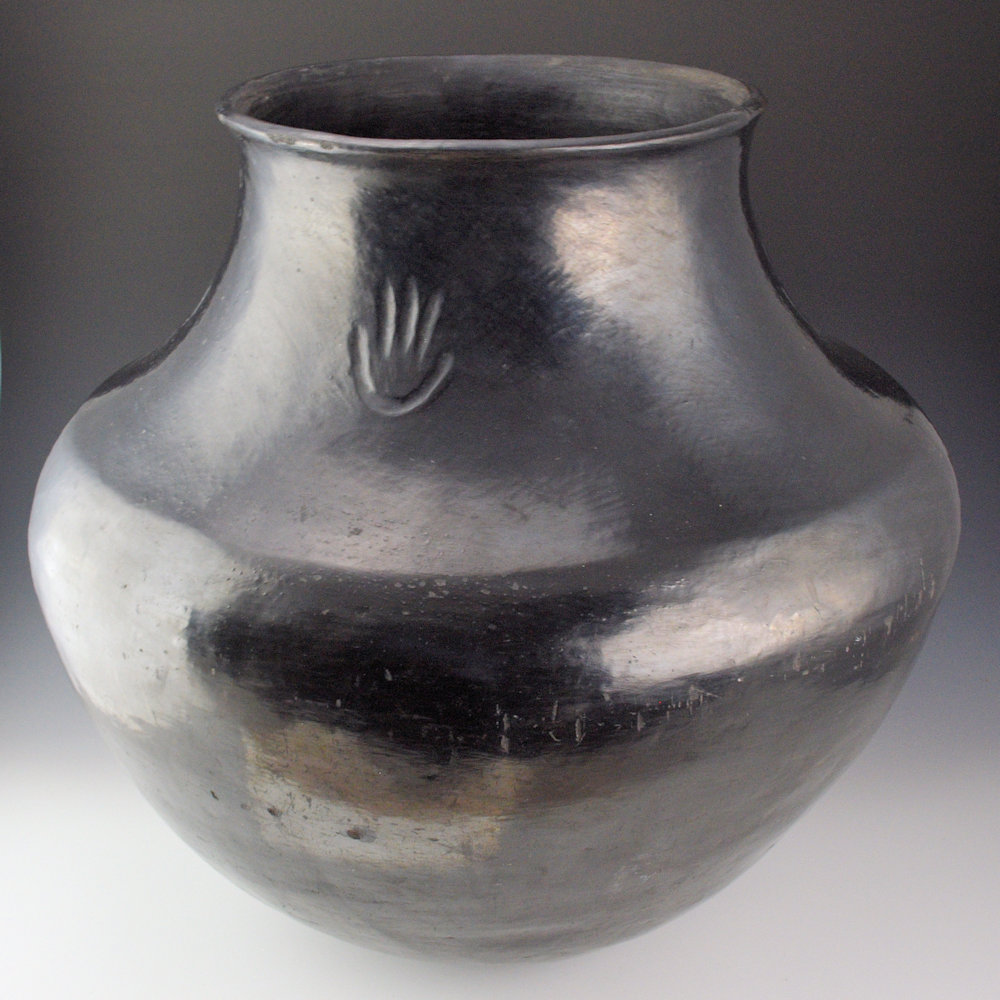
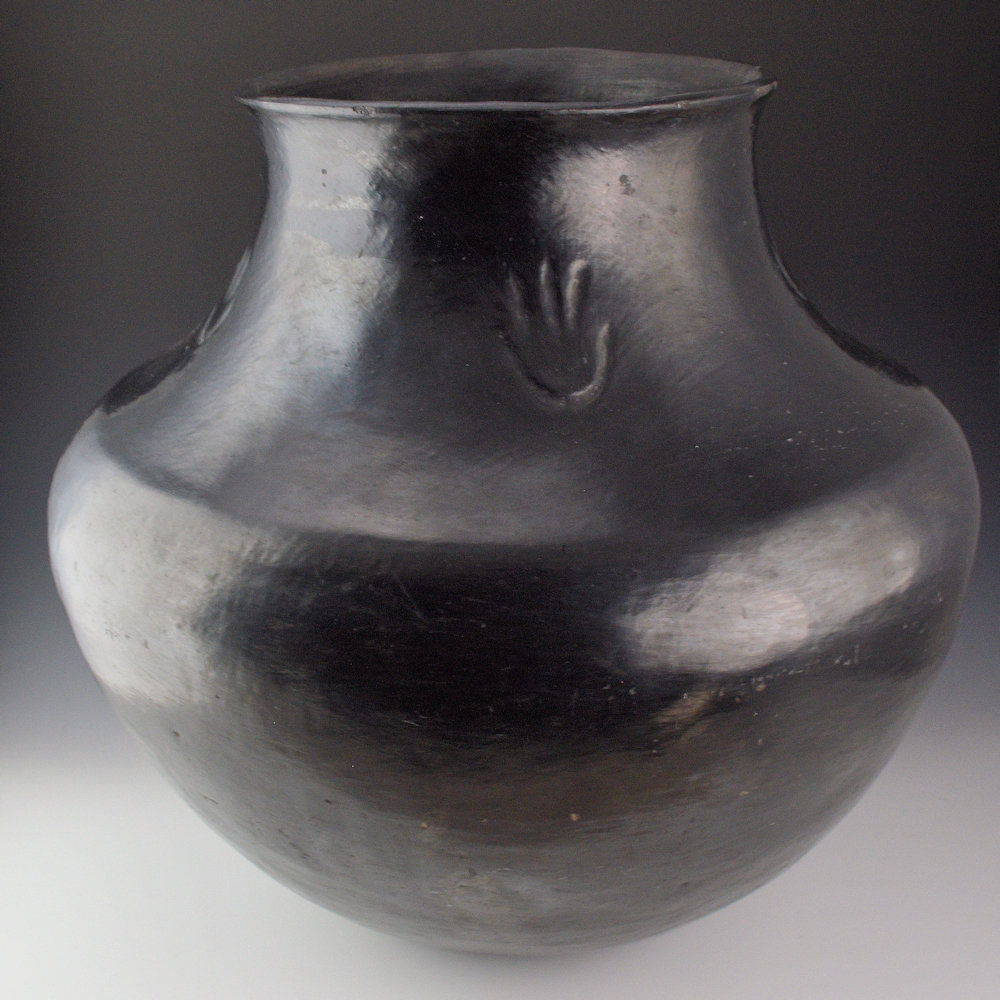
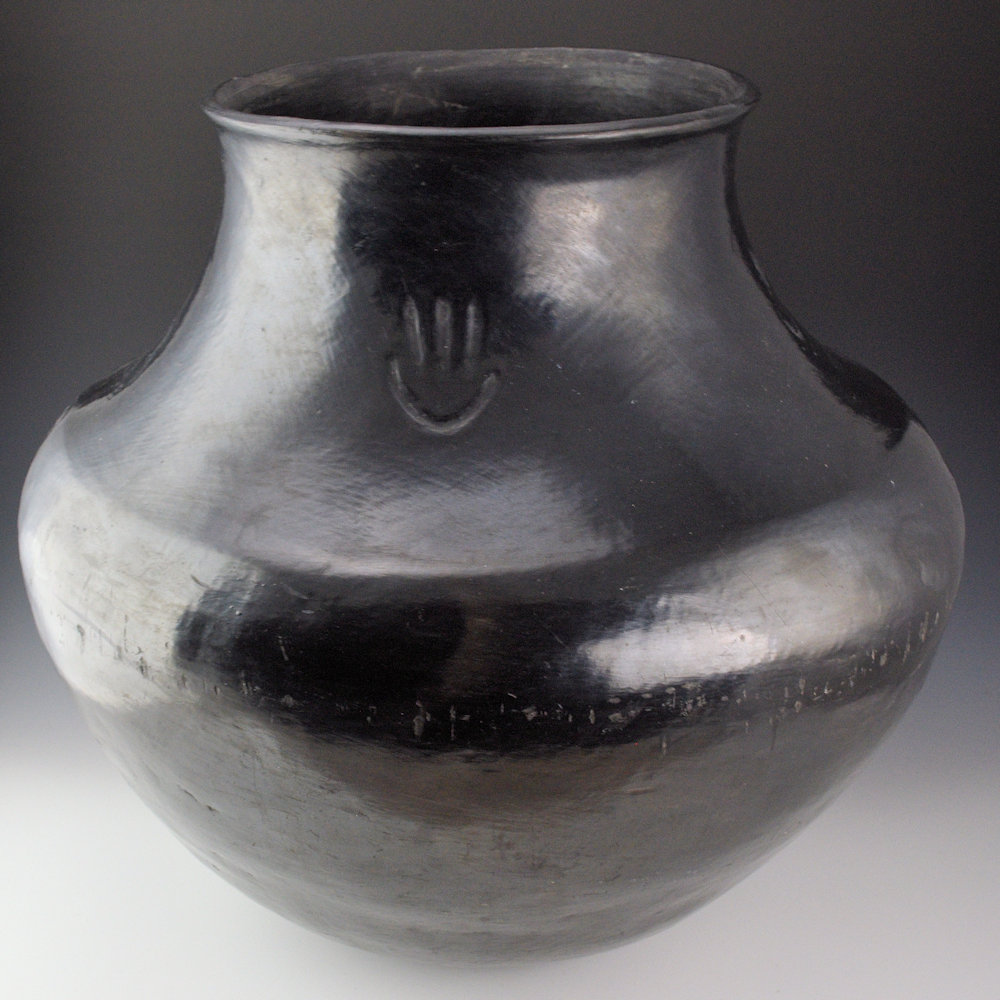
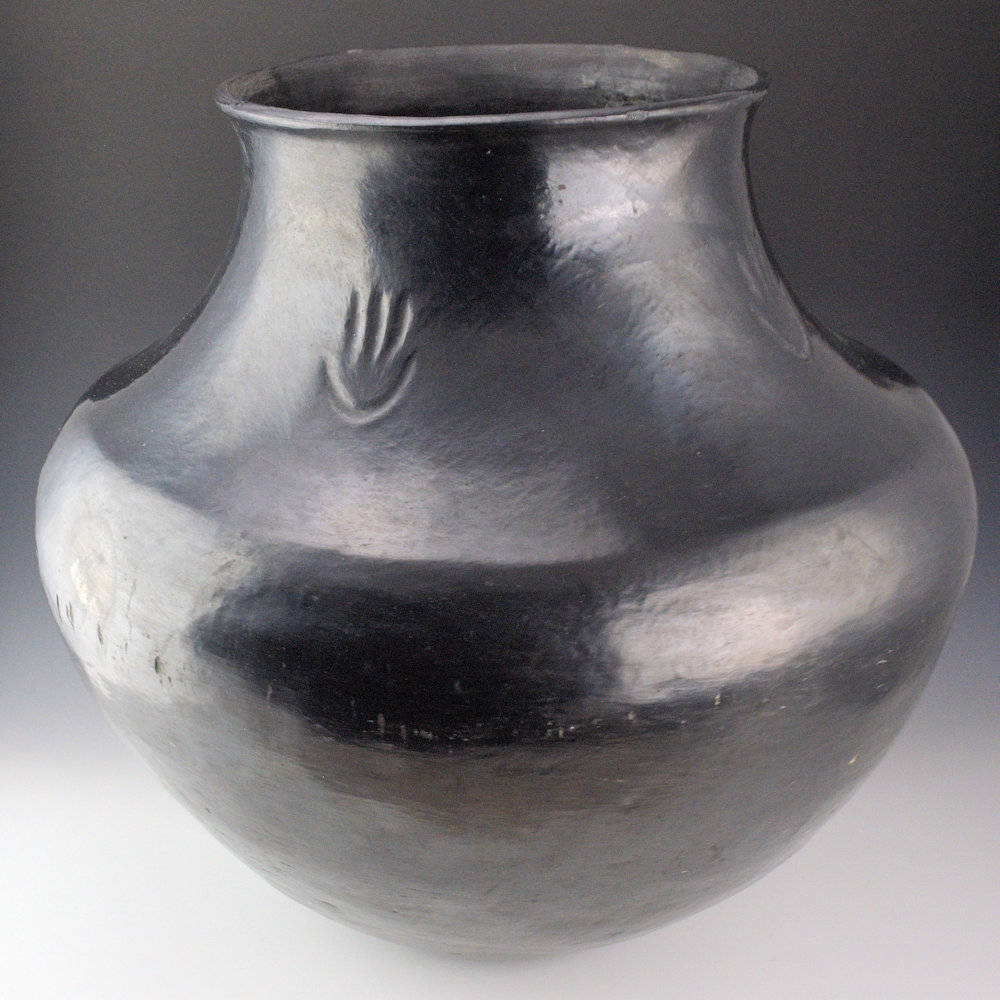
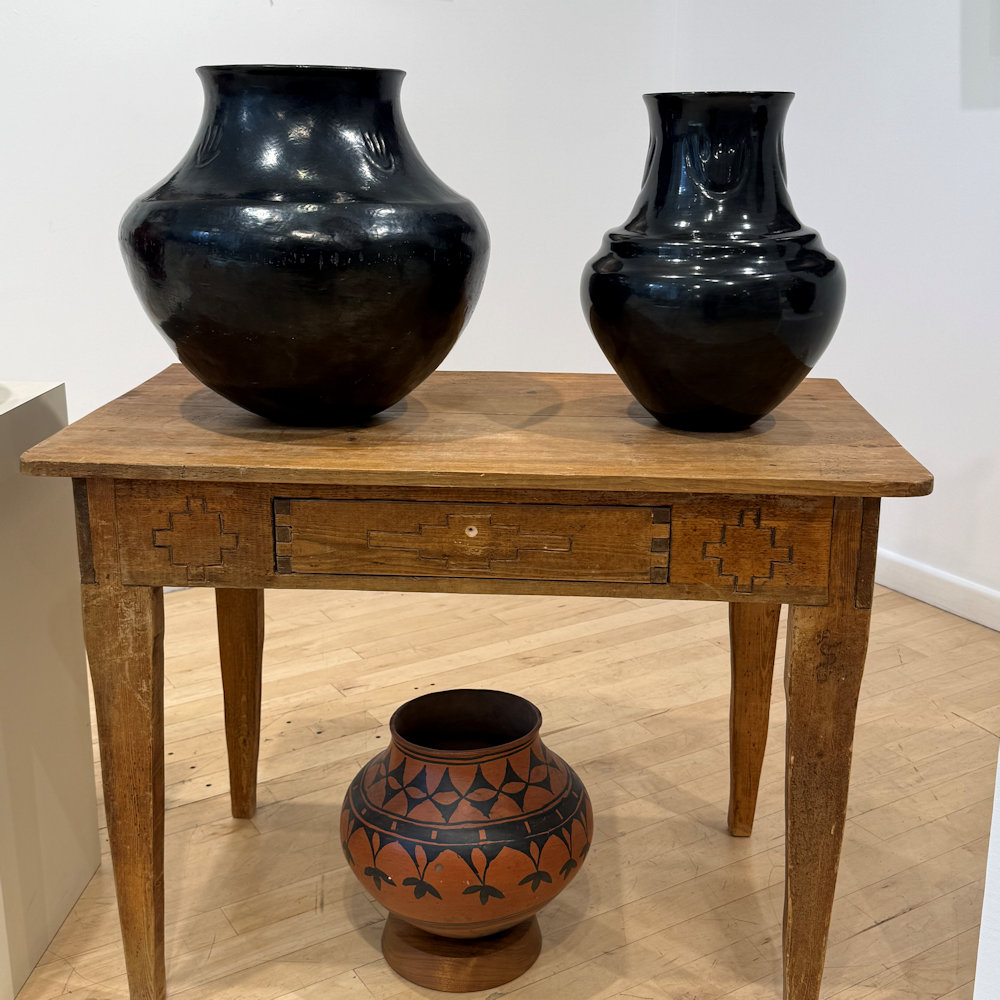
This is spectacular large water jar by SaraFina Tafoya. She was the matriarch of a family of renowned potters, including her children Margaret Tafoya, Camilio Tafoya, and Christina Naranjo. While she is known for her large vessels, including storage jars and water jars. This is one of her few large water jars. It is an elegant shape with a wide, sharp shoulder and a slightly turned out rim. There are bear paws impressed in the clay before it was polished. The bear paws are part of a Santa Clara story where the bear leads the Pueblo people to water in a draught. The jar has her signature polishing style on the neck, and of course, the long toes of the bear paw. The jar was fired a deep black coloration. If you notice on the first photo, you can see an area that looks more silvery, and it is where a piece of wood was touching the jar during the firing. This is actually expected in her work, as:
Sara Fina was often known to say about her own pottery, ‘Nothing is perfect.’ When she was firing a pot, she would often take a stick and touch it to the vessel, leaving a dark mark. She would say, ‘We are not to have anything that perfect made from clay. Only someone more powerful than we are can have perfection.”
This jar is in very good condition no cracks, restoration, or repair. There are some surface rubs that are certainly expected for a piece this age. The jar is not signed but an easy attribution with the shape, polishing marks, and bear paws. It is a major work that speaks to the impact of this great matriarch.
In stock
SaraFina Tafoya was the matriarch of a family of renowned potters, including her children Margaret Tafoya, Camilio Tafoya, and Christina Naranjo. While she is known for her large vessels, in the 1930’s she created a series of smaller painted and plainware vessels which were signed. They are unusual and scarce pieces, yet a fascinating part of the history of Santa Clara pottery. This bowl is a classic piece of painted pottery and has a fascinating provenance. The bowl was originally acquired in 1933 by the Denver Art Museum. It was included in the book “Margaret Tafoya” by Mary Ellen and Lawrence Blair on p. 53 (fig. 2-19). The bowl was later deaccessioned by the DAM and ended up in a private collection. The bowl is fully polished and painted red-on-red with a lightning design. The designs are highlighted with a white clay slip. It is a complex and varied design which relies as much on the matte painted areas as the negative polished space. The bowl is signed in the clay on the bottom, “Sarafina Tafoya”. It is in very good condition with no chips, cracks, restoration or repair. Interestingly, it still has the original catalog number for the museum as well as the museum card. Definitely a great piece of history!
Brand
Tafoya, Sara Fina (1863-1949)
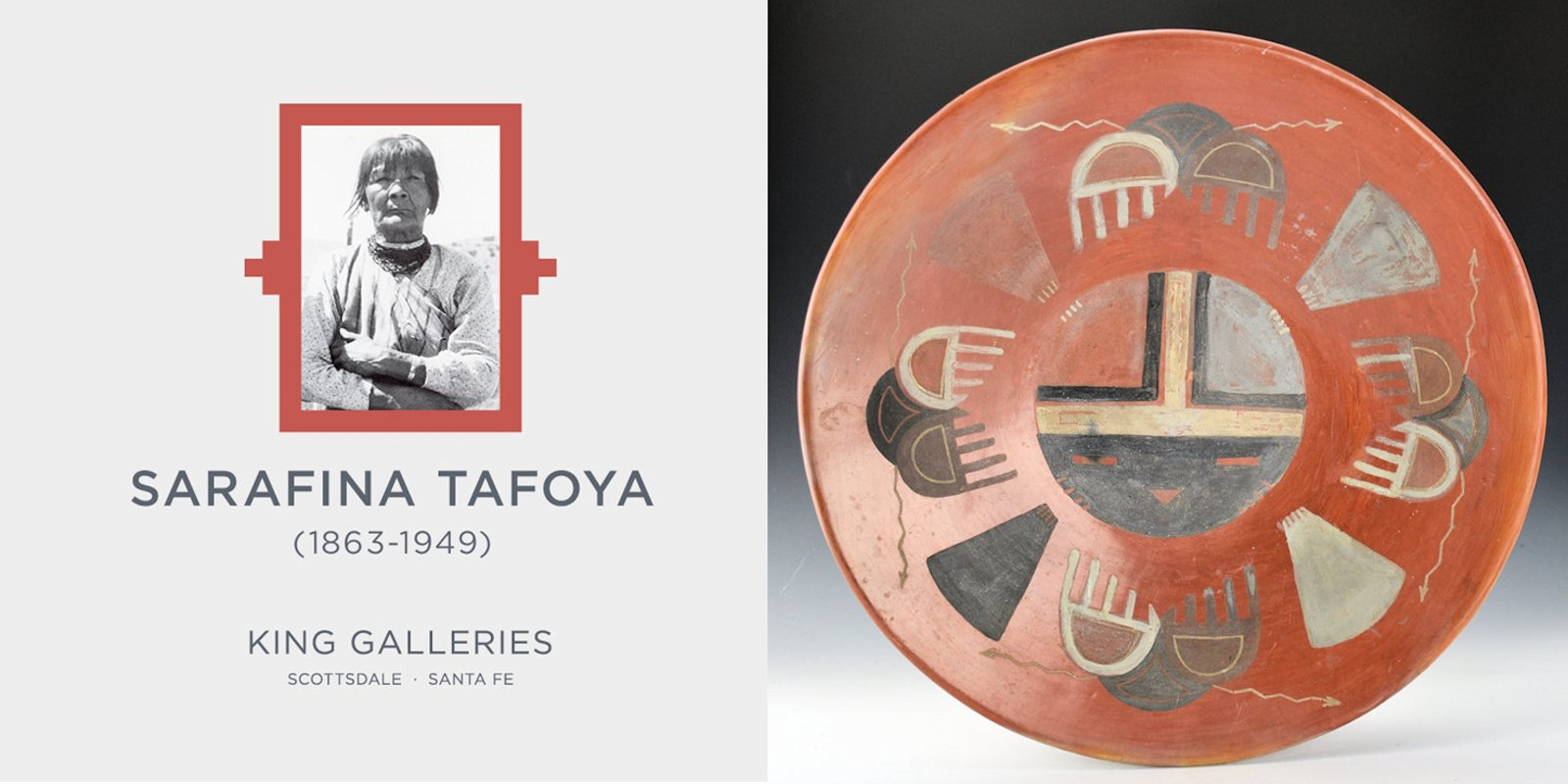 Sara Fina Tafoya is among the most renowned of the early Santa Clara potters. She was the matriarch of a dynasty of potters, included among her children were Camilio Tafoya, Margaret Tafoya, and Christina Naranjo. Beginning in 1924 Sara Fina Tafoya was one of the first pueblo potters to begin "carving" into the clay to create designs in her pottery. She was masterful with her forms, where the simplicity of the shape, especially with her larger vessels such as the storage jars, did not require additional design. Part of her genius was adding elaborate shapes for the handles and unusual indentions such as the "raindrop" rims. These created special features which readily identified her pottery. Her pottery was not signed except for a short period in the late 1930s when she made smaller pieces, often polychrome but also some classic black ware. Certainly, a testament to her skill is that few Pueblo potters today are able to create either pottery of such size or with such complicated additions as her handles.
Check out our article on the signed pottery of Sara Fina Tafoya: "Signed Sara Fina".
Sara Fina Tafoya is among the most renowned of the early Santa Clara potters. She was the matriarch of a dynasty of potters, included among her children were Camilio Tafoya, Margaret Tafoya, and Christina Naranjo. Beginning in 1924 Sara Fina Tafoya was one of the first pueblo potters to begin "carving" into the clay to create designs in her pottery. She was masterful with her forms, where the simplicity of the shape, especially with her larger vessels such as the storage jars, did not require additional design. Part of her genius was adding elaborate shapes for the handles and unusual indentions such as the "raindrop" rims. These created special features which readily identified her pottery. Her pottery was not signed except for a short period in the late 1930s when she made smaller pieces, often polychrome but also some classic black ware. Certainly, a testament to her skill is that few Pueblo potters today are able to create either pottery of such size or with such complicated additions as her handles.
Check out our article on the signed pottery of Sara Fina Tafoya: "Signed Sara Fina".