


Begaye, Nathan – Polychrome Jar with Eagle and Sun Katsina Figures (1988)
$ 1,500.00
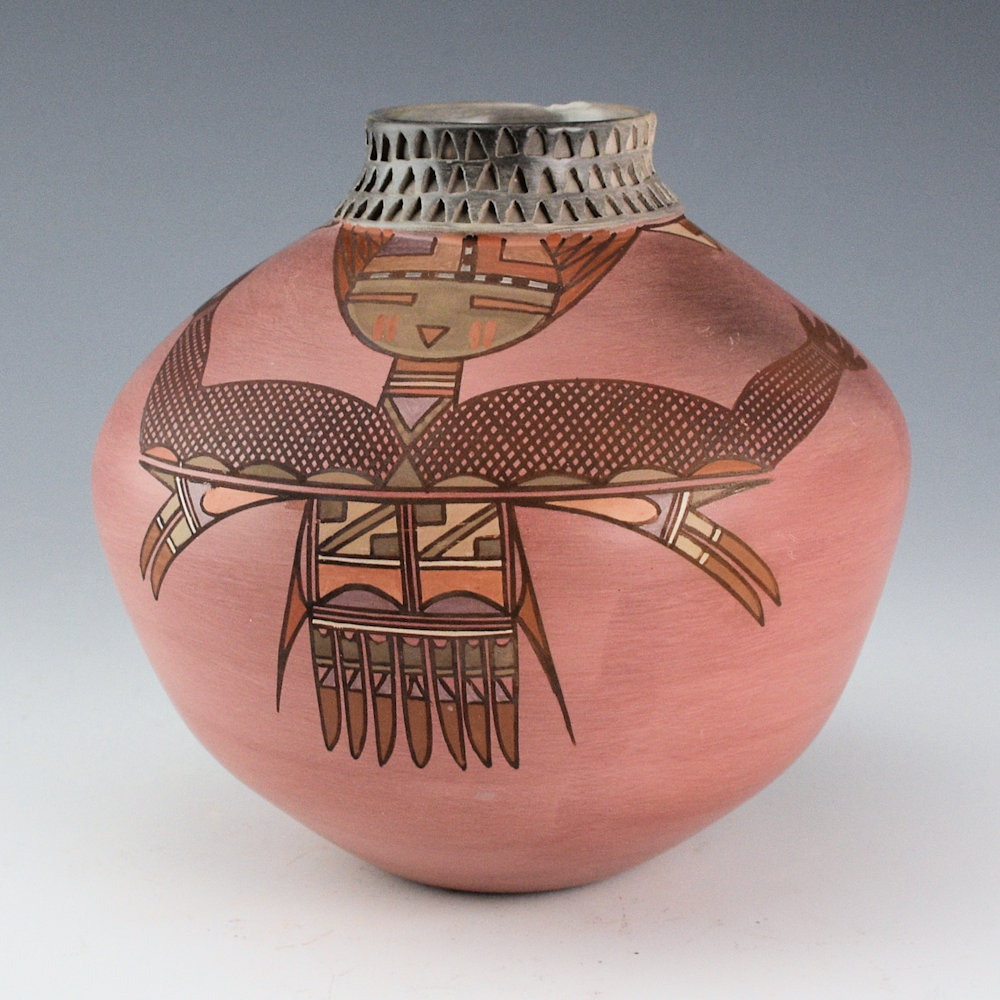
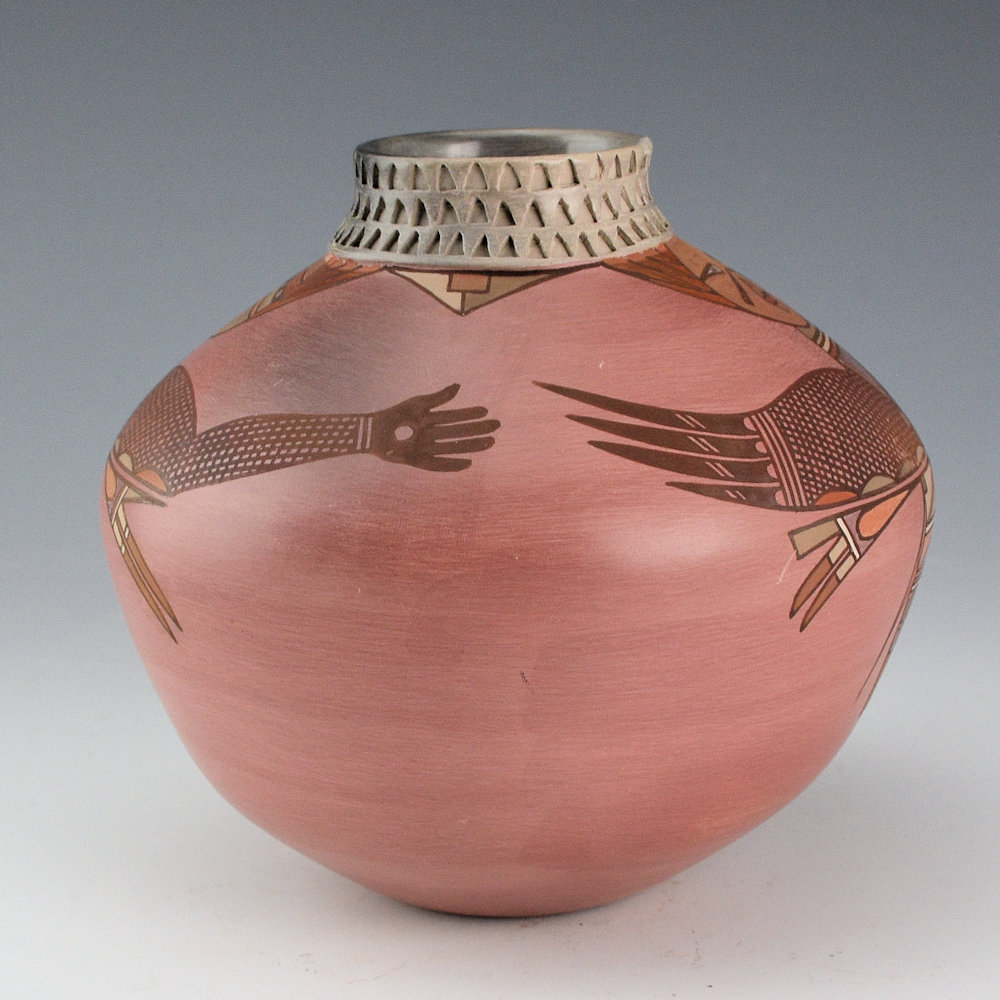
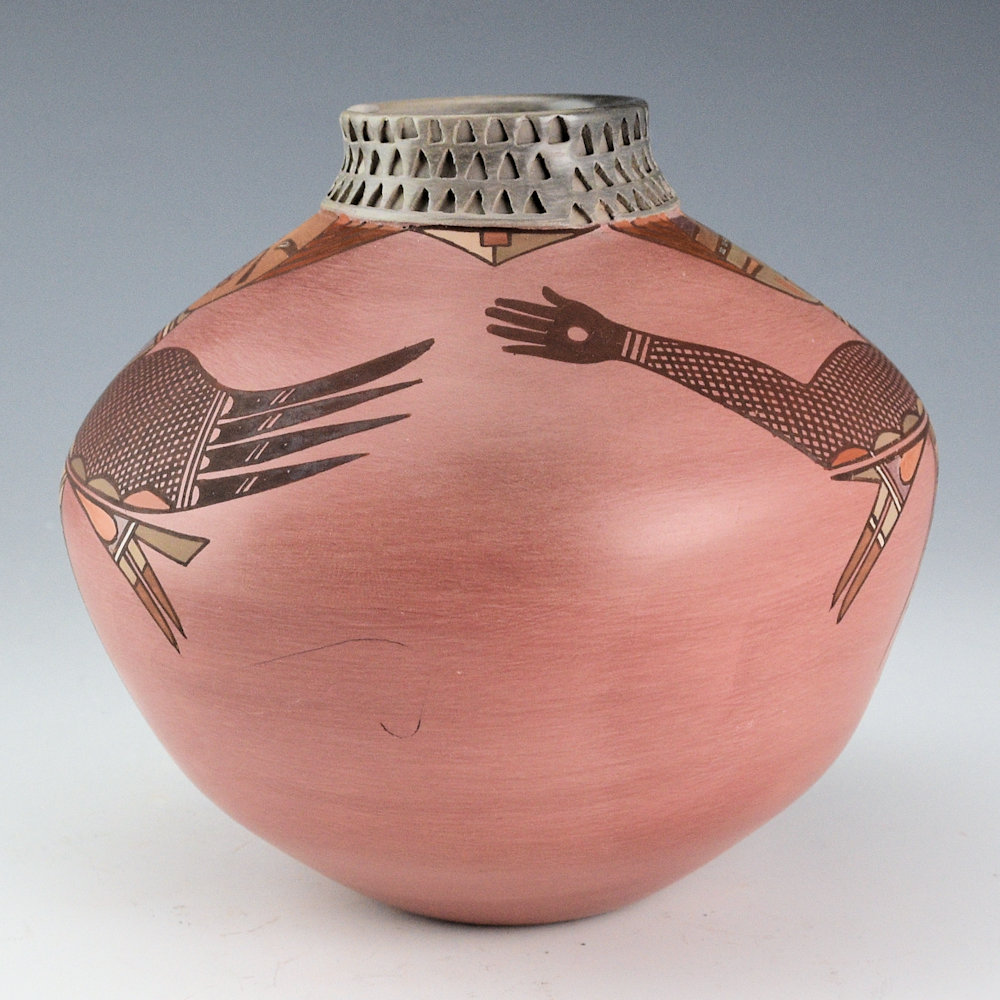
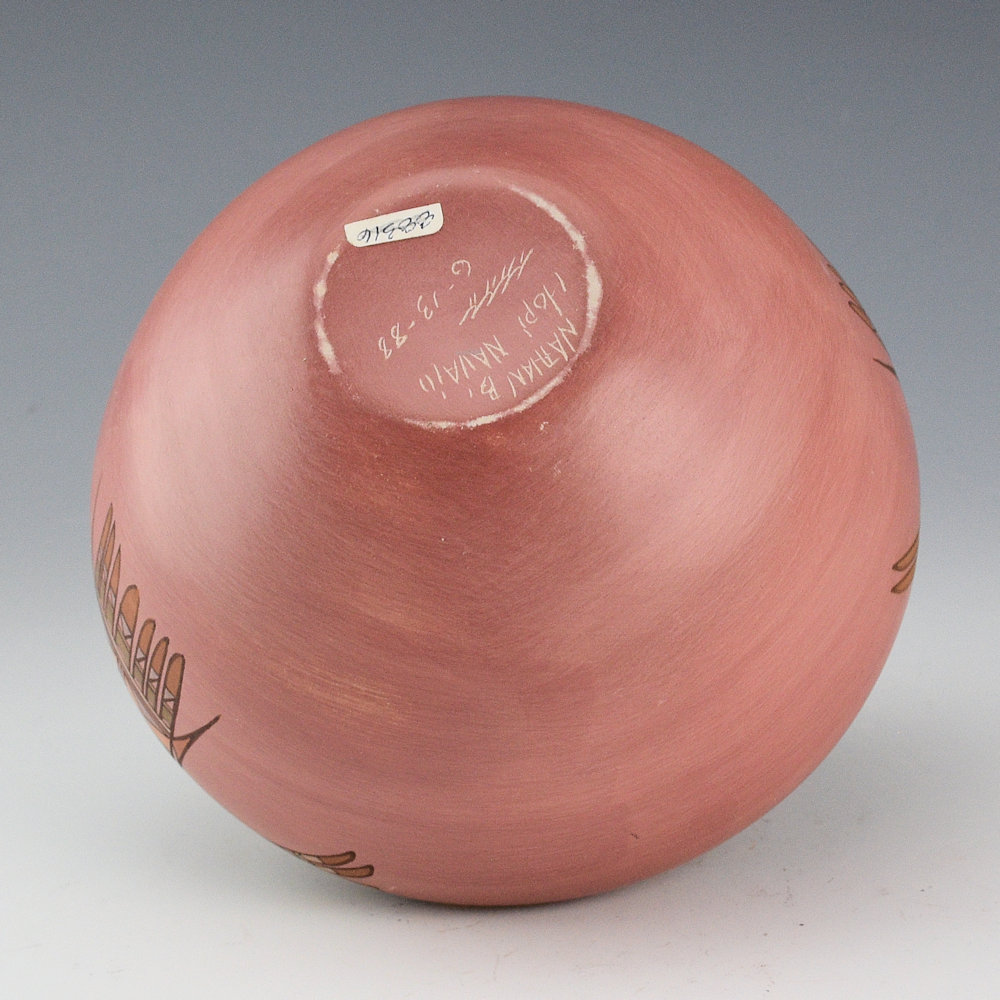
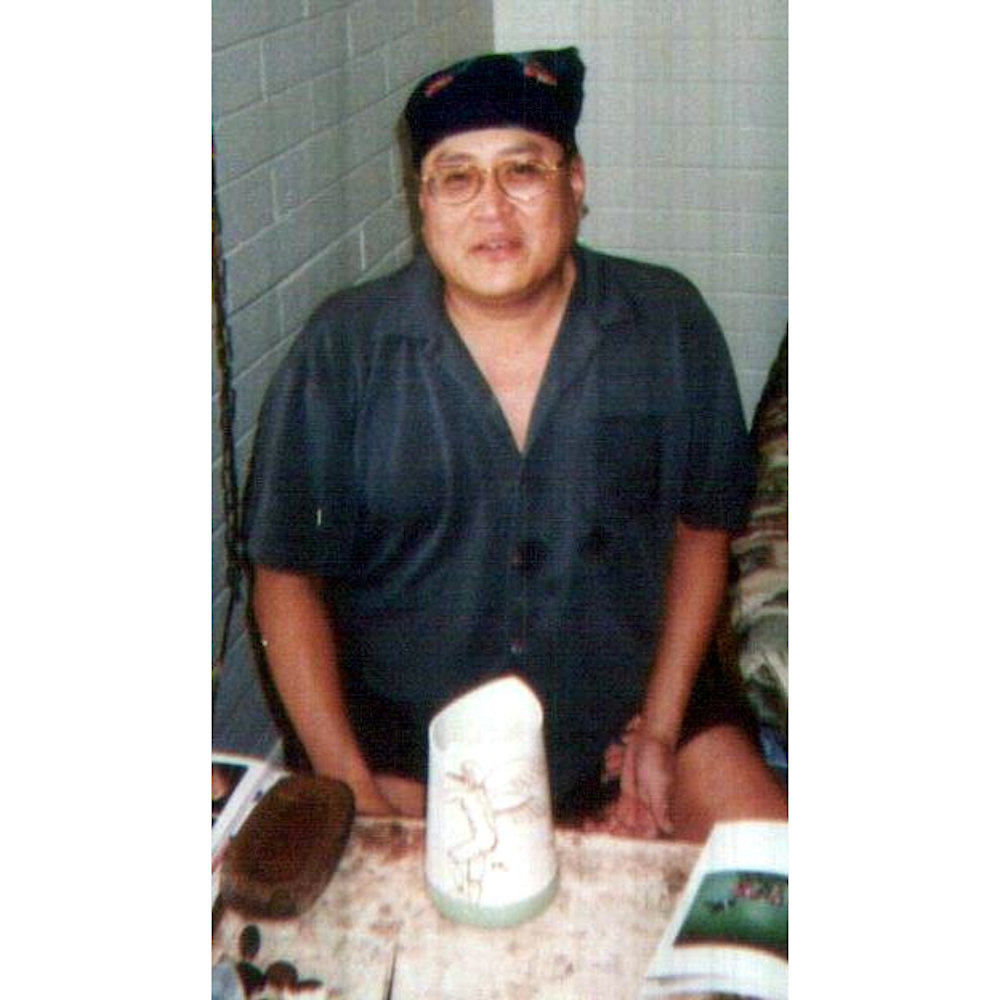
This is an exceptional polychrome jar by Nathan Begaye. He was a unique innovator among Pueblo and Navajo potters. His ethnic connection to both Hopi and Navajo let his clay art flow between the two distinctive styles and yet find its own unique space. His work used traditional designs, forms, and techniques, yet somehow appeared very modern. This jar has a round shoulder and short, corrugated neck. The body of the jar is slipped with a mauve colored clay and polished. On one side is a stylized Eagle katsina, and the other has a Sun Katsina. Each is very detailed and they are pianted with a variety of colors of clay. The black is bee-weed (a plant). It is an extraordinary number of colors on this piece and the result is quite spectacular. I remember going to Nathan’s apartment when he lived in Phoenix. I would watch him work on painting his pottery. He would talk about each of the colors, and some were more difficult to source than others. The purple and blues, I remember, were the most difficult to find. The jar was traditionally fired to create the blushes on the surface. It is in very good condition with no chips, cracks, restoration, or repair. It is signed on the bottom, “Nathan Begaye”. It is from 1988. The last photo is a picture I took of Nathan when he was living in Phoenix. He moved there for several years, and I would go to his apartment and see what he was working on and hear the stories about his pottery, the clays, and his firings.
In stock
This is a creative polychrome jar by Nathan Begaye. He was a unique innovator among Pueblo and Navajo potters. His ethnic connection to both Hopi and Navajo let his clay art flow between the two distinctive styles and yet find its own unique space. His work used traditional designs, forms, and techniques, yet somehow appeared very modern. This jar has a round shoulder and short neck. The inside of the neck is polished red. The jar is painted with Sikyatki bird and a Hopi sun on one side. There is a black painted area with stars. Check out the large birds wings and he painted them so there was a gradation in color across each of the four triangular sections. This is an early piece (1988) and reflects the variety of imagery, textures, and designs for which he would later become famous. There are purple, white, peach, red, teal, orange, blue, and brown clay colors used on this piece. The black is bee-weed (a plant). It is an extraordinary number of colors on this piece and the result is quite spectacular. I remember going to Nathan’s apartment when he lived in Phoenix. I would watch him work on painting his pottery. He would talk about each of the colors, and some were more difficult to source than others. The purple and blues, I remember, were the most difficult to find. The jar was traditionally fired to create the blushes on the surface. It is in very good condition with no chips, cracks, restoration, or repair. It is signed on the bottom, “Nathan Begaye”. It is from 1988. The last photo is a picture I took of Nathan when he was living in Phoenix. He moved there for several years, and I would go to his apartment and see what he was working on and hear the stories about his pottery, the clays, and his firings.
Brand
Begaye, Nathan (1958-2010)
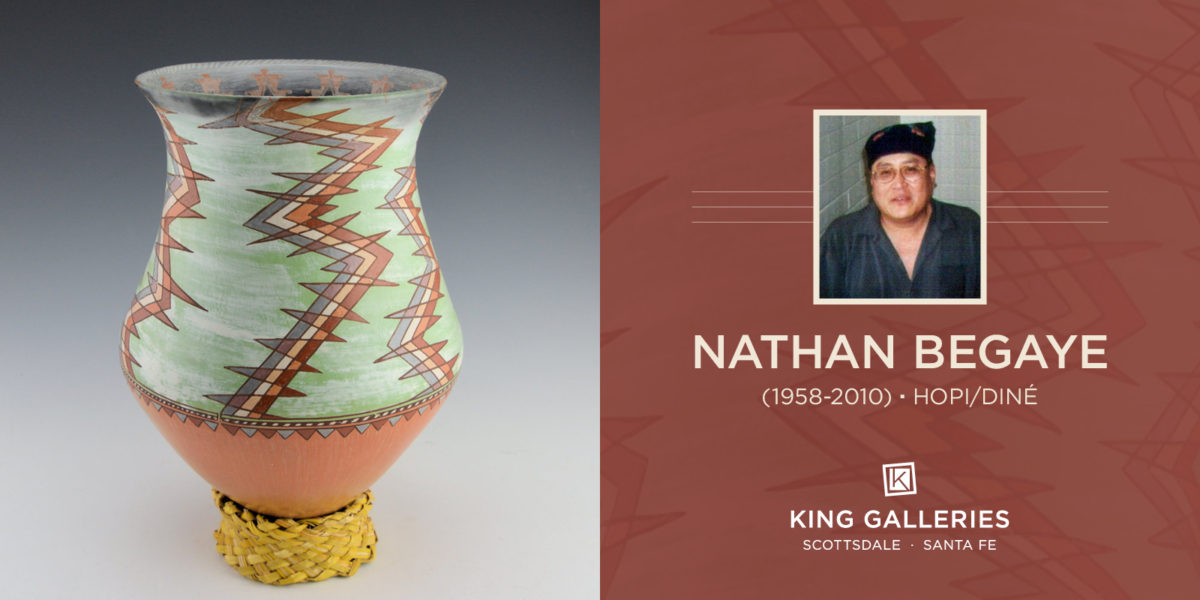 Nathan Begaye was a unique innovator among Pueblo and Navajo potters. His ethnic connection to both Hopi and Navajo let his work flow between the two distinctive styles and yet find their own unique space. His work used traditional designs, forms, and techniques, yet somehow appeared very modern. Nathan was one of the innovators of Native pottery and was featured in numerous books, including "Free Spirit: The New Native American Indian Potter", "Beyond Traditions" and others. His pottery can also be found in the permanent collection of the Heard and other museums.