

Lonewolf, Joseph – Black Seedpot with Two Deer (1994)
$ 1,200.00
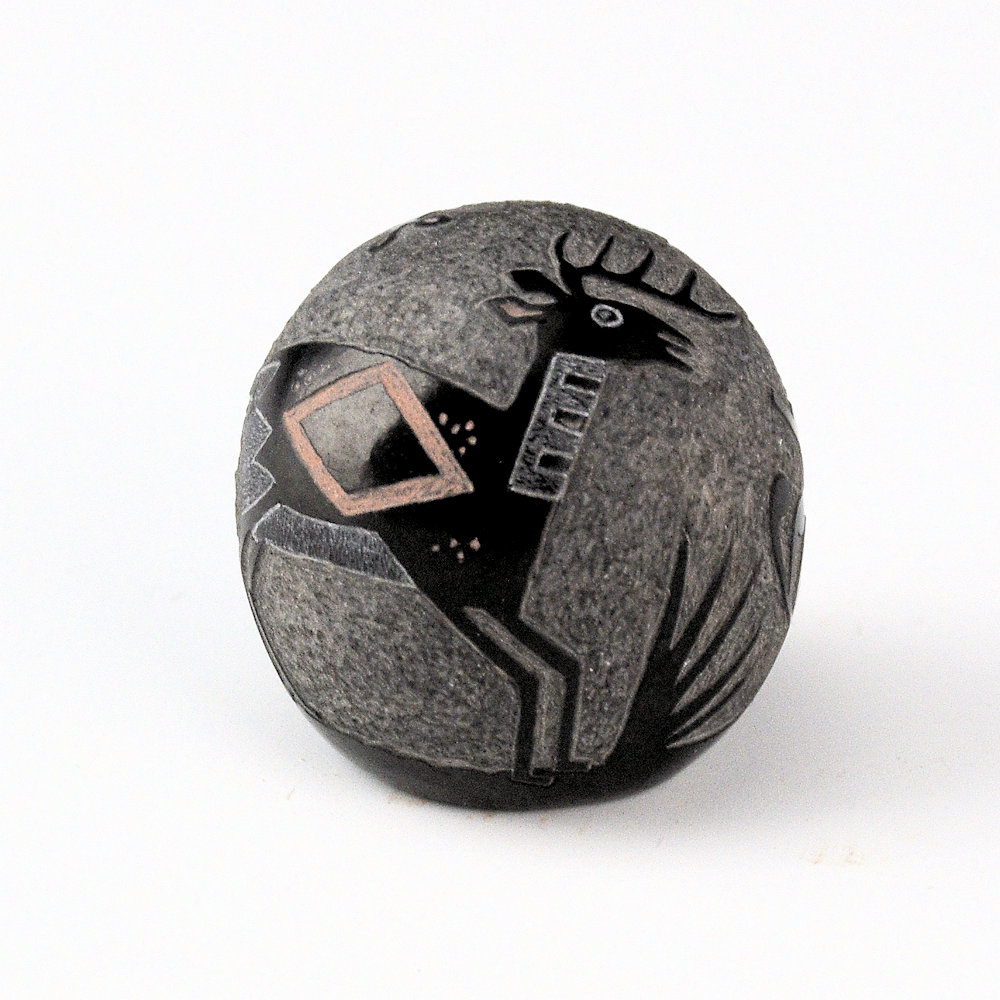
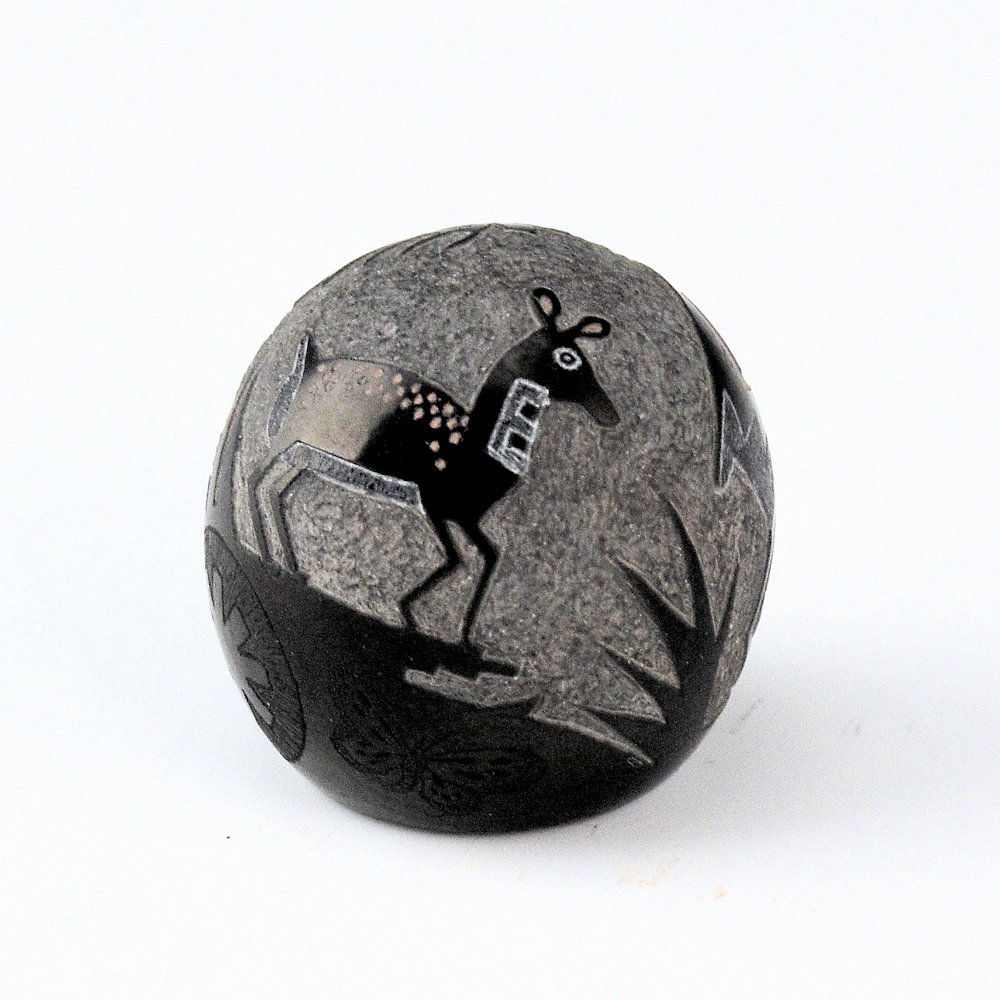
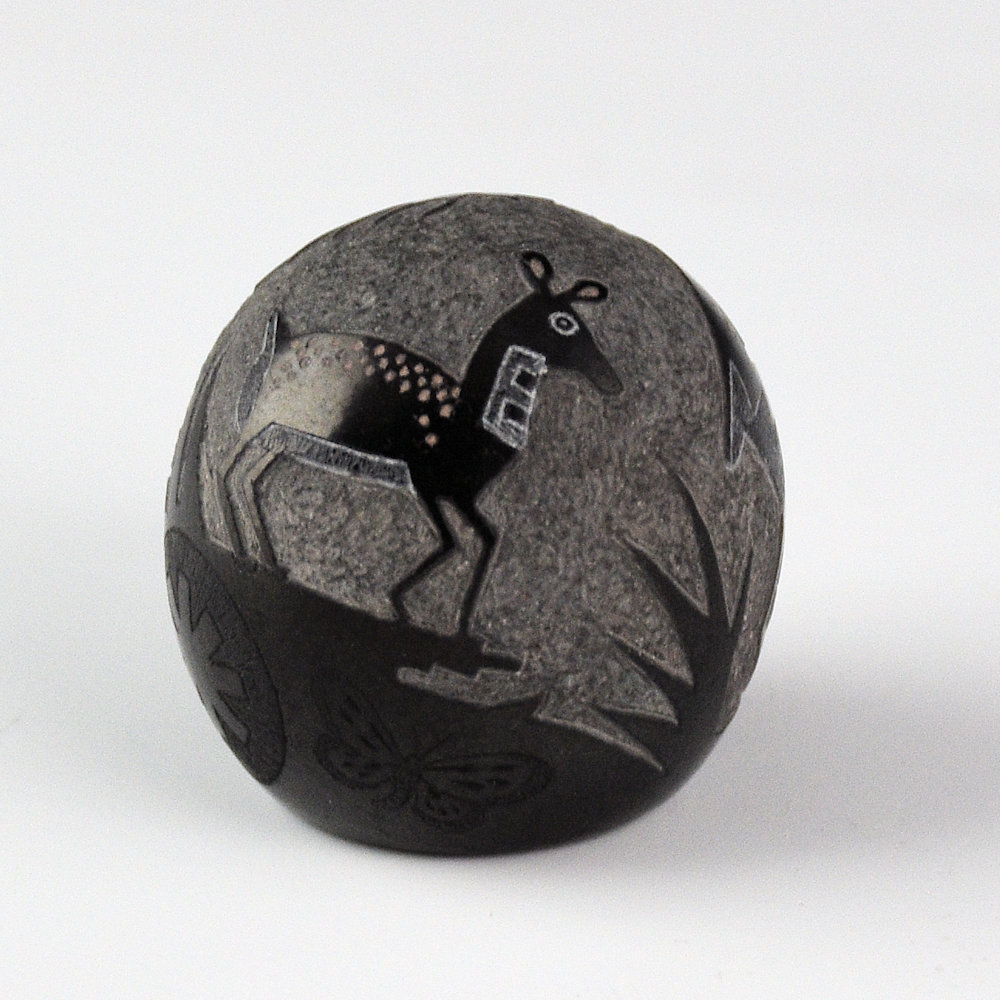
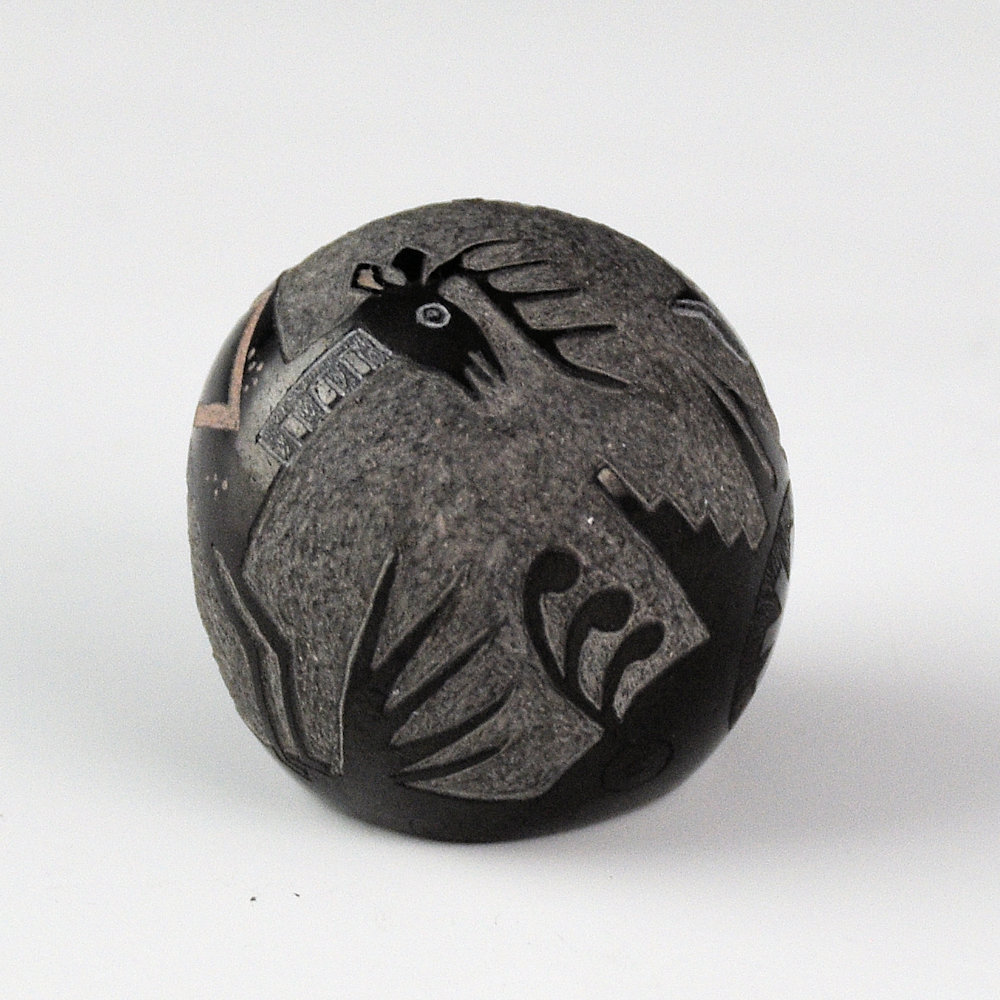
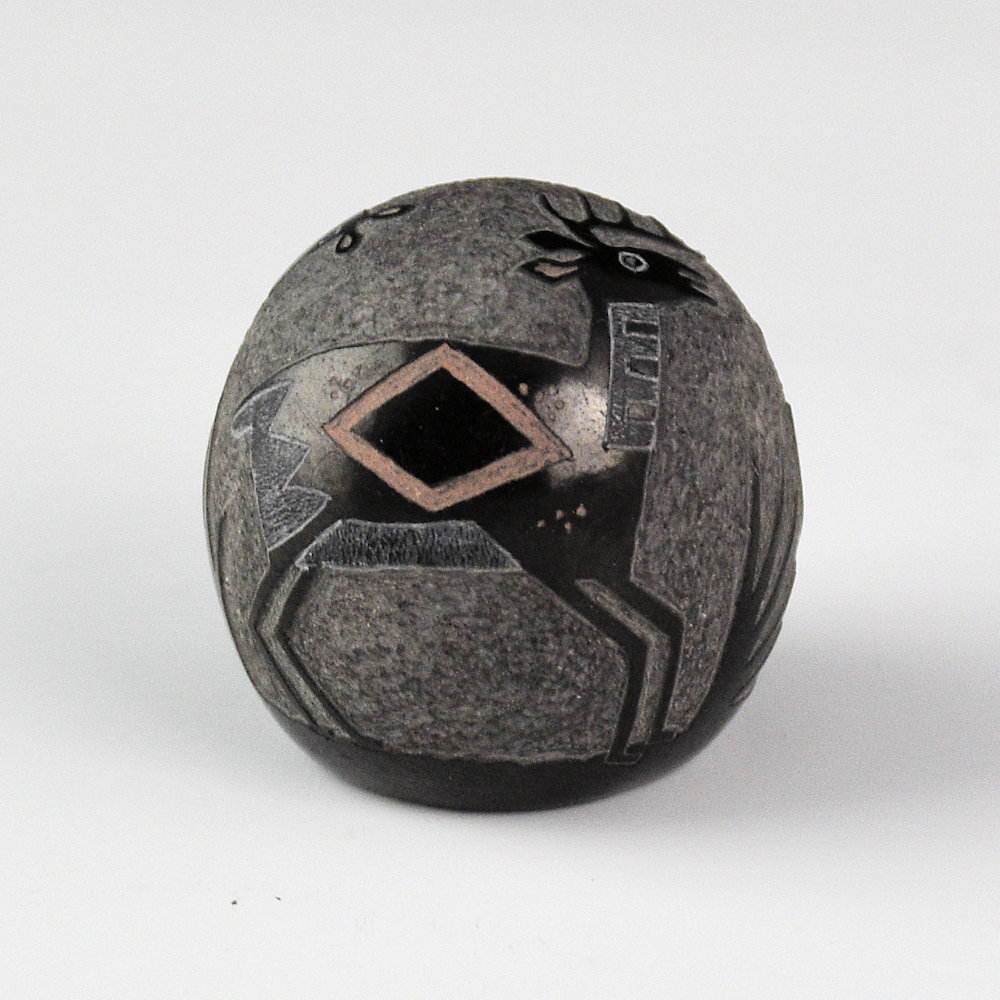
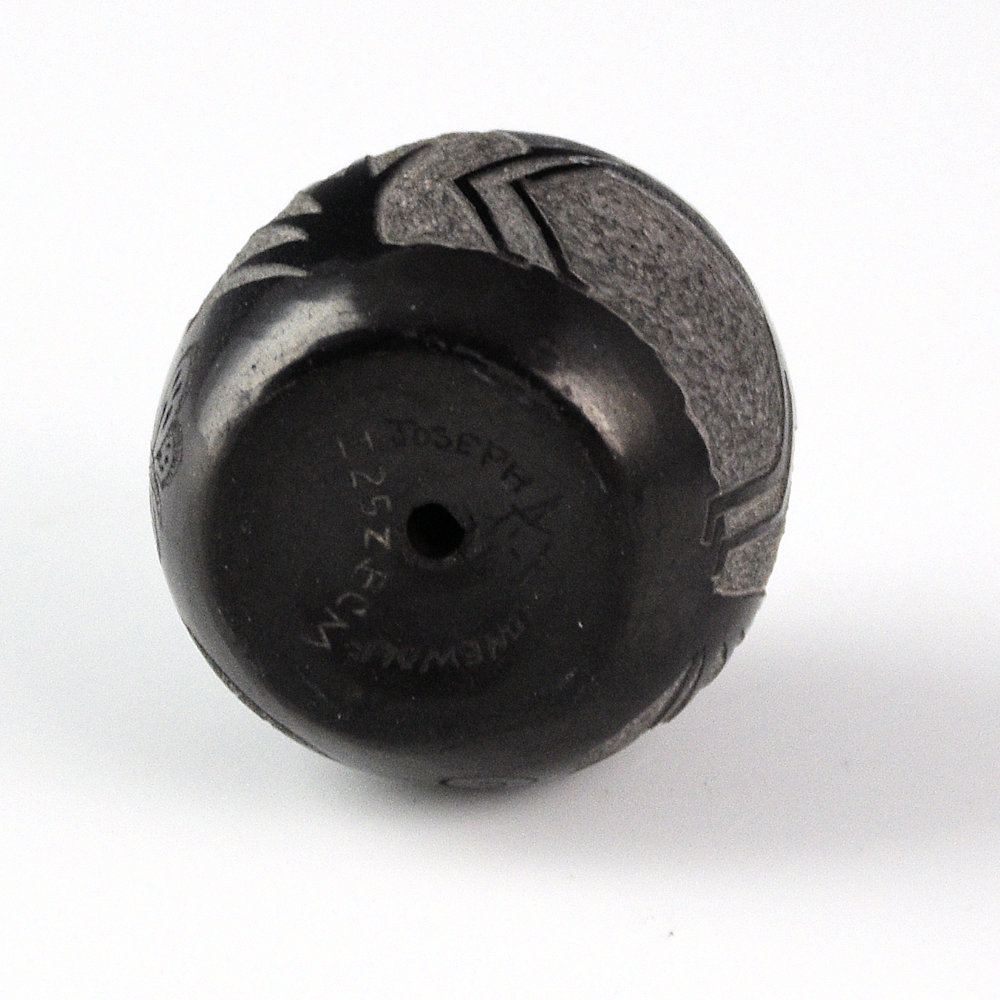
This intricate seedpot by Joseph Lonewolf is from 1994. The piece is one of his few black-fired pieces. It is fully polished and fully designed. There is a buck one one side and a doe on the other. They are each etched with design. There are small plants on the ground. The two deer are highlighted with pink and white clay slips. Near the base, there is a small realistic butterfly along with the yearly symbol for 1994. All the colors are from natural clay slips he would find. It is signed on the bottom. It is in excellent condition with no chips, cracks, restoration or repair.
“I’ve just figured out all over again what potters did centuries ago. But it is NOT new as people like to say it is. Such colors were achieved in pre-history times by my ancestors. I regard the Mimbres as my ancestors. Though I refine their designs, each design must have meaning for me. In my dreams, I see how to use the design, and how to make the pot happen. Then when I work with the clay, everything flows. Some people wonder why I keep changing styles, colors, and forms. But I can’t just sit there and make pots. Like any artist, I must try different things and different techniques. I must meet the challenge with my hands. The patterns and the methods I see in my mind during my dreams.” —Joseph Lonewolf, Spoken Through Clay
In stock
This intricate seedpot by Joseph Lonewolf is from 1994. The piece is one of his few black-fired pieces. It is fully polished and fully designed. There is a buck one one side and a doe on the other. They are each etched with design. There are small plants on the ground. The two deer are highlighted with pink and white clay slips. Near the base, there is a small realistic butterfly along with the yearly symbol for 1994. All the colors are from natural clay slips he would find. It is signed on the bottom. It is in excellent condition with no chips, cracks, restoration or repair.
“It gives me a funny feeling when people tell me I’ve done something brand new and different. I’ve just figured out all over again what potters did centuries ago. But it is NOT new as people like to say it is. Such colors were achieved in pre-history times by my ancestors. I regard the Mimbres as my ancestors. Though I refine their designs, each design must have meaning for me. In my dreams, I see how to use the design, and how to make the pot happen. Then when I work with the clay, everything flows. Some people wonder why I keep changing styles, colors, and forms. But I can’t just sit there and make pots. Like any artist, I must try different things and different techniques. I must meet the challenge with my hands. The patterns and the methods I see in my mind during my dreams.” —Joseph Lonewolf, Spoken Through Clay
Brand
Lonewolf, Joseph (1932-2014)
Joseph Lonewolf
 Joseph Lonewolf was a son of noted potters Camilio and Agapita Tafoya and the brother of Grace Medicine Flower. In the early 1970s, Joseph revolutionized the world of Santa Clara pottery by incorporating his sgraffito (lightly etching the surface of the clay) and incised (more deeply cut into the clay) designs in his work.
When Joseph and his family gather clay, they do it with the utmost respect. Before the clay can be taken from Mother Earth, they must say a prayer, asking to take the clay and tell the clay mother that they will take her and make her into a beautiful pot. The clay is brought home, and water is added to turn the clay into a liquid form known as slip. The slip is then strained to take out any rocks or debris, and then the clay can be dried, kneaded, and used.
Joseph was awarded numerous awards throughout his career, and his work can be found in museums worldwide. He has been featured in multiple books, including "The Art of Clay." He received the prestigious New Mexico Governor's Award for Excellence in the Arts in 2009 and the SWAIA Lifetime Achievement Award.
Joseph Lonewolf was a son of noted potters Camilio and Agapita Tafoya and the brother of Grace Medicine Flower. In the early 1970s, Joseph revolutionized the world of Santa Clara pottery by incorporating his sgraffito (lightly etching the surface of the clay) and incised (more deeply cut into the clay) designs in his work.
When Joseph and his family gather clay, they do it with the utmost respect. Before the clay can be taken from Mother Earth, they must say a prayer, asking to take the clay and tell the clay mother that they will take her and make her into a beautiful pot. The clay is brought home, and water is added to turn the clay into a liquid form known as slip. The slip is then strained to take out any rocks or debris, and then the clay can be dried, kneaded, and used.
Joseph was awarded numerous awards throughout his career, and his work can be found in museums worldwide. He has been featured in multiple books, including "The Art of Clay." He received the prestigious New Mexico Governor's Award for Excellence in the Arts in 2009 and the SWAIA Lifetime Achievement Award.