

Nampeyo, Elva Tewaguna – 11″ Wide Jar with 14 Bird Wing Migration Pattern (1960s)
$ 1,500.00
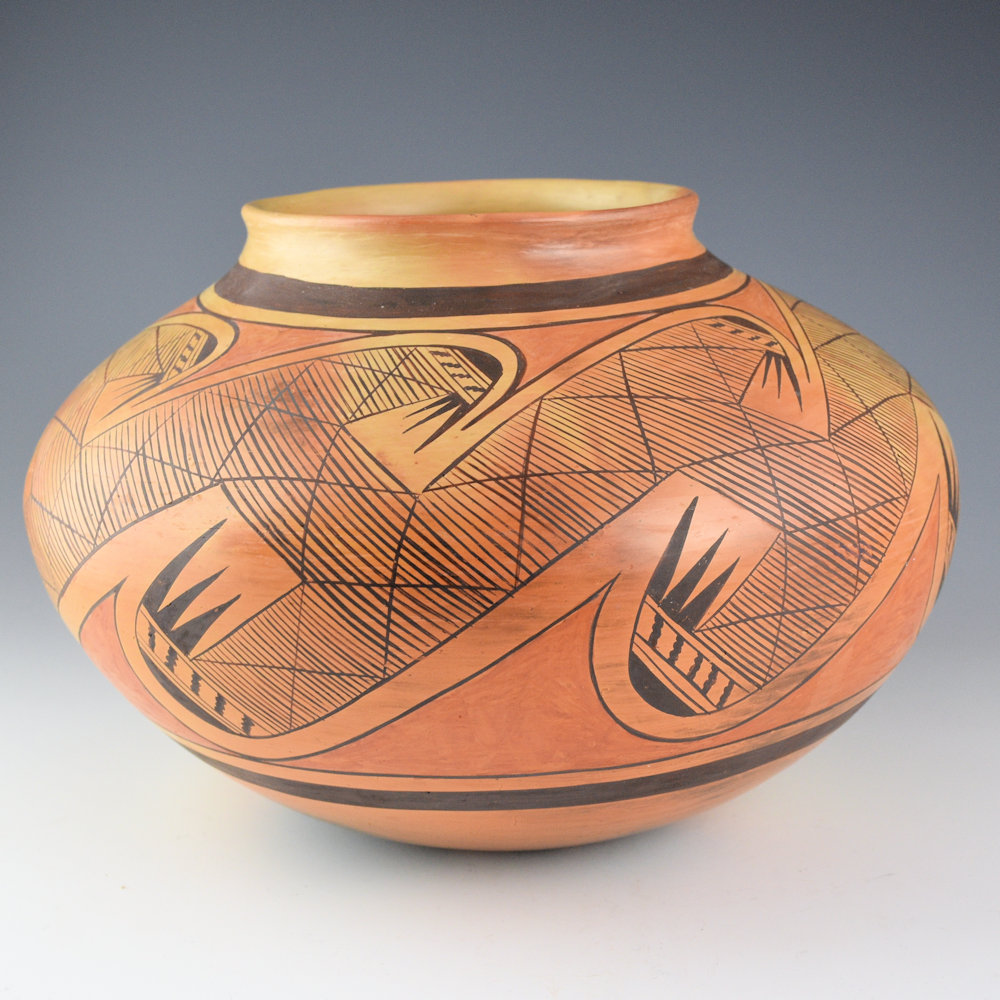
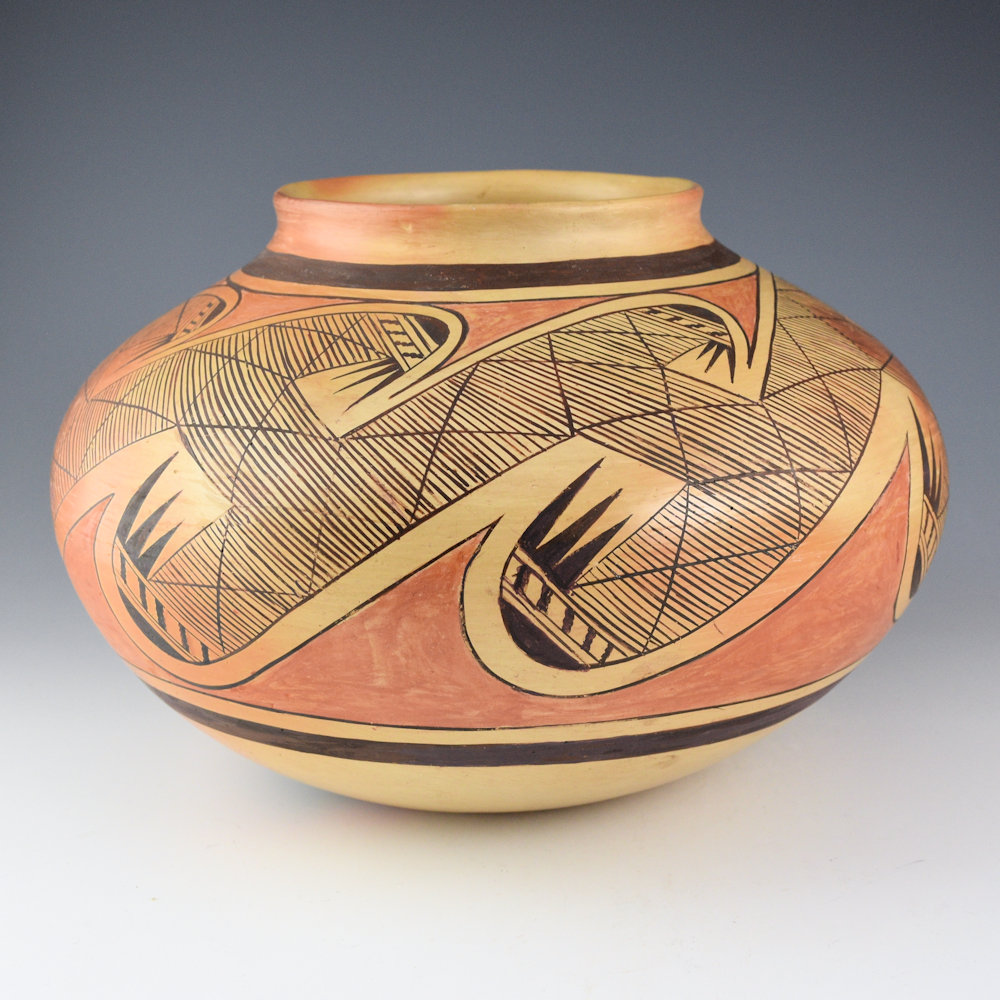
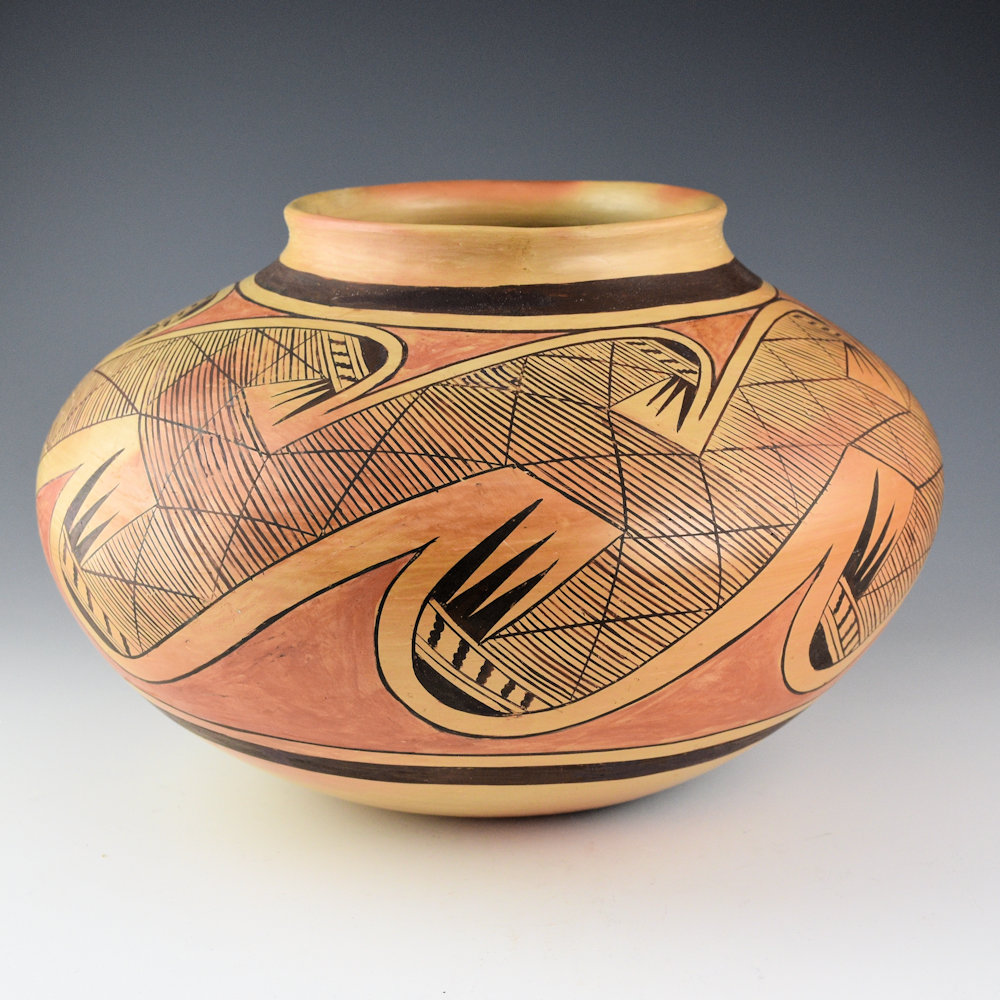
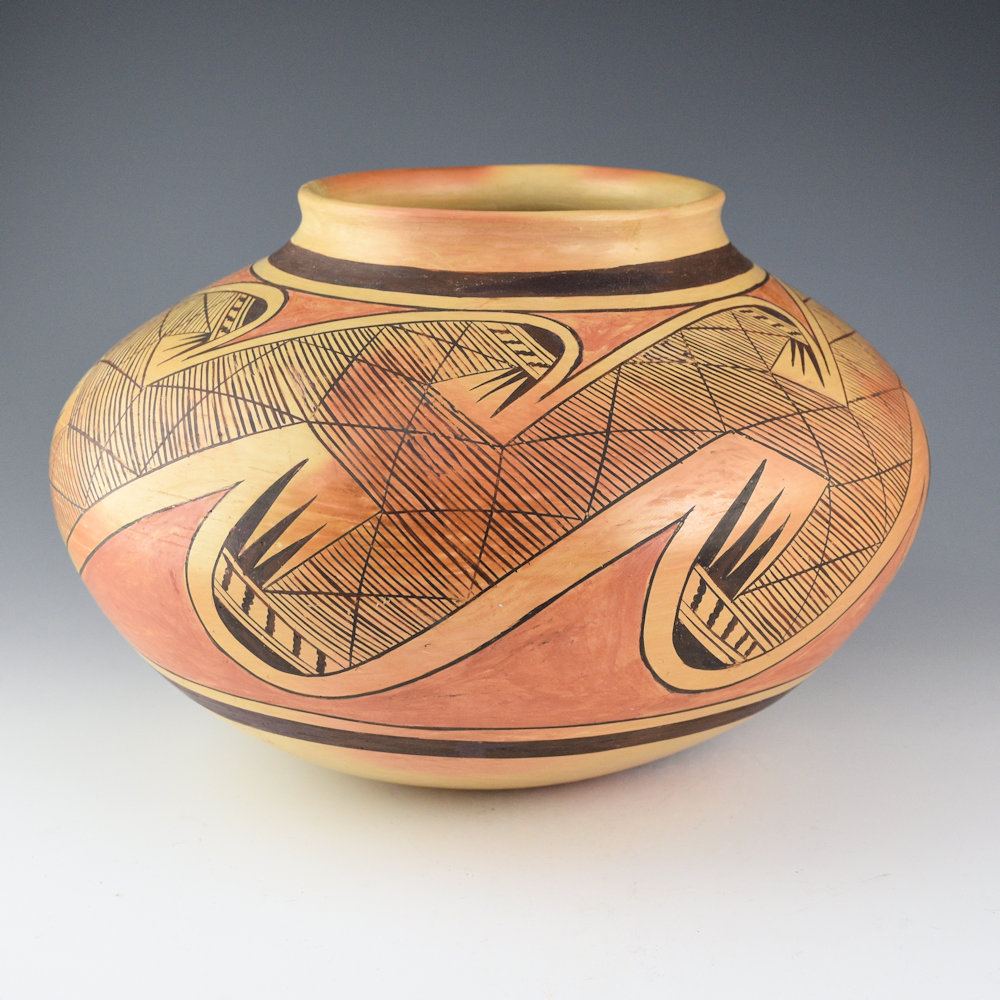
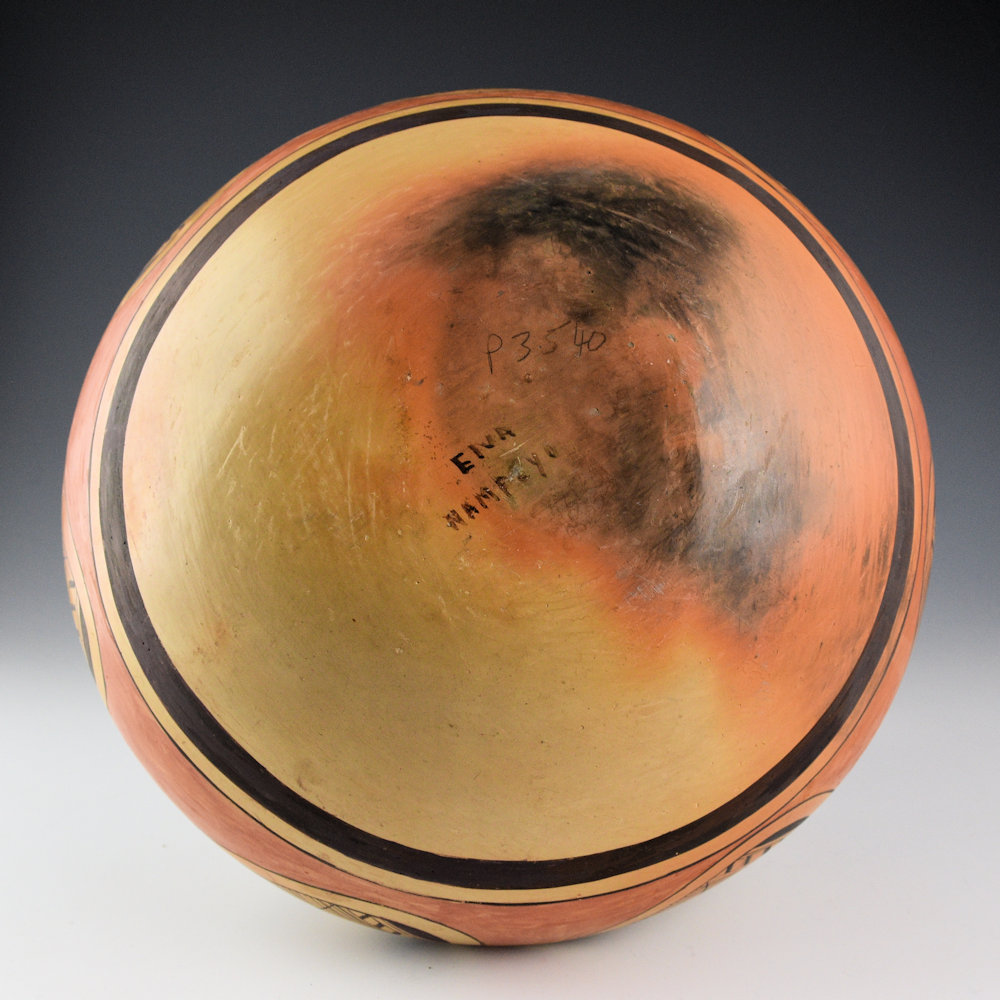
Elva Tewaguna Namepyo was a daughter of Fannie Nampeyo, a granddaughter of the Nampeyo of Hano, and a sister of Iris and Tonita Nampeyo and Thomas Polacca. Her pottery was coil-built, stone polished, and painted with bee-weed and natural clay slips. This jar is one of the largest we have had of her work. It has a round shape and a small, turned out rim. The jar has a migration pattern that is a series of bird wings with connecting lines. There are 7 bird wings above the shoulder and 7 below, for a total of 14! Each wing connects to the next with thin lines. The jar was traditionally fired to create the blushes on the surface. It is signed on the bottom, “Elva Nampeyo”. It is in excellent condition with no chips, cracks, restoration, or repair. Her daughter Adelle Nampeyo continues in the same family tradition.
Dextra Quotskuyva Nampeyo said of the migration pattern:
“This is the one design that was really stressed for us to use, the migration pattern. Nothing but lines, representing the migration of all the people to all the places, including down below and up above. It has seven points at the top and bottom. All the x’s represent life from the bottom and top, telling you the universe is one. The thin lines, I just wanted to paint them real fast and real close to try and include everyone.” Dextra Quotskuyva Nampeyo, Spoken Through Clay
In stock
Elva Tewaguna Namepyo was a daughter of Fannie Nampeyo, a granddaughter of the Nampeyo of Hano, and a sister of Iris and Tonita Nampeyo and Thomas Polacca. Her pottery was coil-built, stone polished, and painted with bee-weed and natural clay slips. This jar is one of the largest we have had of her work. It has a round shape and a small, turned out rim. The jar has a migration pattern that is a series of bird wings with connecting lines. There are 7 bird wings above the shoulder and 7 below, for a total of 14! Each wing connects to the next with thin lines. The jar was traditionally fired to create the blushes on the surface. It is signed on the bottom, “Elva Nampeyo”. It is in excellent condition with no chips, cracks, restoration, or repair. Her daughter Adelle Nampeyo continues in the same family tradition.
Dextra Quotskuyva Nampeyo said of the migration pattern:
“This is the one design that was really stressed for us to use, the migration pattern. Nothing but lines, representing the migration of all the people to all the places, including down below and up above. It has seven points at the top and bottom. All the x’s represent life from the bottom and top, telling you the universe is one. The thin lines, I just wanted to paint them real fast and real close to try and include everyone.” Dextra Quotskuyva Nampeyo, Spoken Through Clay
Brand
Nampeyo, Elva Tewaguna(1926-1985)
 Elva Nampeyo was born in the Corn Clan house where her grandmother Nampeyo of Hano lived, in First Mesa at Hopi. She was a daughter of Fannie Nampeyo and Vinton Polacca. As a child she watched her grandmother make pottery and when she was 11 her mother taught her to make pottery.
Elva became an expert at decorating and painting pottery. Her husband, Richard Tewaguna, never became involved in her pottery making. She specialized in black and red on yellow bowls and jars with traditional migration designs and eagle motifs. Her pieces most often resembled the works of her mother and grandmother. On occasion she could be persuaded to break from tradition and try some designs of her own invention. During her later years when she was no longer able to finish her work, her daughter Adelle would polish, decorate and fire the pottery for her. Elva signed her pottery as "Elva Nampeyo" followed by the corn clan symbol which was initiated by her mother Fannie.
Elva had five children of which four are potters including Neva, Elton, Miriam and Adelle. All sign their work with their first names followed by "Nampeyo" and an ear of corn.
Elva Nampeyo was born in the Corn Clan house where her grandmother Nampeyo of Hano lived, in First Mesa at Hopi. She was a daughter of Fannie Nampeyo and Vinton Polacca. As a child she watched her grandmother make pottery and when she was 11 her mother taught her to make pottery.
Elva became an expert at decorating and painting pottery. Her husband, Richard Tewaguna, never became involved in her pottery making. She specialized in black and red on yellow bowls and jars with traditional migration designs and eagle motifs. Her pieces most often resembled the works of her mother and grandmother. On occasion she could be persuaded to break from tradition and try some designs of her own invention. During her later years when she was no longer able to finish her work, her daughter Adelle would polish, decorate and fire the pottery for her. Elva signed her pottery as "Elva Nampeyo" followed by the corn clan symbol which was initiated by her mother Fannie.
Elva had five children of which four are potters including Neva, Elton, Miriam and Adelle. All sign their work with their first names followed by "Nampeyo" and an ear of corn.