


Polacca, Thomas – 11″ Wide Bowl with Two Hano Katsinas (1985)
$ 1,800.00
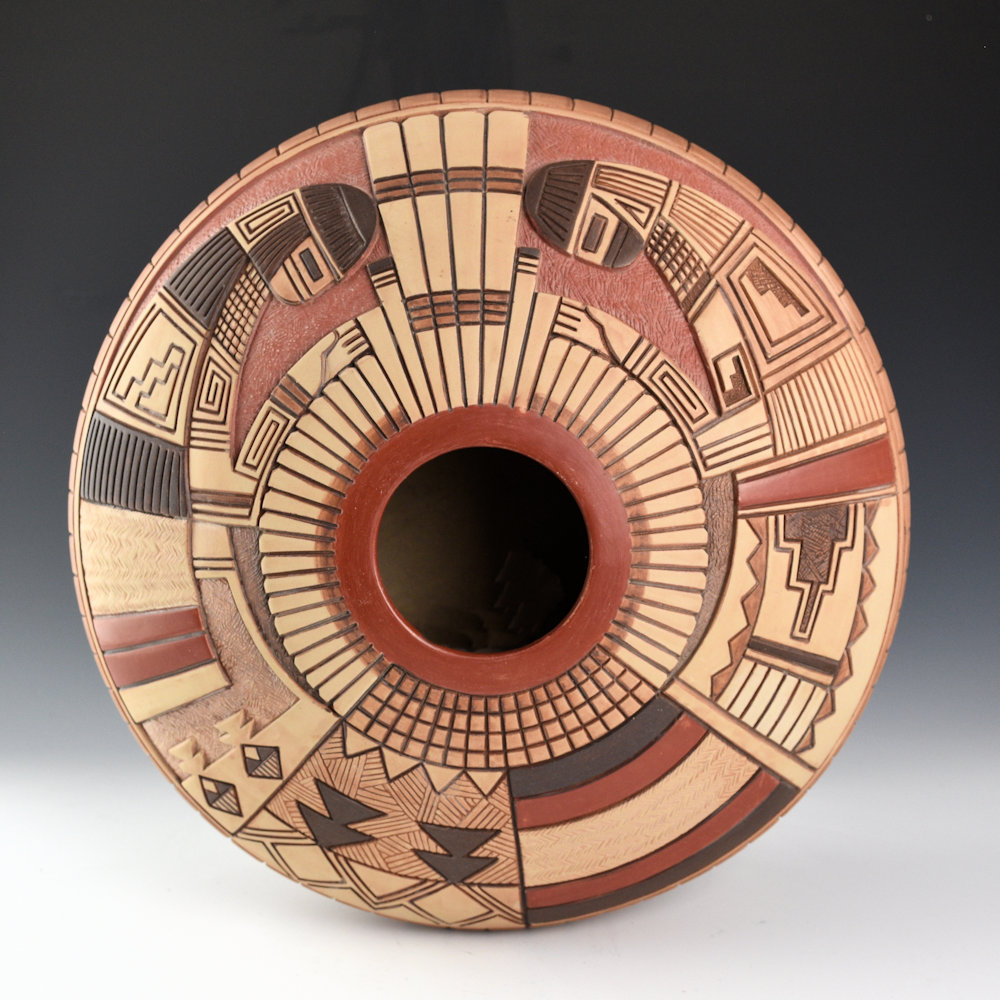
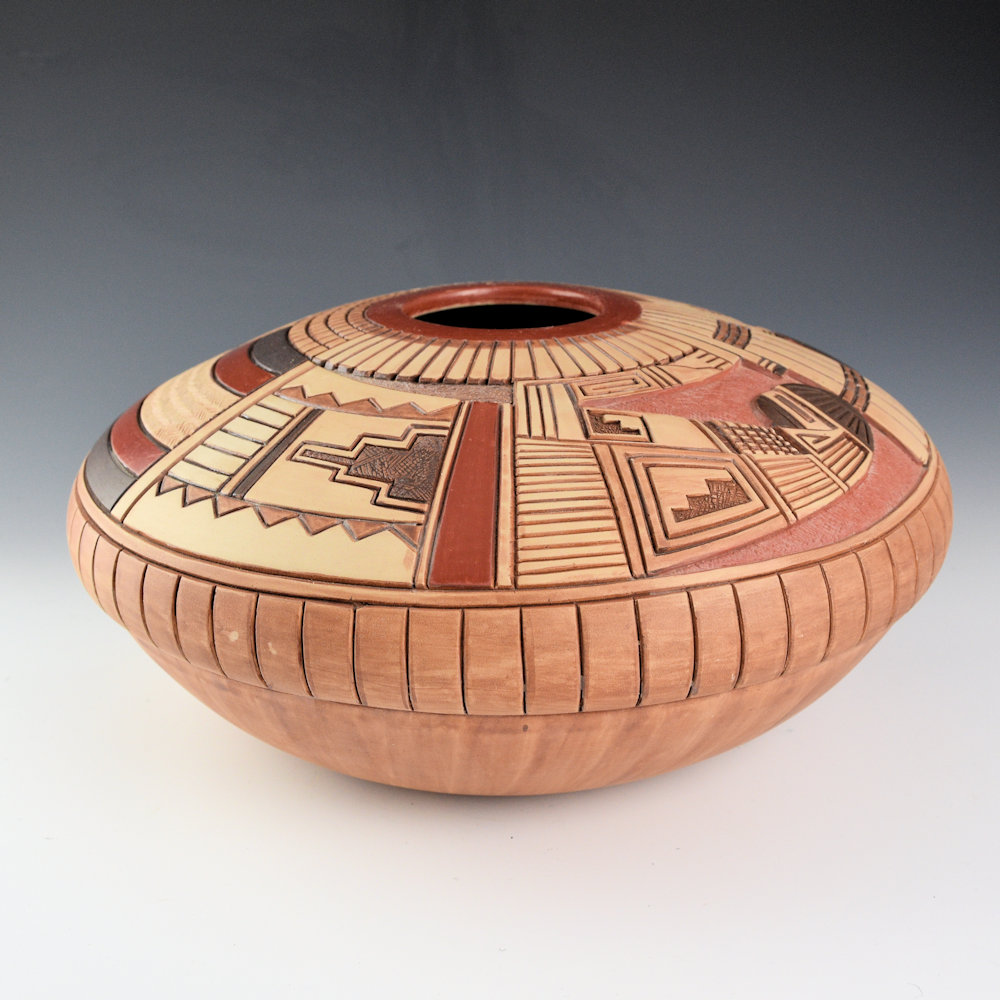
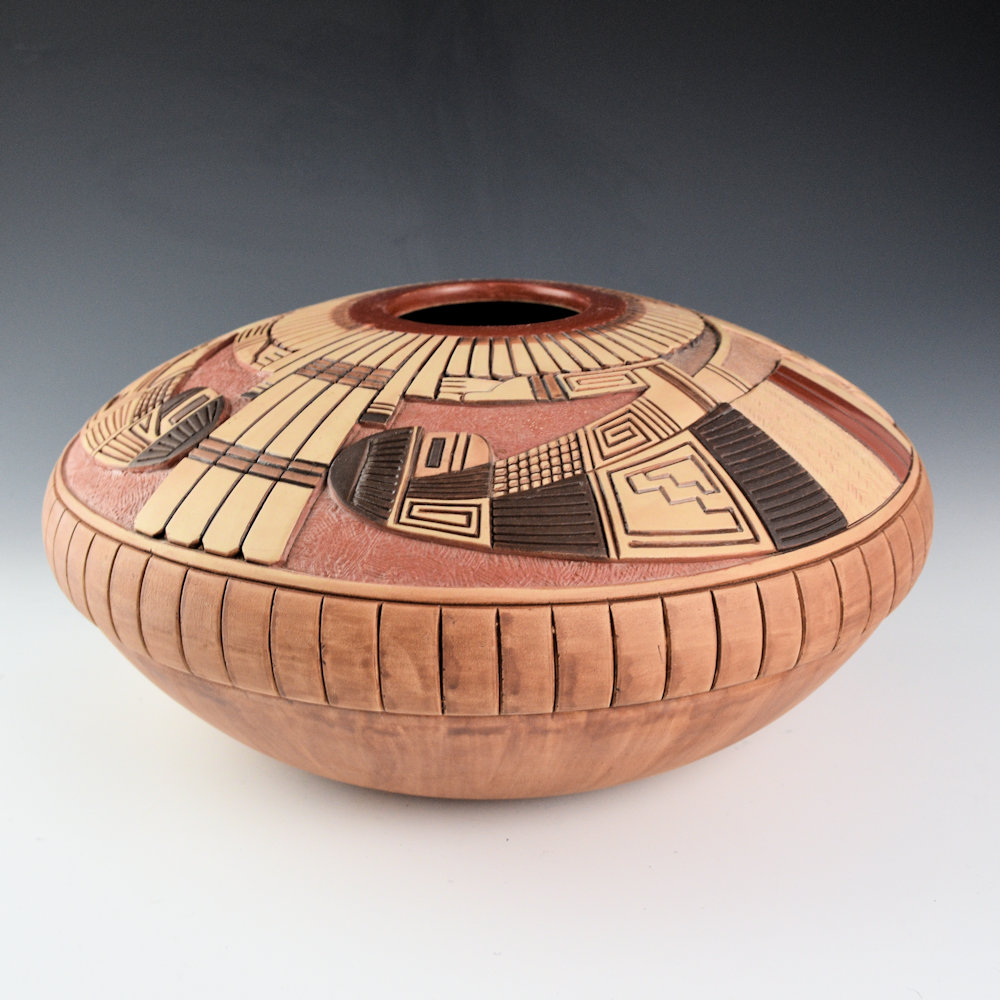
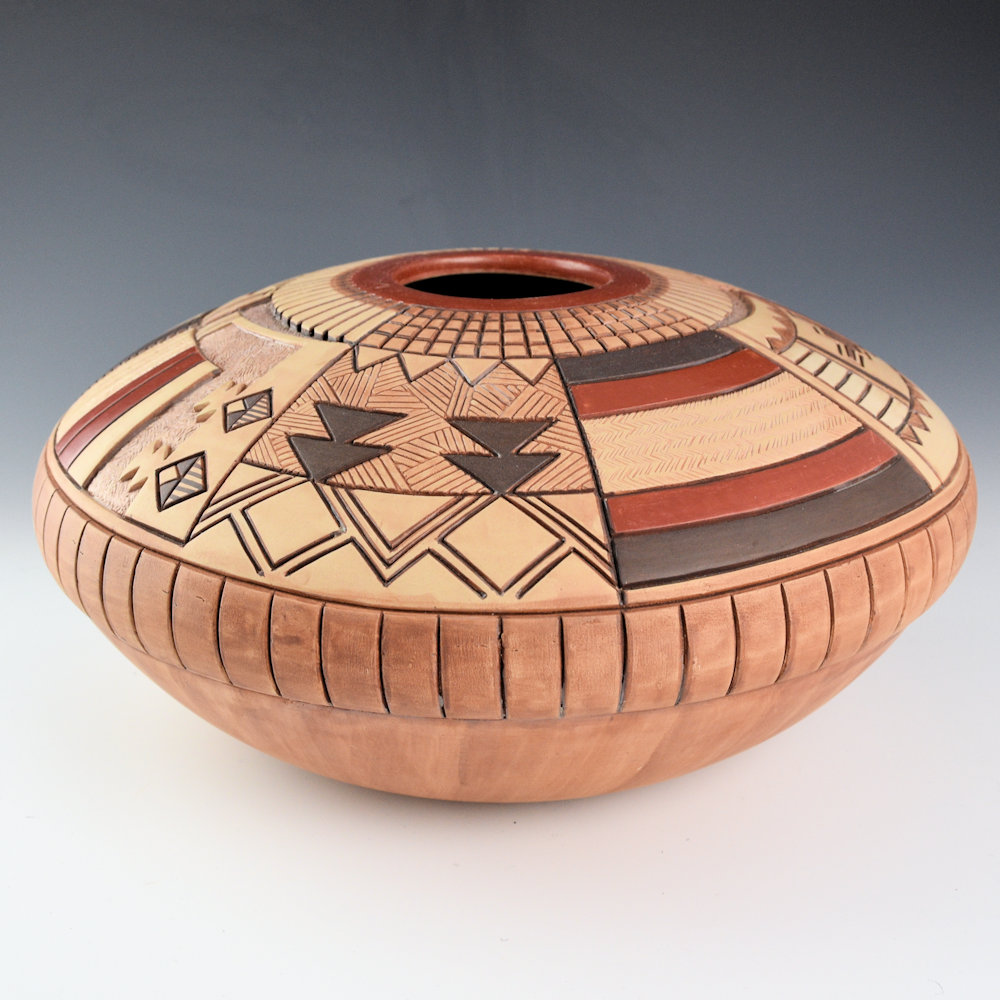
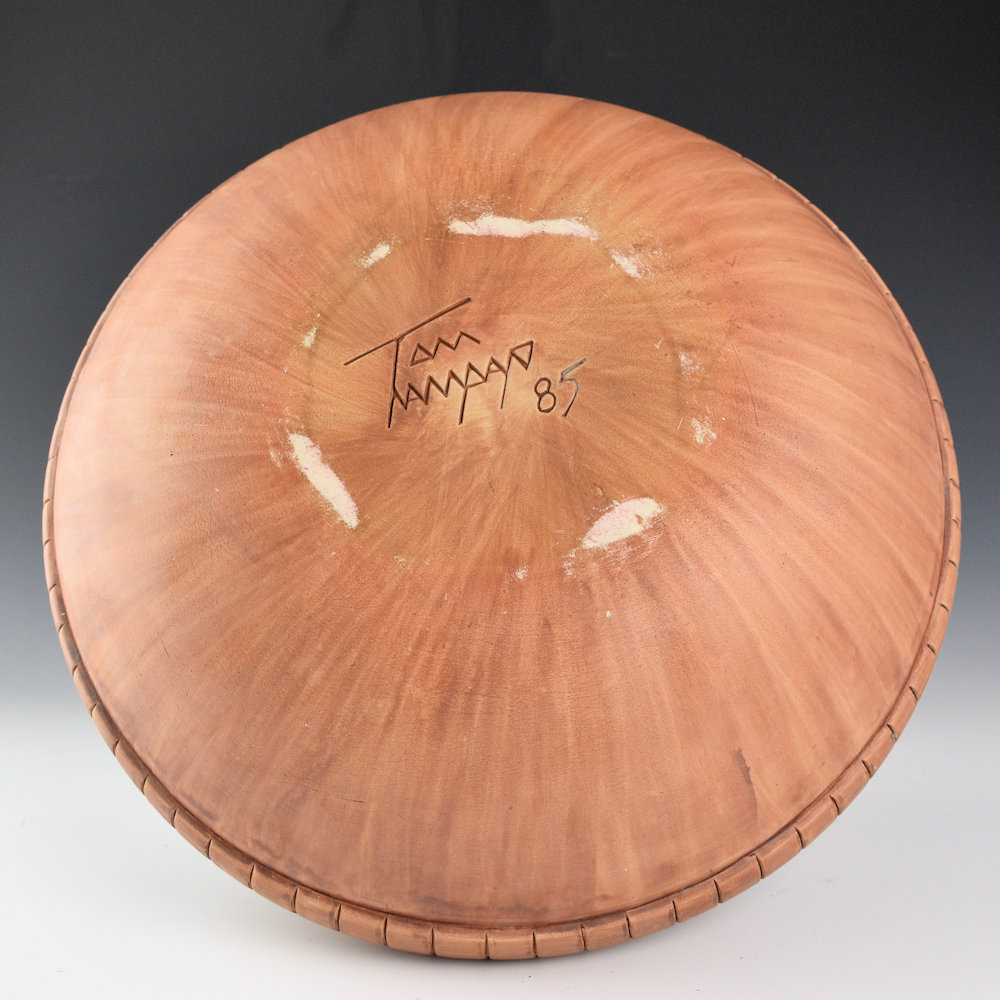
This is an exceptional carved large bowl by Thomas Polacca. Thomas was a son of noted potter Fannie Nampeyo and a grandson of Nampeyo of Hano. He is considered among the first men to begin making pottery at Hopi in the 1970s. Interestingly, the men initially did not use the traditional Sikyatki painted designs but followed other directions in their pottery. This bowl is a great example of Thomas Polacca at his peak. The bowl has two large Hano Katsinas on the top side. They are deeply carved into the clay at various levels. The lower half of the bowl has three different shawl designs used in various dances. The deep red areas of the bowl are stone polished to a high shine. This is something he rarely combined with his deeply carved figures. The center has carved feathers, prayer feathers, and corn. The side of the bowl has a carved feather design. It is a striking combination of designs, carving, and coloration. The bowl was traditionally fired to create slight blushes on the surface. It certainly captures the skill and carving abilities of Thomas as he was creating this innovative new style of Hopi-Tewa pottery. The bowl is in very good condition with no chips, cracks, restoration, or repair. The piece is signed on the bottom in the clay, “Tom Nampeyo”. It is from 1985..
Out of stock
This is an exceptional carved large bowl by Thomas Polacca. Thomas was a son of noted potter Fannie Nampeyo and a grandson of Nampeyo of Hano. He is considered among the first men to begin making pottery at Hopi in the 1970s. Interestingly, the men initially did not use the traditional Sikyatki painted designs but followed other directions in their pottery. This bowl is a great example of Thomas Polacca at his peak. The bowl has two large Hano Katsinas on the top side. They are deeply carved into the clay at various levels. The lower half of the bowl has three different shawl designs used in various dances. The deep red areas of the bowl are stone polished to a high shine. This is something he rarely combined with his deeply carved figures. The center has carved feathers, prayer feathers, and corn. The side of the bowl has a carved feather design. It is a striking combination of designs, carving, and coloration. The bowl was traditionally fired to create slight blushes on the surface. It certainly captures the skill and carving abilities of Thomas as he was creating this innovative new style of Hopi-Tewa pottery. The bowl is in very good condition with no chips, cracks, restoration, or repair. The piece is signed on the bottom in the clay, “Tom Nampeyo”. It is from 1985..
Brand
Polacca, Thomas (1935 - 2003)
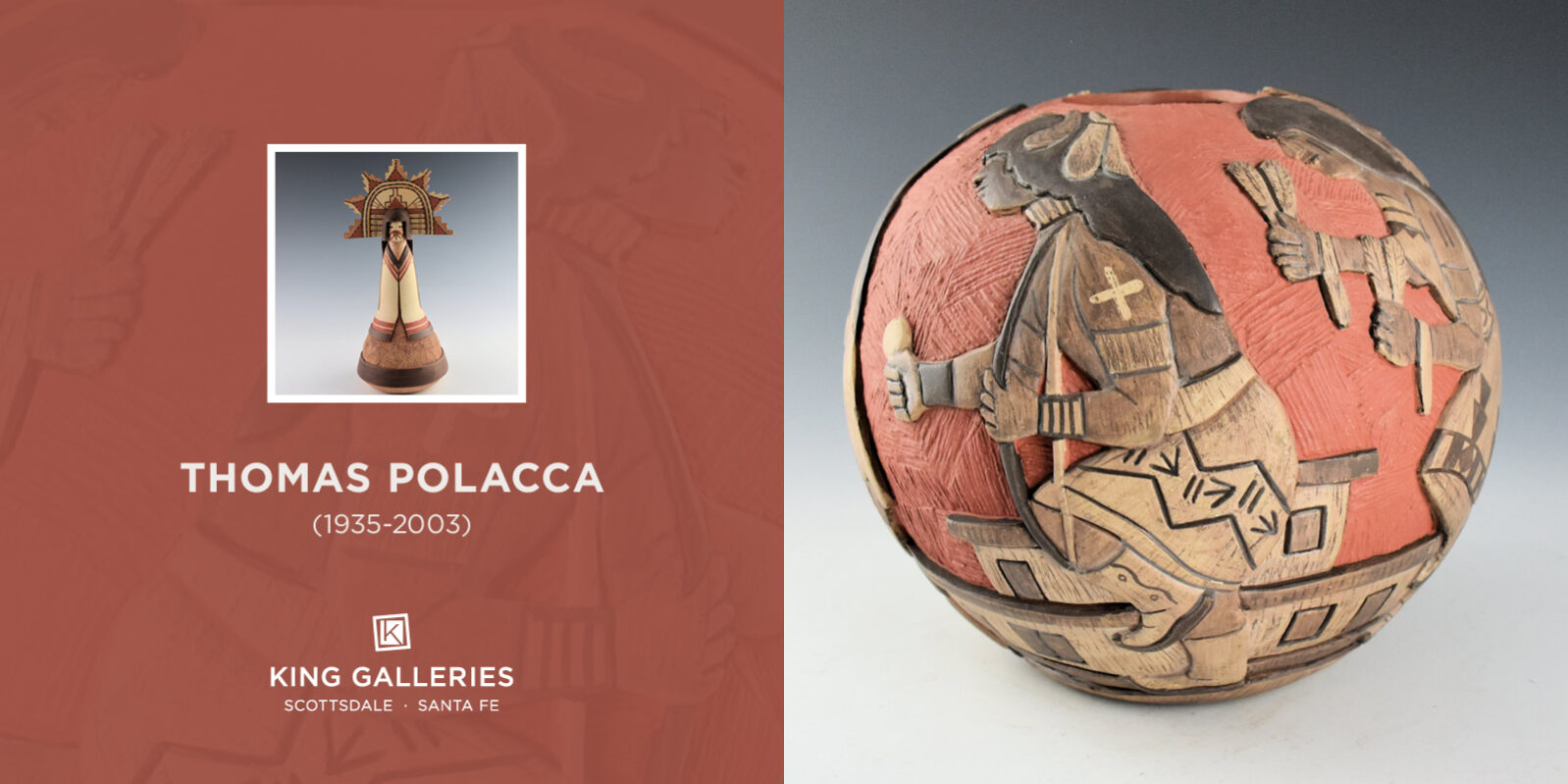 Thomas Polacca was a son of noted potter Fannie Nampeyo and a grandson of Nampeyo of Hano. Along with Wallace Youvella (the husband of his sister Iris), Thomas was one of the first Hopi men to make and design pottery in the 1970s. Wallace and Thomas told the story that they first tried making pottery with "traditional" designs. Still, there was resistance from the women, so they began to create a new style of Hopi pottery with carved designs, much like Hopi Katsinas. Thomas received wide acclaim for his pottery over the years, and his work is in numerous museums, such as the Heard, the Denver Art Museum, and others.