-
×
 Curran, Dolores - "Poly-Tonal" Jar with Feathers and Rain Clouds
1 × $ 800.00
Curran, Dolores - "Poly-Tonal" Jar with Feathers and Rain Clouds
1 × $ 800.00 -
×
Martinez, Maria - Gunmetal Jar with 41 Feathers "Maria Popovi" (1956-9)
1 × $ 4,200.00
-
×
Hooee, Daisy Nampeyo -Jar with Migration Pattern (1980s)
1 × $ 550.00
-
×
Singer, Mary - 8" Wide Fully Polished Bowl with Carved Avanyu (1980s)
1 × $ 600.00
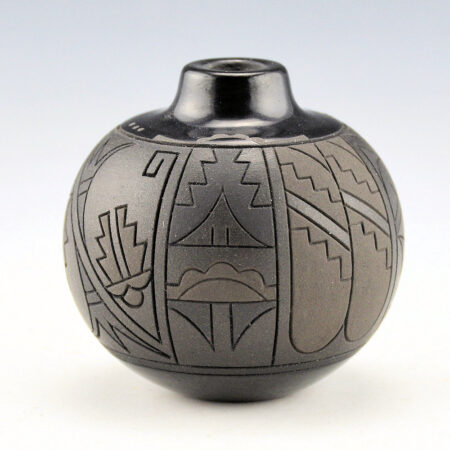 Curran, Dolores - "Poly-Tonal" Jar with Feathers and Rain Clouds
 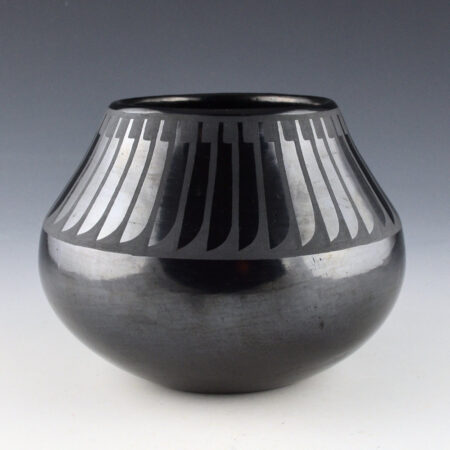 Martinez, Maria - Gunmetal Jar with 41 Feathers "Maria Popovi" (1956-9)
 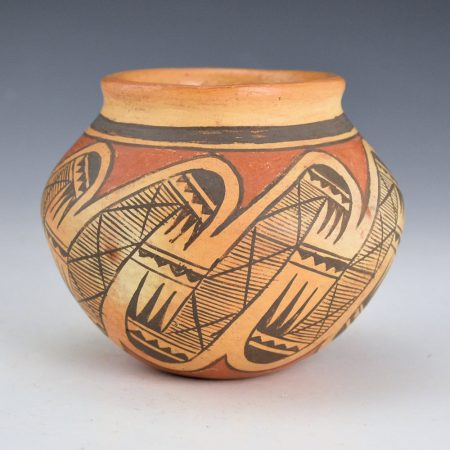 Hooee, Daisy Nampeyo -Jar with Migration Pattern (1980s)
 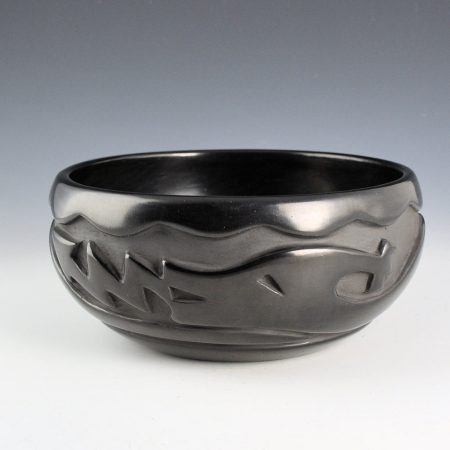 Singer, Mary - 8" Wide Fully Polished Bowl with Carved Avanyu (1980s)
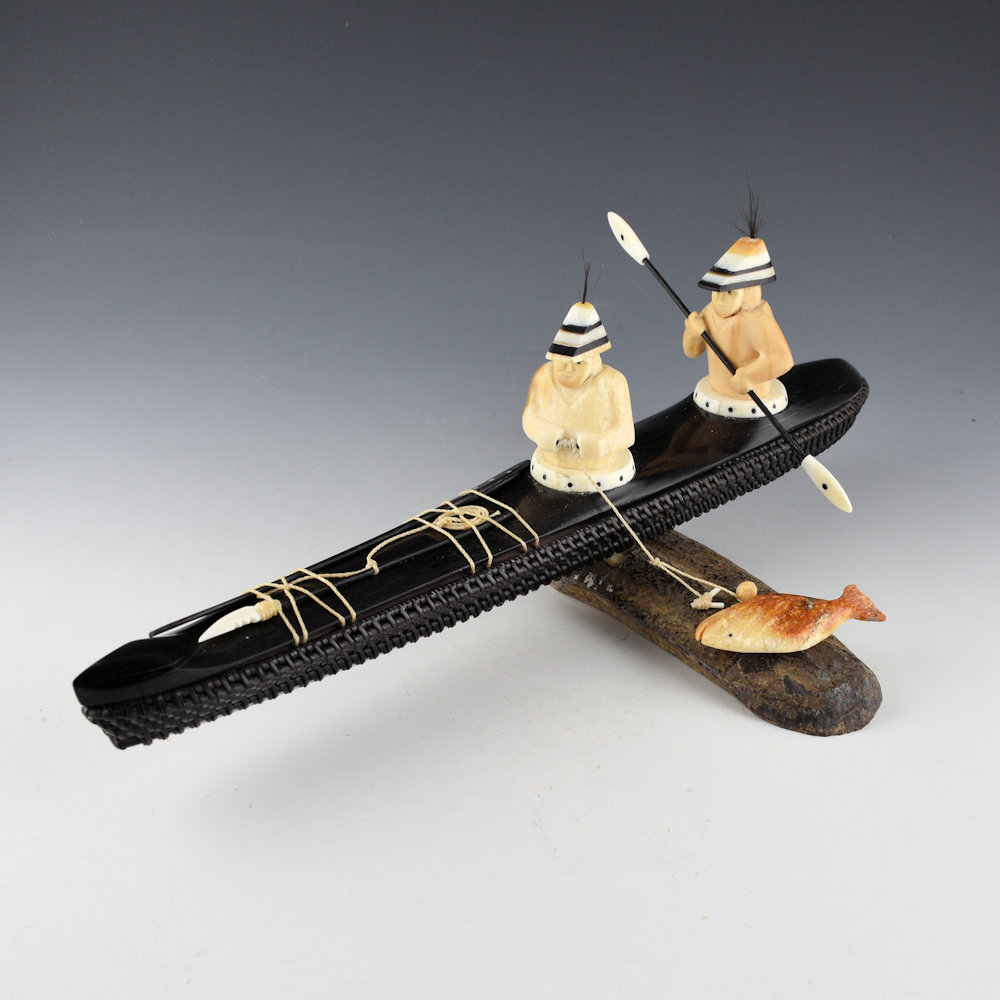

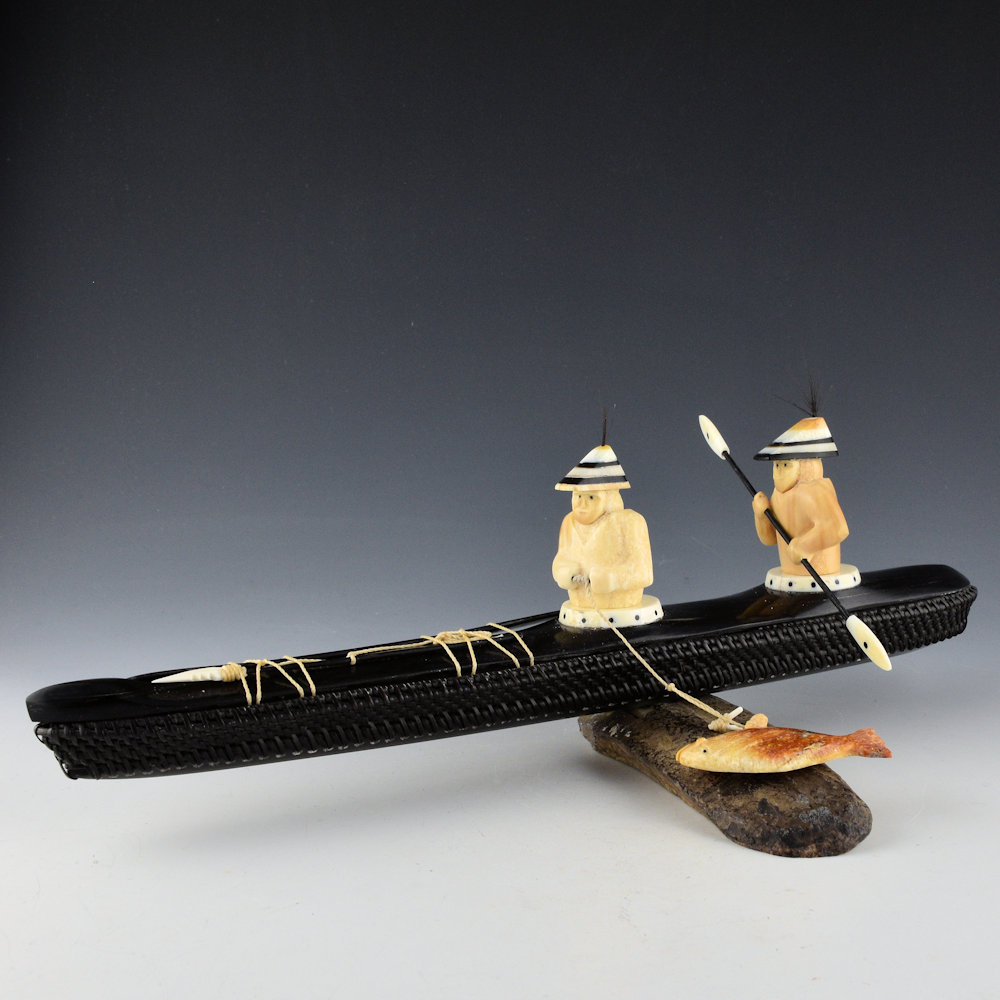
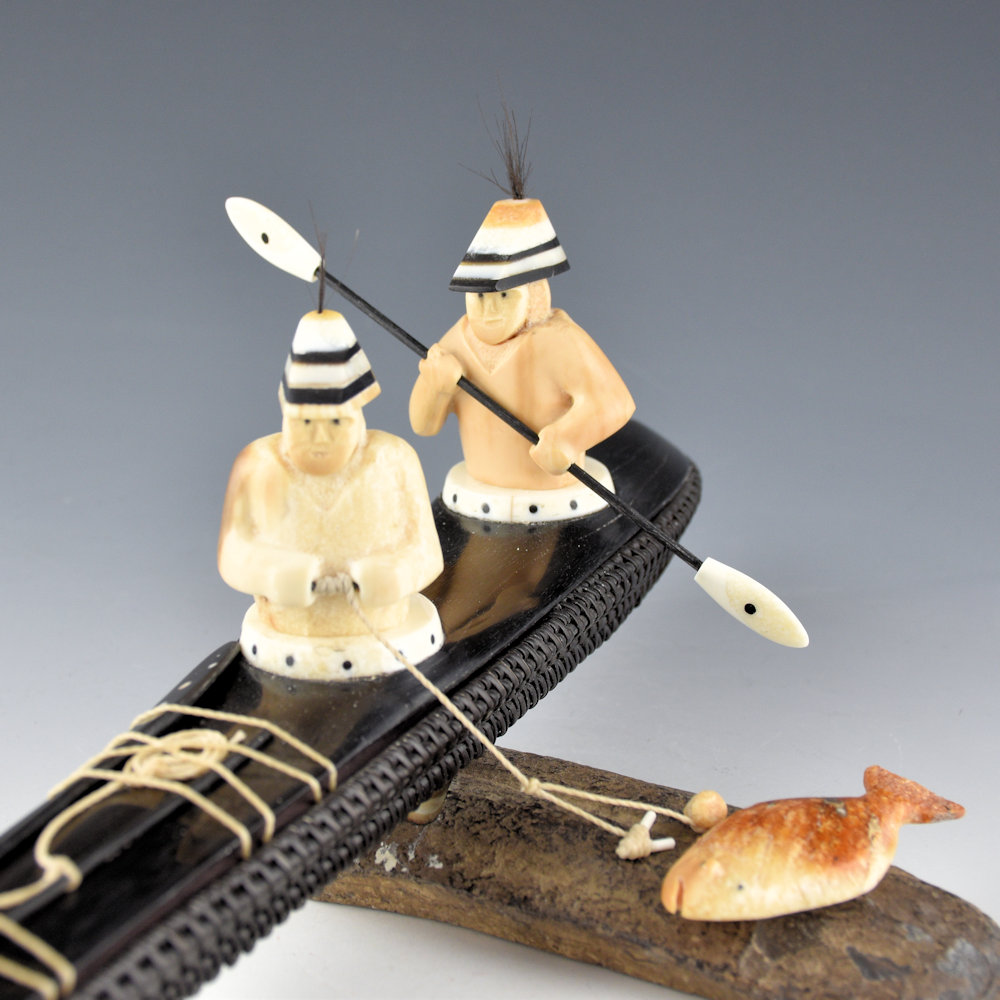
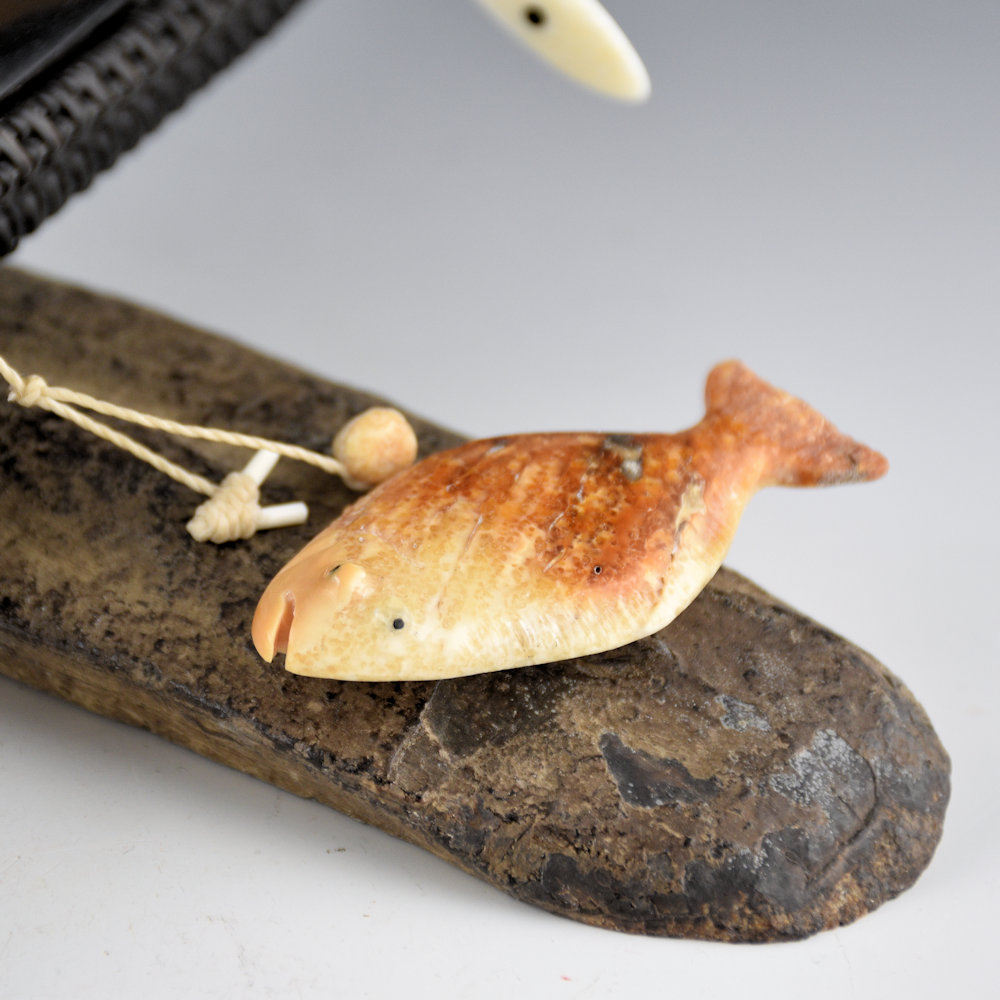
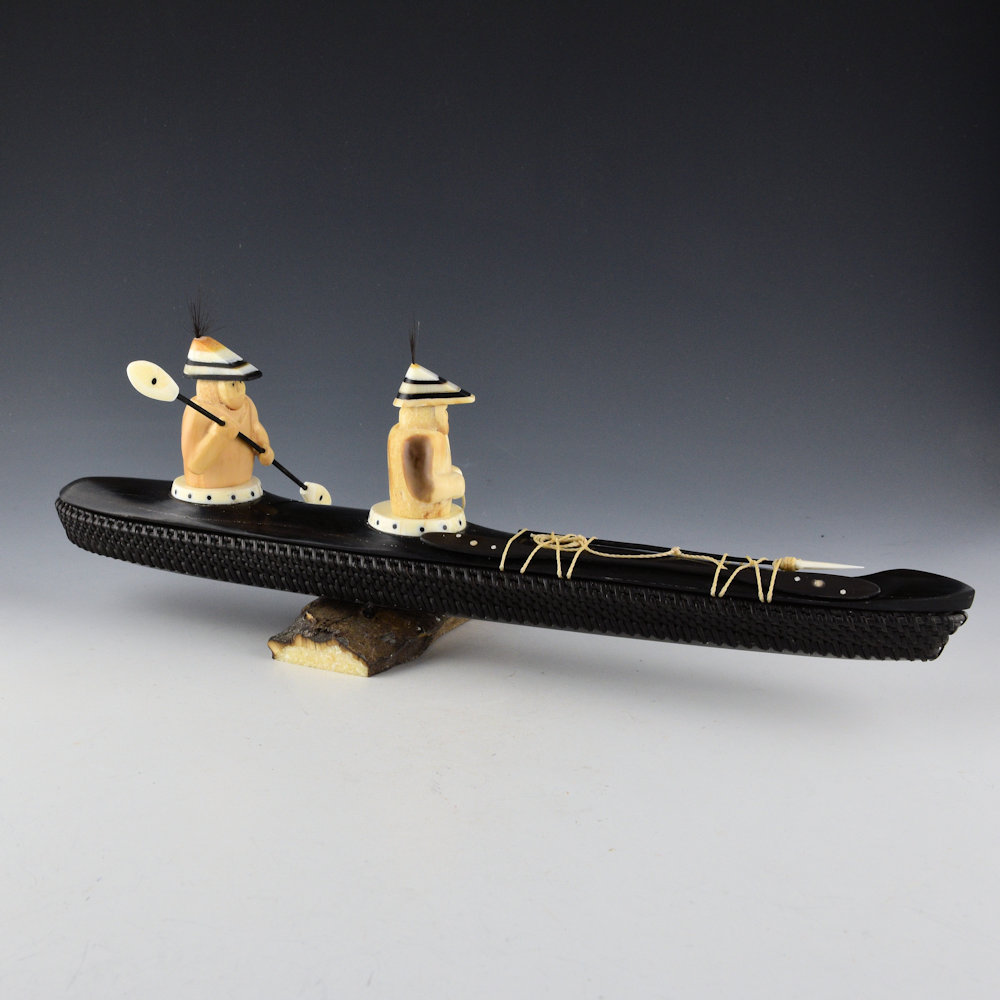
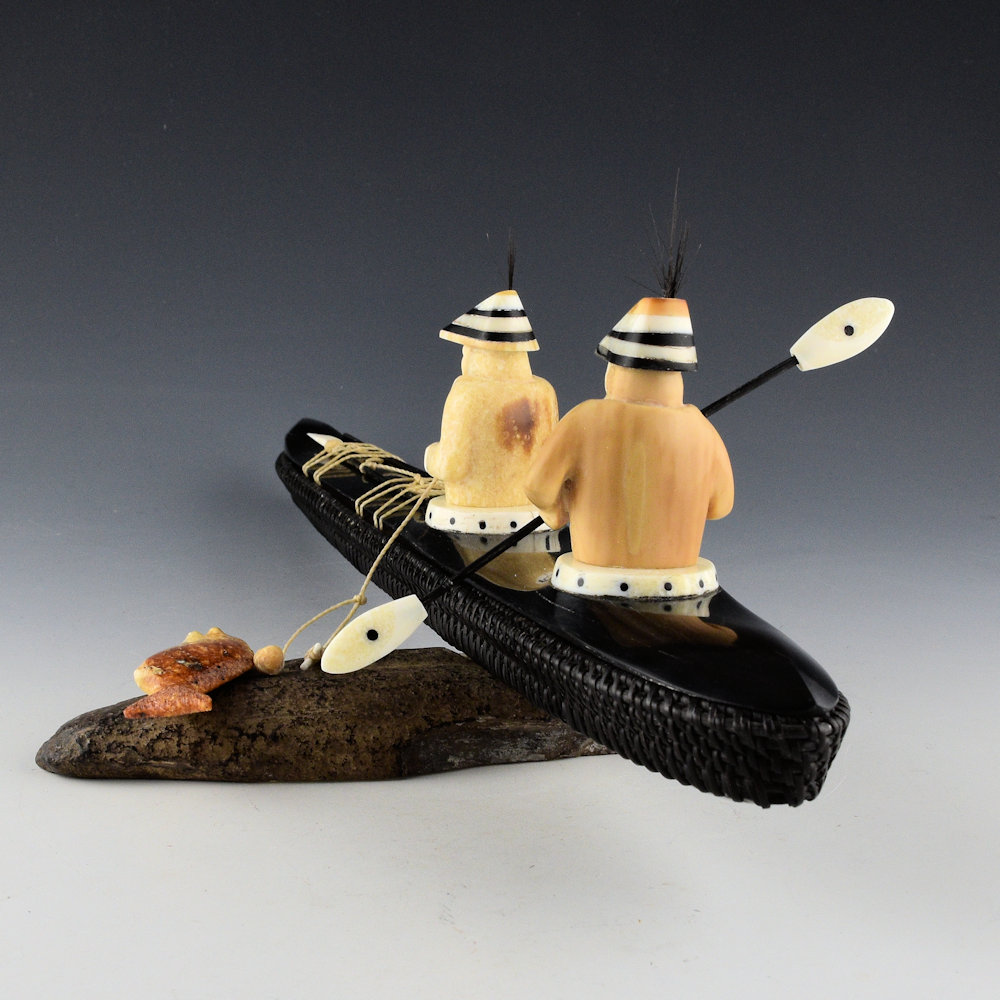
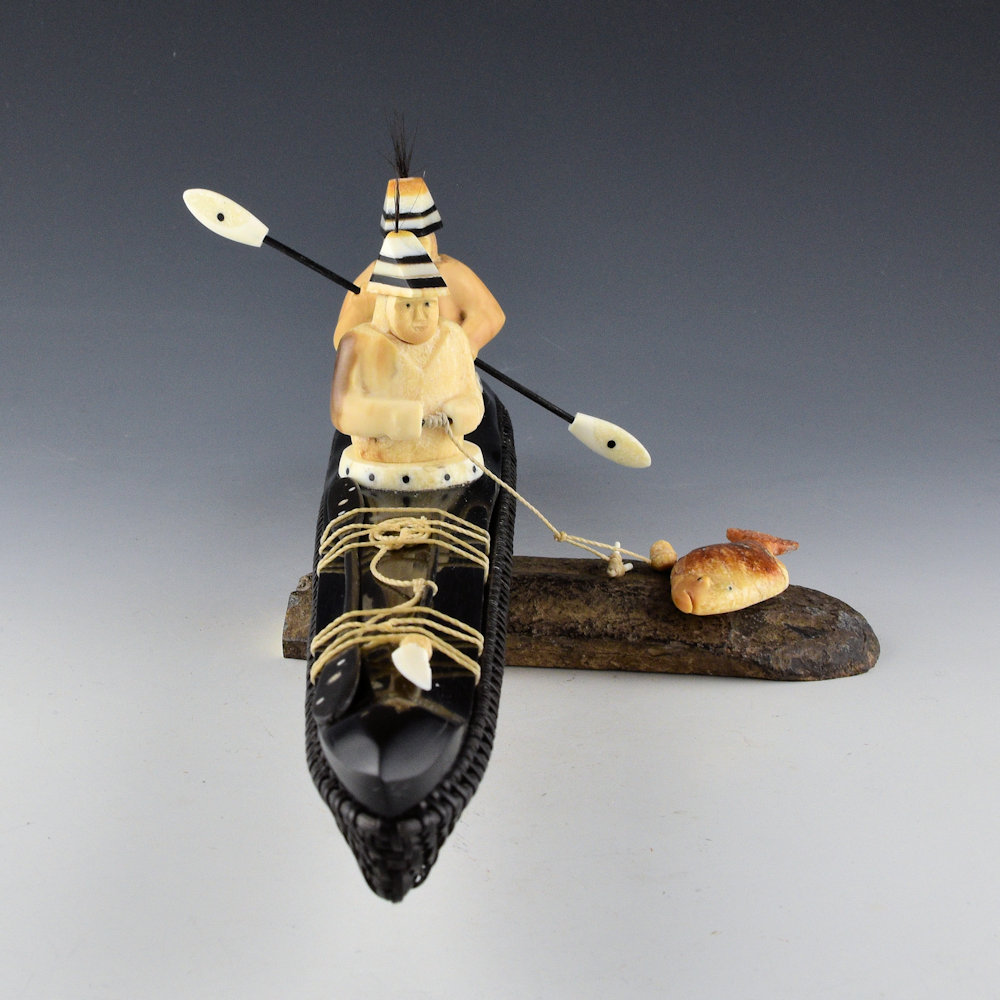
Johnston, Don – Baleen Basket Kayak with Summer Fisherman, Paddler, and Halibut
14" long x 6.5"w x 5"h
$ 14,000.00
Don Johnston (Aleut) was born in Ketchikan, Alaska. He apprenticed with James Omnik, Sr. a well-known baleen basket weaver. In the years since those first important lessons, Don has continued to improve and innovate his unique weaving style. Needless to say, this piece is extraordinary. The kayak is woven from baleen. The top and bottom are larger, polished pieces of baleen. The piece has two figures. One has an oar, and one is the fisherman. The oar in his hands is made from baleen with fossilized ivory ends. The fisherman has a traditional “V” hook (often called čibu·d) which traditionally was constructed from yellow cedar and yew. This one captures the same style and is carved from fossilzedivory. The top of the kayak is a large piece of baleen, and note how it is carved at the tip. There is a second oar and a spear on the top of the kayak. The figures are Summer hunters. He carved the faces of the hunters, as well as using various shades of fossilized ivory or mastodon ivory to create the coloration. The black on the figures is carved sections of baleen. They are amazing in style and detail. Underneath the kayak is a fossilized ivory stand with a single carved halibut! The coloration and the carving is exceptional! The top half of the kayak is removable by the edge, not the figures. There is always a locking lip on the bottom inside of the lid.” This is the first time he has created this scene, and it is an exciting continuation of his cultural story!
What is baleen?
Baleen plates have hair-like structures that filter out tiny floating organisms and fish and are found in the mouth these plankton-eating whales. Baleen was originally used for indigenous objects like water cups, buckets, and sleds. The Bowhead whale has been subsistence hunted by Alaska Coastal Natives, including the Yup’ik and Inupiat for over 1,000 years, and no part of the whale is ever wasted. A butchered bowhead whale can yield thousands of pounds of food. The community shares of meat and blubber are apportioned equitably to ensure that everyone benefits from a successful hunt.
In stock
Description
Don Johnston (Aleut) was born in Ketchikan, Alaska. He apprenticed with James Omnik, Sr. a well-known baleen basket weaver. In the years since those first important lessons, Don has continued to improve and innovate his unique weaving style. Needless to say, this piece is extraordinary. The kayak is woven from baleen. The top and bottom are larger, polished pieces of baleen. The piece has two figures. One has an oar, and one is the fisherman. The oar in his hands is made from baleen with fossilized ivory ends. The fisherman has a traditional “V” hook (often called čibu·d) which traditionally was constructed from yellow cedar and yew. This one captures the same style and is carved from fossilzedivory. The top of the kayak is a large piece of baleen, and note how it is carved at the tip. There is a second oar and a spear on the top of the kayak. The figures are Summer hunters. He carved the faces of the hunters, as well as using various shades of fossilized ivory or mastodon ivory to create the coloration. The black on the figures is carved sections of baleen. They are amazing in style and detail. Underneath the kayak is a fossilized ivory stand with a single carved halibut! The coloration and the carving is exceptional! The top half of the kayak is removable by the edge, not the figures. There is always a locking lip on the bottom inside of the lid.” This is the first time he has created this scene, and it is an exciting continuation of his cultural story!
What is baleen?
Baleen plates have hair-like structures that filter out tiny floating organisms and fish and are found in the mouth these plankton-eating whales. Baleen was originally used for indigenous objects like water cups, buckets, and sleds. The Bowhead whale has been subsistence hunted by Alaska Coastal Natives, including the Yup’ik and Inupiat for over 1,000 years, and no part of the whale is ever wasted. A butchered bowhead whale can yield thousands of pounds of food. The community shares of meat and blubber are apportioned equitably to ensure that everyone benefits from a successful hunt.
Learn More
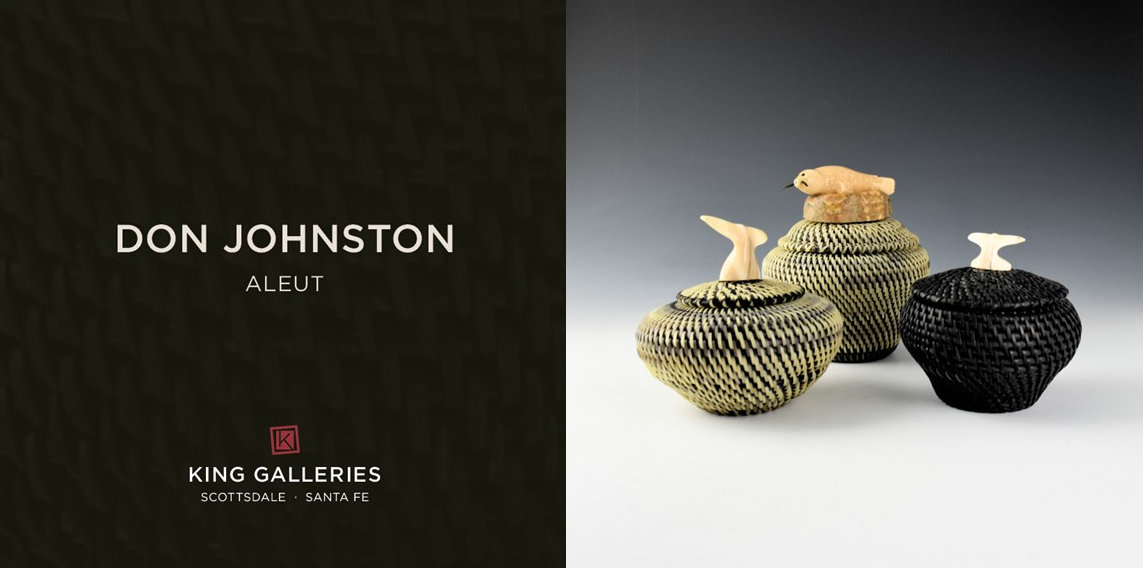 Don Johnston was born in Ketchikan, Alaska, and moved to Anchorage when he was 20. He apprenticed with James Omnik Sr., a well-known baleen basket weaver. In the years since those first important lessons, Don has continued to improve and innovate his unique weaving style.
Don's natural gifts for both carving walrus ivory and working with the challenging threads of baleen from traditionally harvested Bowhead whales have drawn the attention of collectors worldwide.
Baleen plates have hair-like structures that filter out tiny floating organisms and fish and are found in the mouth of these plankton-eating whales. Baleen was originally used for indigenous objects like water cups, buckets, and sleds. The Bowhead whale has been subsistence hunted by Alaska Coastal Natives, including the Yup'ik and Inupiat, for over 1,000 years, and no part of the whale is ever wasted. Instead, a butchered Bowhead whale can yield thousands of pounds of food. The community shares of meat and fat are apportioned equitably to ensure that everyone benefits from a successful hunt.
Don is one of a handful of baleen basket weavers. His works have won numerous awards, including Grand Champion and Judge's Choice at the Alaska State Fair, Best in Basketry at Los Angeles Autry Museum Show, Best in Show at the 2017 Heard Museum Show, Best in Category - Weaving at the 2018 Santa Fe Indian Market, and Best in Category, 2019 Heard Museum Show. In addition, a basket resides in the permanent collection of the Denver Art Museum.
Don Johnston was born in Ketchikan, Alaska, and moved to Anchorage when he was 20. He apprenticed with James Omnik Sr., a well-known baleen basket weaver. In the years since those first important lessons, Don has continued to improve and innovate his unique weaving style.
Don's natural gifts for both carving walrus ivory and working with the challenging threads of baleen from traditionally harvested Bowhead whales have drawn the attention of collectors worldwide.
Baleen plates have hair-like structures that filter out tiny floating organisms and fish and are found in the mouth of these plankton-eating whales. Baleen was originally used for indigenous objects like water cups, buckets, and sleds. The Bowhead whale has been subsistence hunted by Alaska Coastal Natives, including the Yup'ik and Inupiat, for over 1,000 years, and no part of the whale is ever wasted. Instead, a butchered Bowhead whale can yield thousands of pounds of food. The community shares of meat and fat are apportioned equitably to ensure that everyone benefits from a successful hunt.
Don is one of a handful of baleen basket weavers. His works have won numerous awards, including Grand Champion and Judge's Choice at the Alaska State Fair, Best in Basketry at Los Angeles Autry Museum Show, Best in Show at the 2017 Heard Museum Show, Best in Category - Weaving at the 2018 Santa Fe Indian Market, and Best in Category, 2019 Heard Museum Show. In addition, a basket resides in the permanent collection of the Denver Art Museum.
Brand
Johnston, Don
Don Johnston was born in Ketchikan, Alaska, and moved to Anchorage when he was 20. He apprenticed with James Omnik Sr., a well-known baleen basket weaver. In the years since those first important lessons, Don has continued to improve and innovate his unique weaving style.
Don's natural gifts for both carving walrus ivory and working with the challenging threads of baleen from traditionally harvested Bowhead whales have drawn the attention of collectors worldwide.
Baleen plates have hair-like structures that filter out tiny floating organisms and fish and are found in the mouth of these plankton-eating whales. Baleen was originally used for indigenous objects like water cups, buckets, and sleds. The Bowhead whale has been subsistence hunted by Alaska Coastal Natives, including the Yup'ik and Inupiat, for over 1,000 years, and no part of the whale is ever wasted. Instead, a butchered Bowhead whale can yield thousands of pounds of food. The community shares of meat and fat are apportioned equitably to ensure that everyone benefits from a successful hunt.
Don is one of a handful of baleen basket weavers. His works have won numerous awards, including Grand Champion and Judge's Choice at the Alaska State Fair, Best in Basketry at Los Angeles Autry Museum Show, Best in Show at the 2017 Heard Museum Show, Best in Category - Weaving at the 2018 Santa Fe Indian Market, and Best in Category, 2019 Heard Museum Show. In addition, a basket resides in the permanent collection of the Denver Art Museum.