
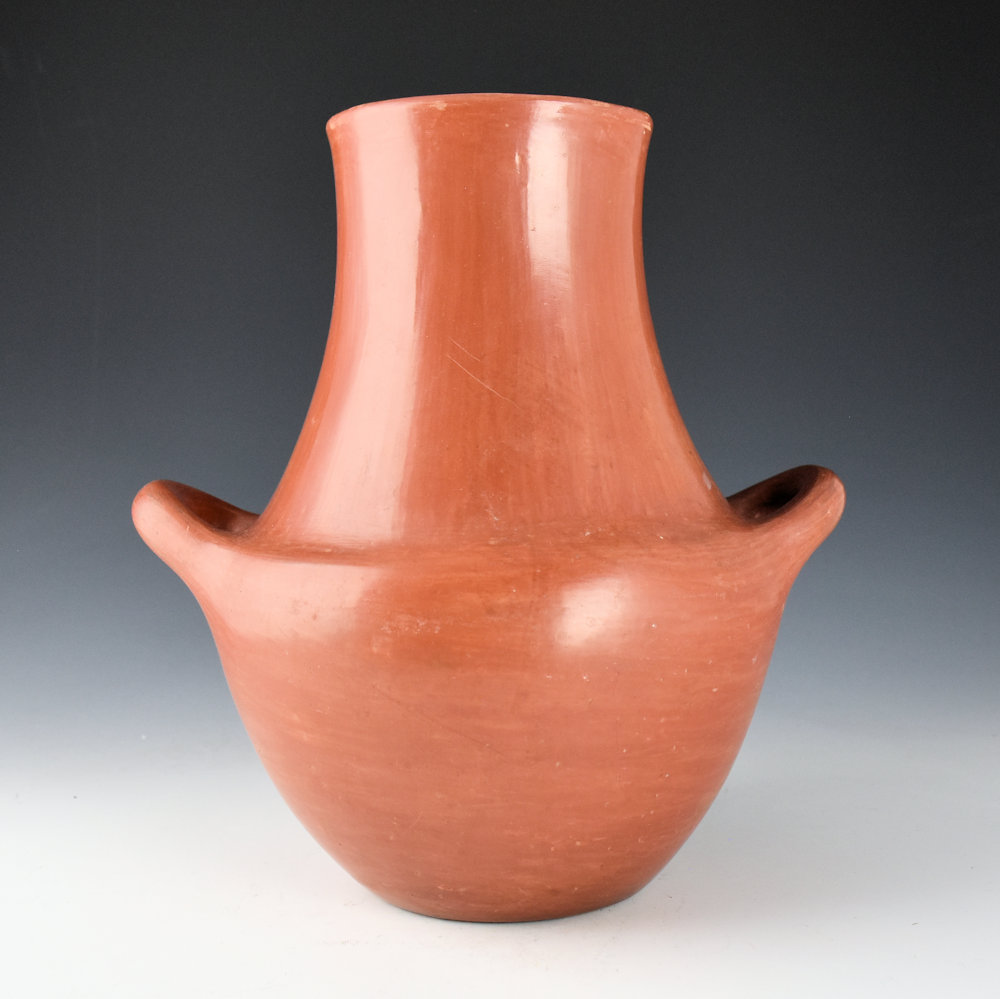

Tafoya, SaraFina – Red Water Jar with Handles (1930s), signed “Sarafina Tafoya”
$ 8,800.00
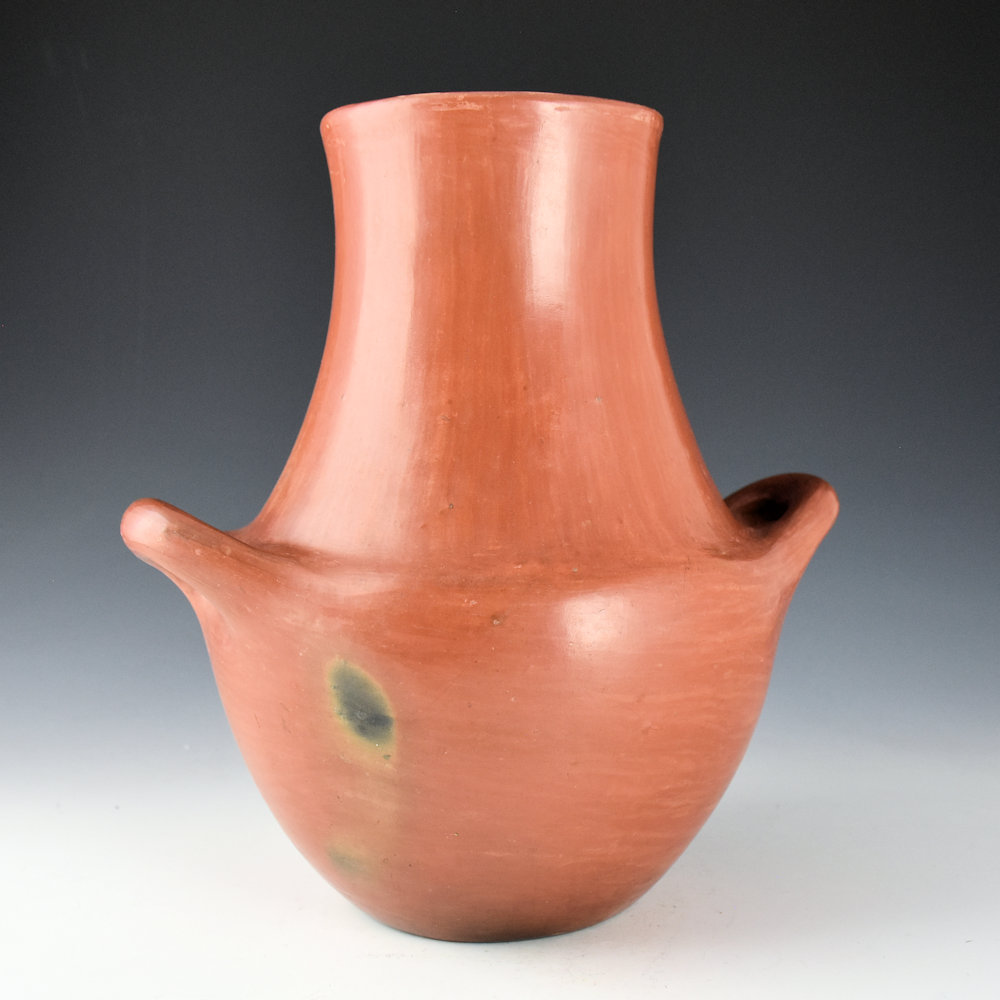
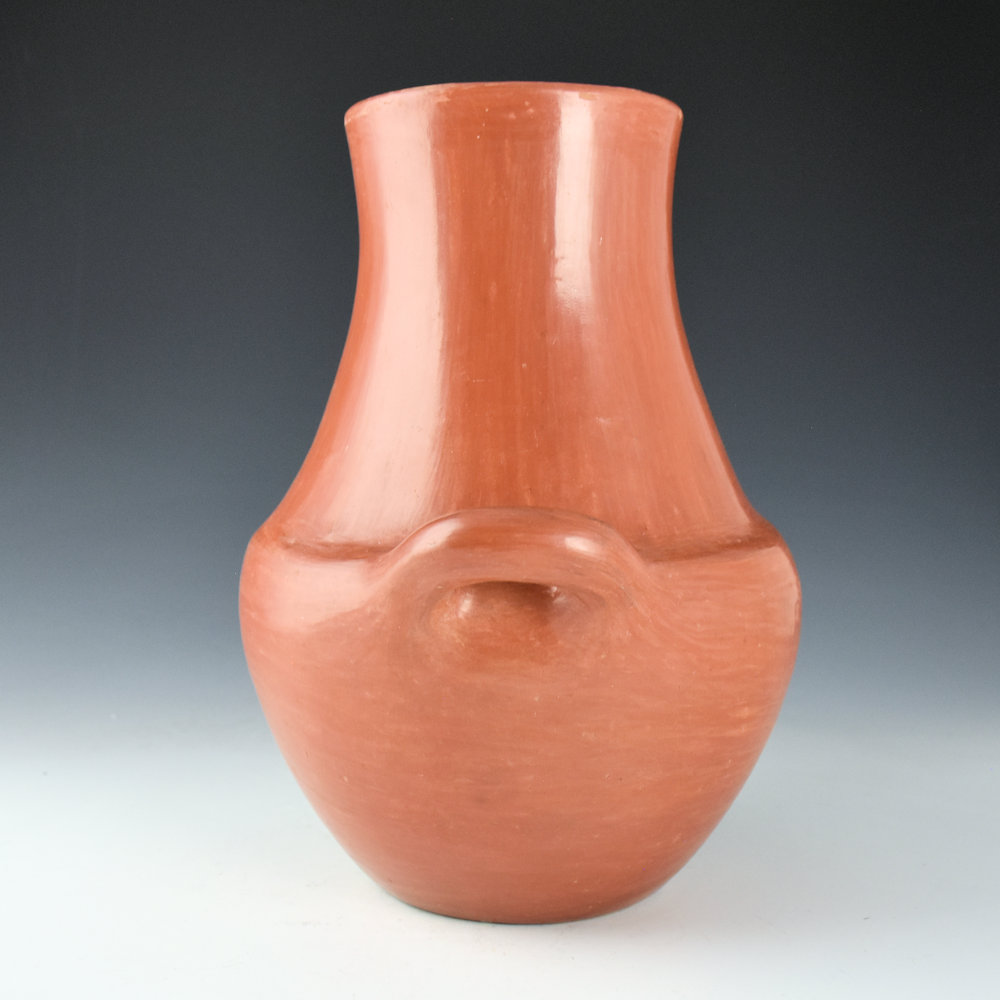
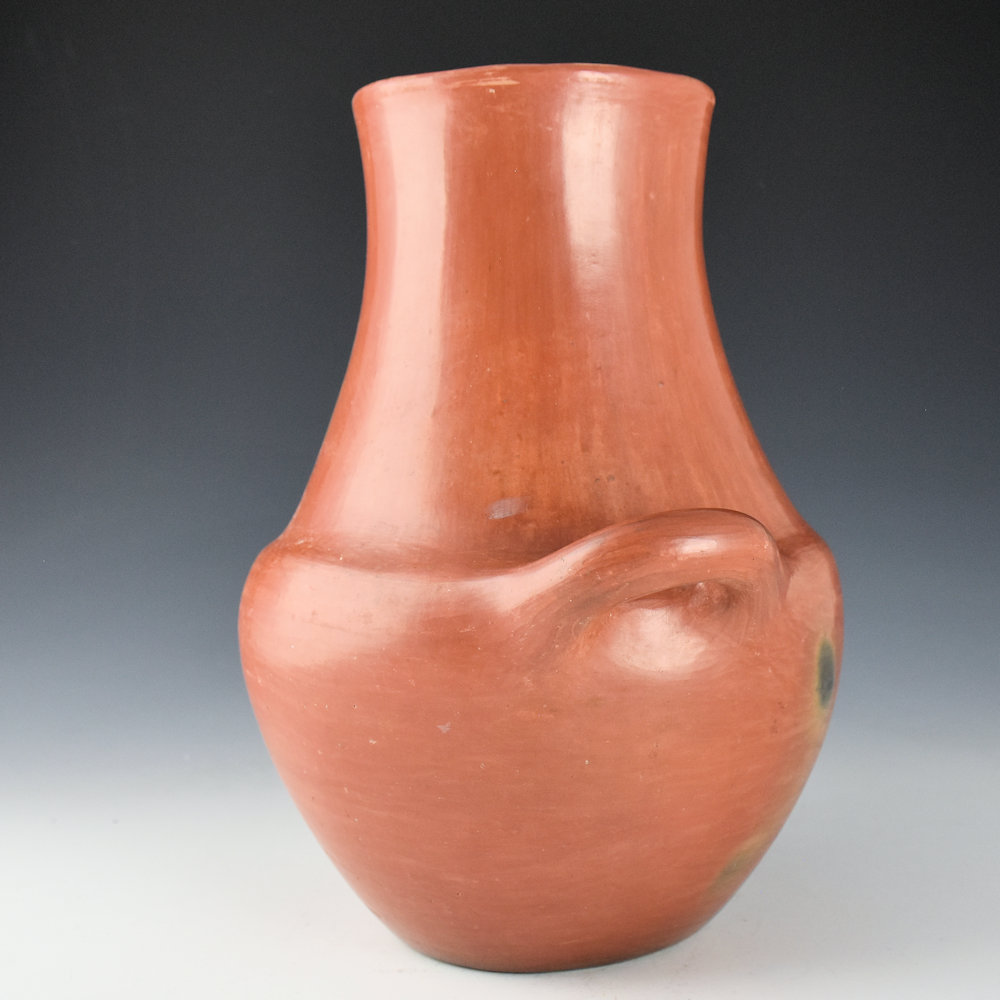
SaraFina Tafoya was the matriarch of a family of renowned potters, including her children Margaret Tafoya, Camilio Tafoya, and Christina Naranjo. While she is known for her large vessels, in the 1930’s she created a series of smaller painted and plainware vessels that were signed. They are unusual and scarce pieces, yet a fascinating part of the history of Santa Clara pottery. This is a larger red water jar. The jar is fully polished and has handles on the shoulder. The handles are also fully polished. The jar was fired a deep red coloration. Interestingly, on one side there is a dark black area from the firing. It brings to mind the story about Sarafina and marks on her red pottery:
“Sara Fina was often known to say about her own pottery, ‘Nothing is perfect.’ When she was firing a red pot, she would often take a stick and touch it to the vessel, leaving a dark mark. She would say, ‘We are not to have anything that perfect made from clay. Only Some One more powerful than we are can have perfection.’” —TONI ROLLER, Born of Fire, 2007
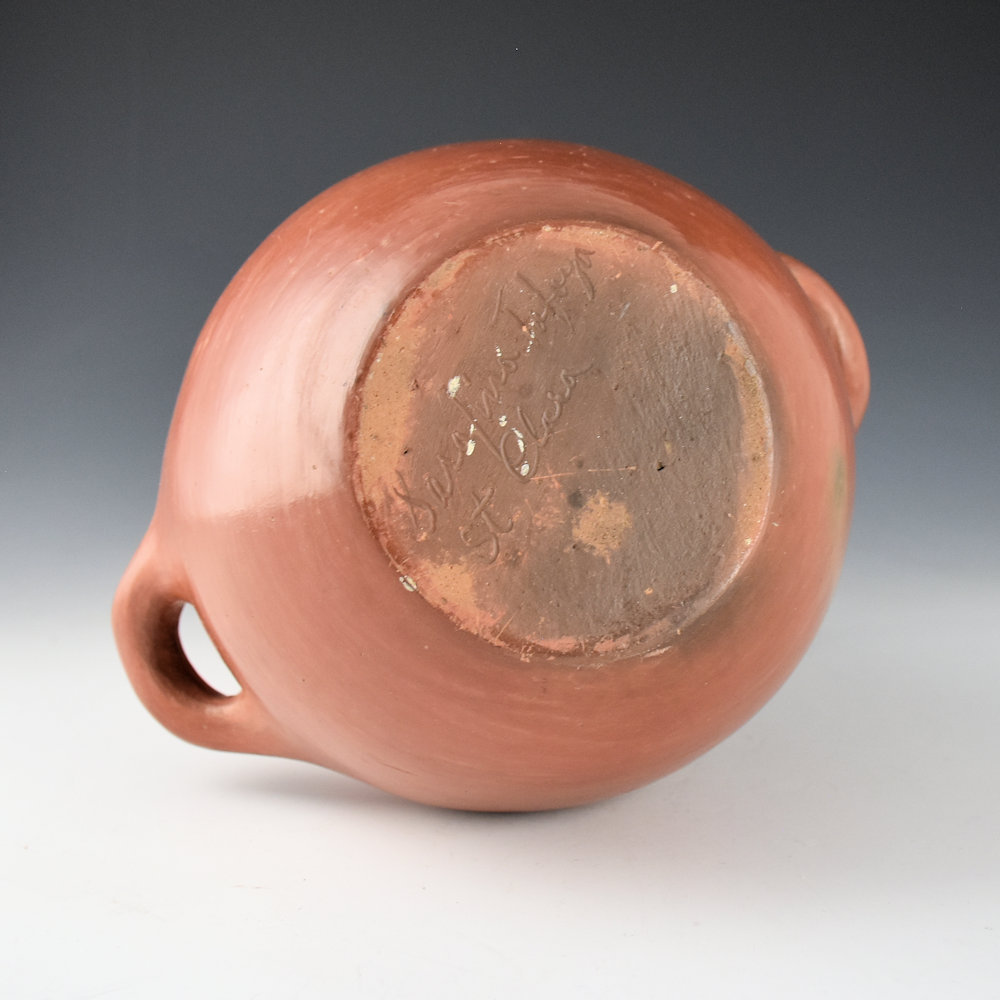
Ther mark certainly adds to the story of his exceptional piece! The jar is also polished on the inside of the neck. It is signed in the clay on the bottom, “Sarafina Tafoya”. It is in very good condition with no chips, cracks, restoration or repair.
You can read more about the signed pottery of Sarafina in my article below:
Signed, “Serafina”: The Signed Pottery of SaraFina Tafoya
Out of stock
SaraFina Tafoya was the matriarch of a family of renowned potters, including her children Margaret Tafoya, Camilio Tafoya, and Christina Naranjo. While she is known for her large vessels, in the 1930’s she created a series of smaller painted and plainware vessels that were signed. They are unusual and scarce pieces, yet a fascinating part of the history of Santa Clara pottery. This is a larger red water jar. The jar is fully polished and has handles on the shoulder. The handles are also fully polished. The jar was fired a deep red coloration. Interestingly, on one side there is a dark black area from the firing. It brings to mind the story about Sarafina and marks on her red pottery:
“Sara Fina was often known to say about her own pottery, ‘Nothing is perfect.’ When she was firing a red pot, she would often take a stick and touch it to the vessel, leaving a dark mark. She would say, ‘We are not to have anything that perfect made from clay. Only Some One more powerful than we are can have perfection.’” —TONI ROLLER, Born of Fire, 2007
Ther mark certainly adds to the story of his exceptional piece! The jar is also polished on the inside of the neck. It is signed in the clay on the bottom, “Sarafina Tafoya”. It is in very good condition with no chips, cracks, restoration or repair. You can read more about the signed pottery of Sarafina in my article below:
Brand
Tafoya, Sara Fina (1863-1949)
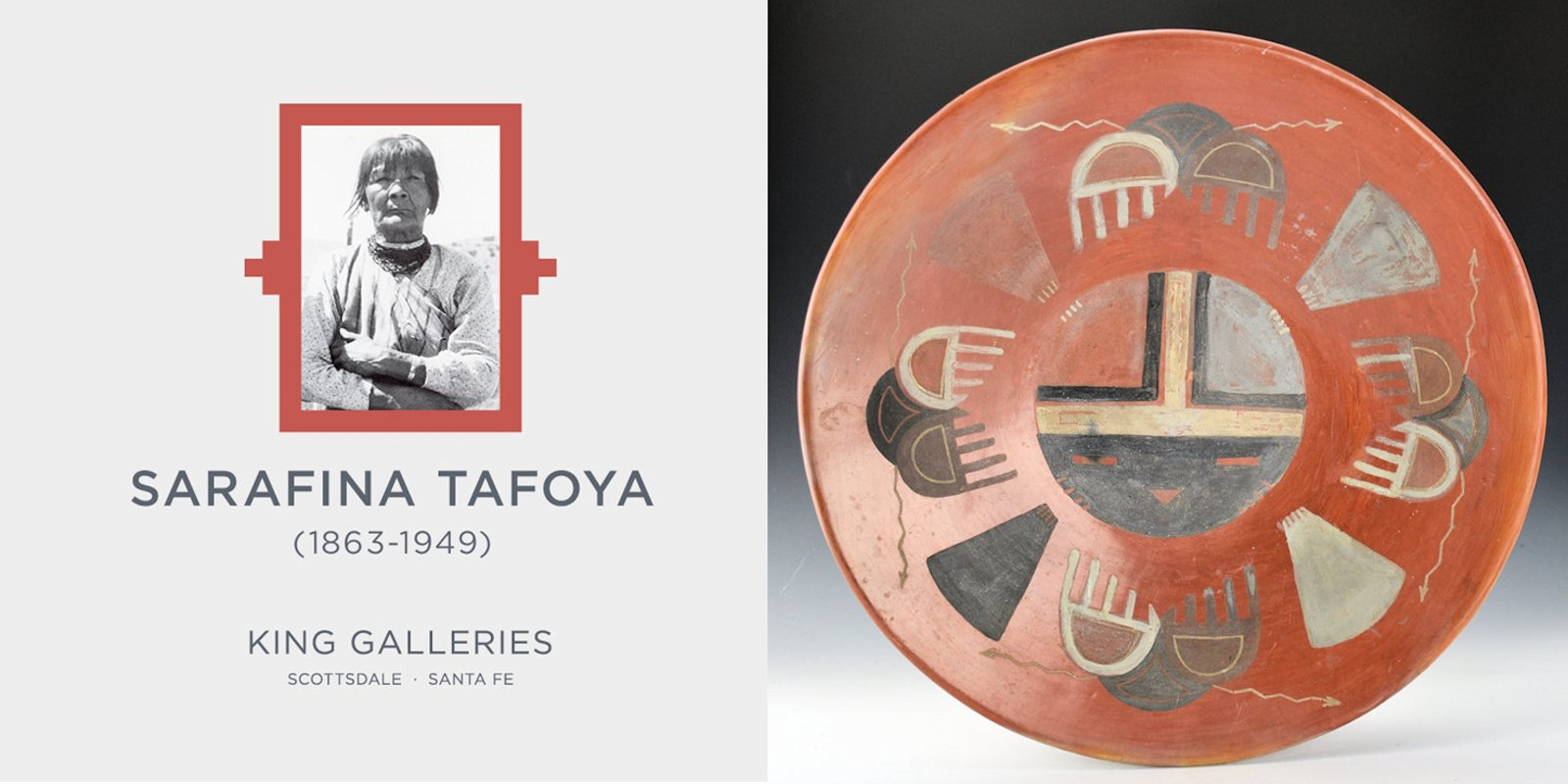 Sara Fina Tafoya is among the most renowned of the early Santa Clara potters. She was the matriarch of a dynasty of potters, included among her children were Camilio Tafoya, Margaret Tafoya, and Christina Naranjo. Beginning in 1924 Sara Fina Tafoya was one of the first pueblo potters to begin "carving" into the clay to create designs in her pottery. She was masterful with her forms, where the simplicity of the shape, especially with her larger vessels such as the storage jars, did not require additional design. Part of her genius was adding elaborate shapes for the handles and unusual indentions such as the "raindrop" rims. These created special features which readily identified her pottery. Her pottery was not signed except for a short period in the late 1930s when she made smaller pieces, often polychrome but also some classic black ware. Certainly, a testament to her skill is that few Pueblo potters today are able to create either pottery of such size or with such complicated additions as her handles.
Check out our article on the signed pottery of Sara Fina Tafoya: "Signed Sara Fina".
Sara Fina Tafoya is among the most renowned of the early Santa Clara potters. She was the matriarch of a dynasty of potters, included among her children were Camilio Tafoya, Margaret Tafoya, and Christina Naranjo. Beginning in 1924 Sara Fina Tafoya was one of the first pueblo potters to begin "carving" into the clay to create designs in her pottery. She was masterful with her forms, where the simplicity of the shape, especially with her larger vessels such as the storage jars, did not require additional design. Part of her genius was adding elaborate shapes for the handles and unusual indentions such as the "raindrop" rims. These created special features which readily identified her pottery. Her pottery was not signed except for a short period in the late 1930s when she made smaller pieces, often polychrome but also some classic black ware. Certainly, a testament to her skill is that few Pueblo potters today are able to create either pottery of such size or with such complicated additions as her handles.
Check out our article on the signed pottery of Sara Fina Tafoya: "Signed Sara Fina".