

Johnston, Don – Black & White Baleen Basket with Seal Lid
$ 9,000.00
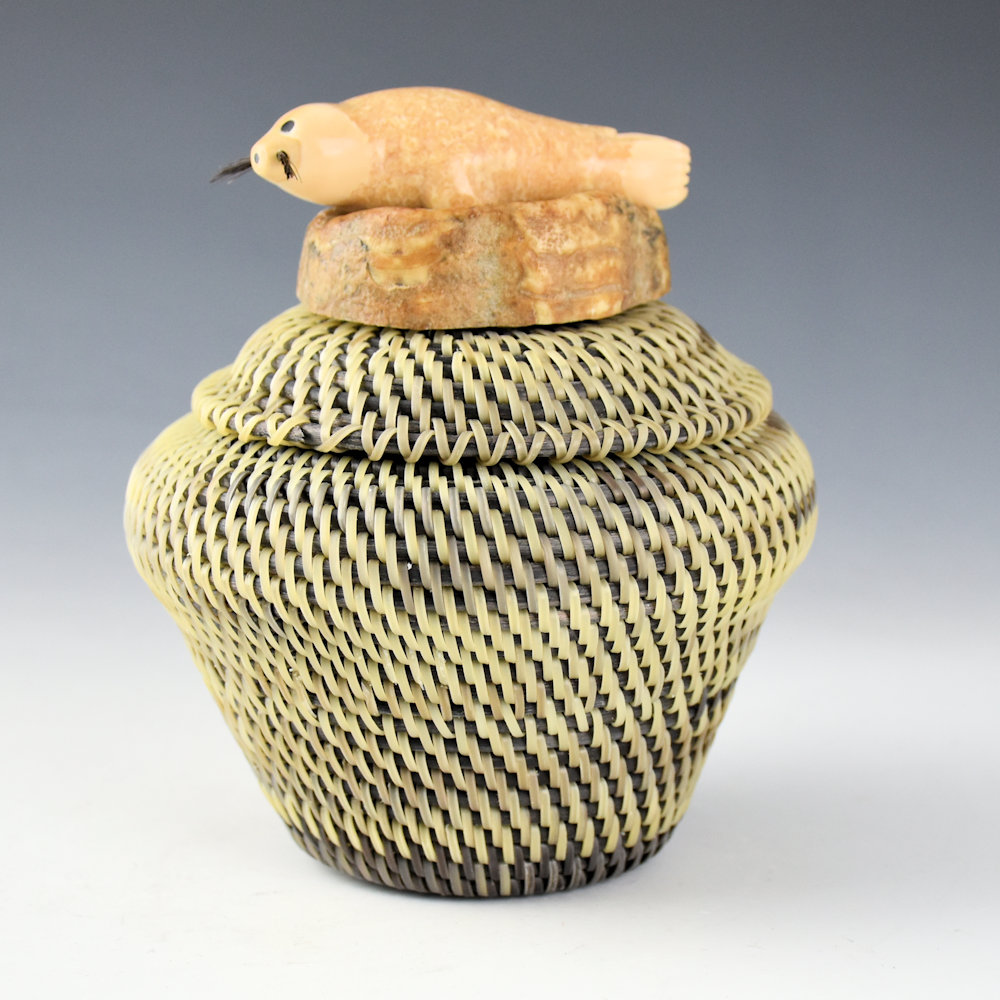
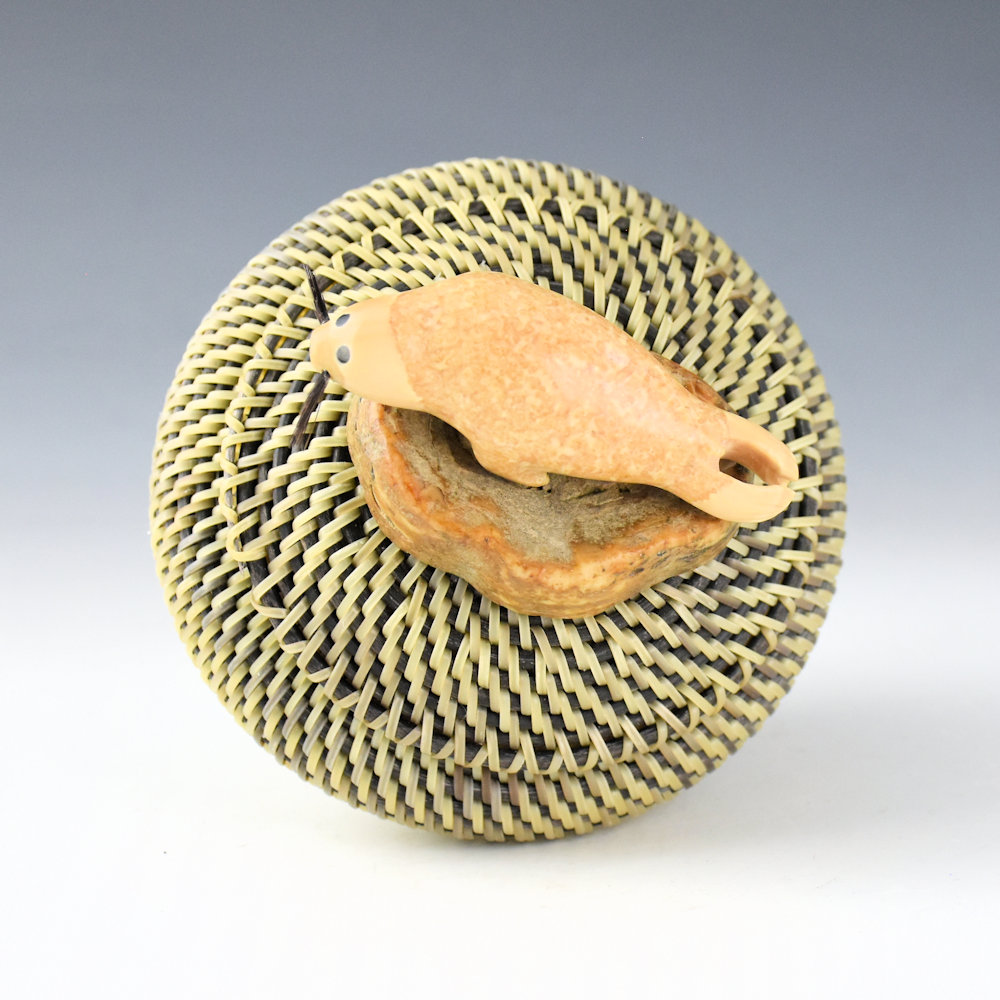
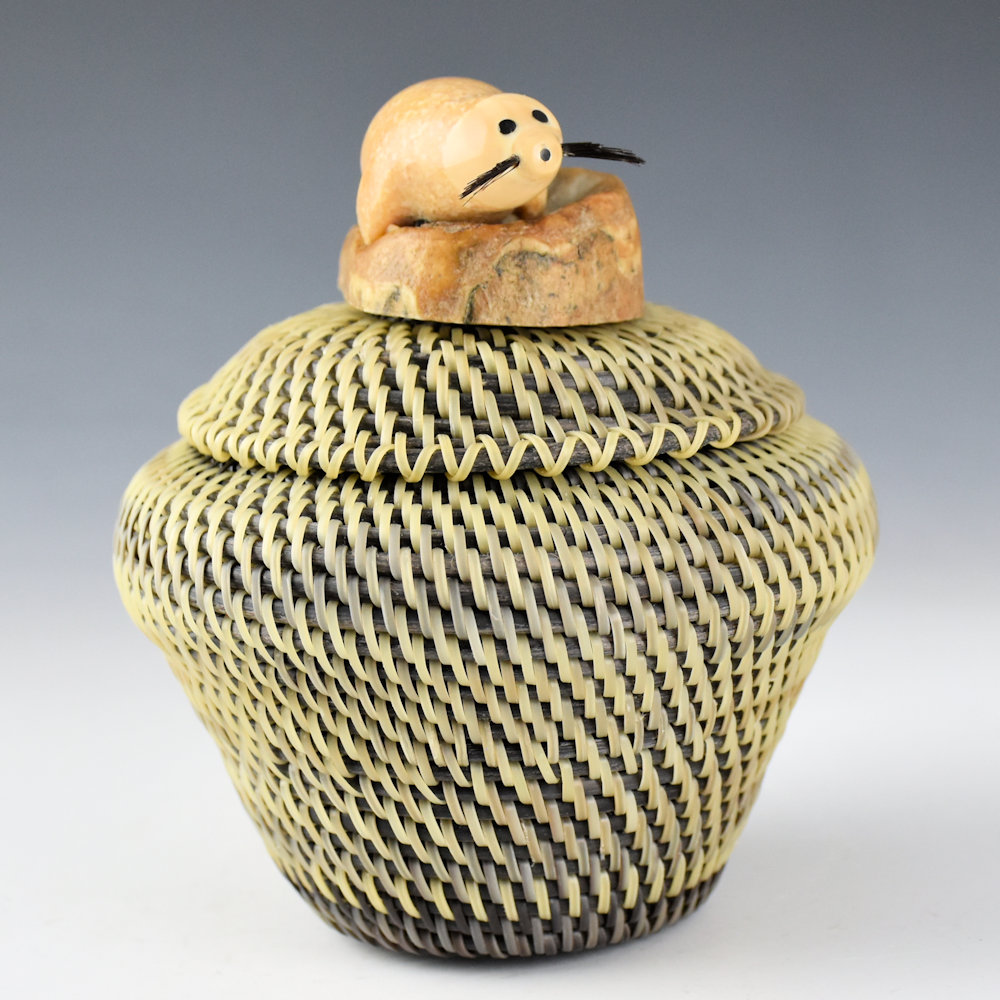
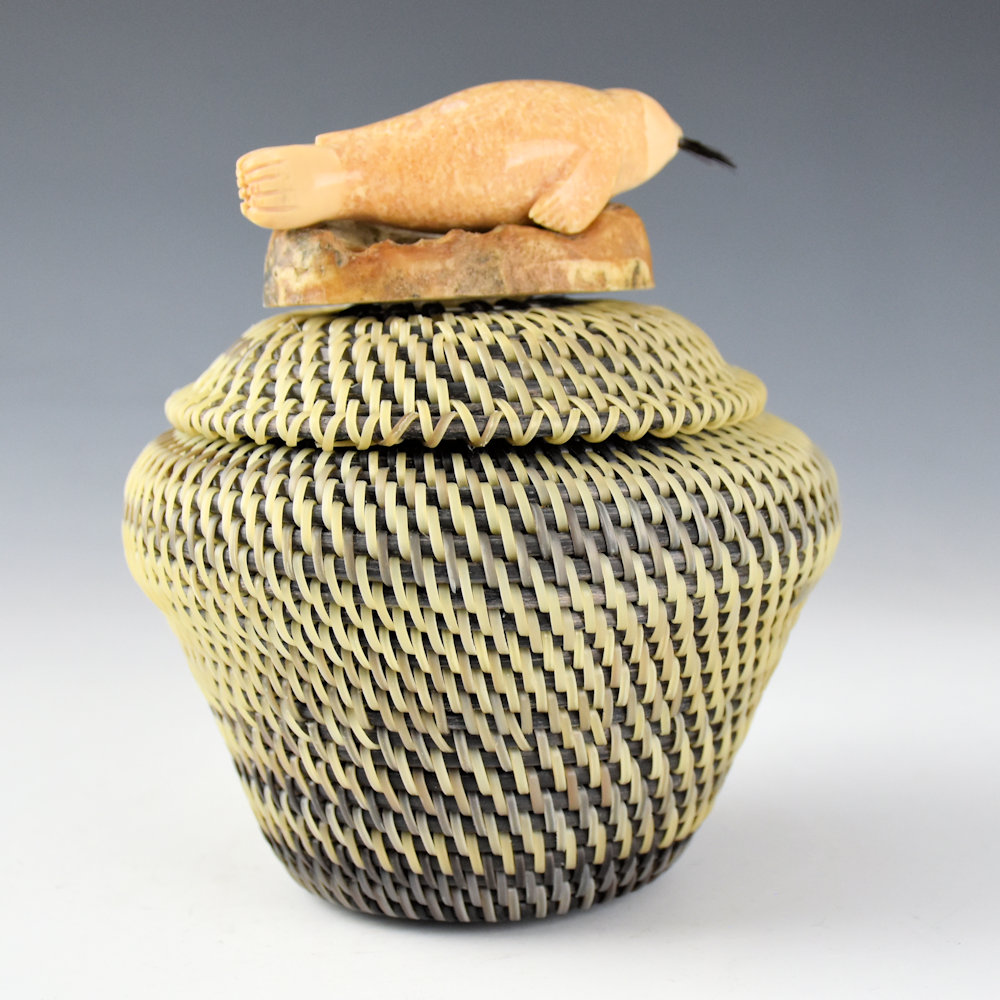
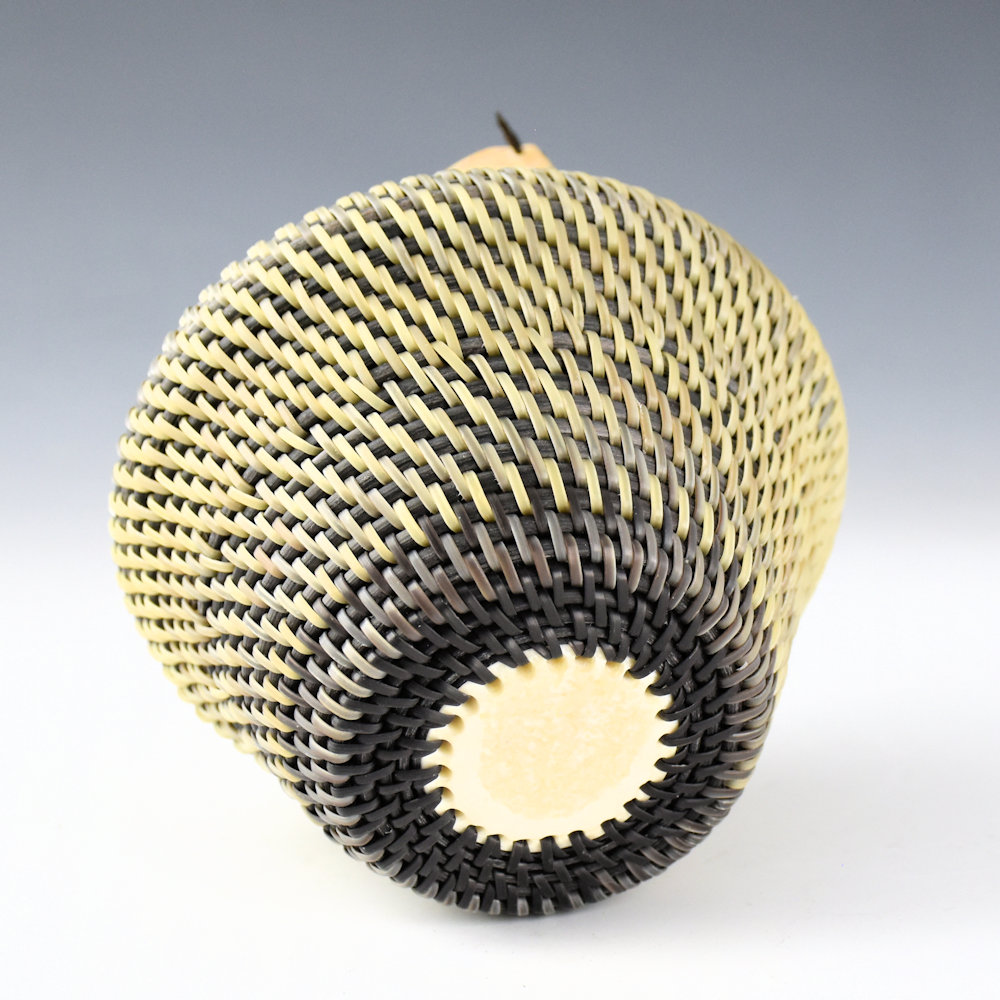
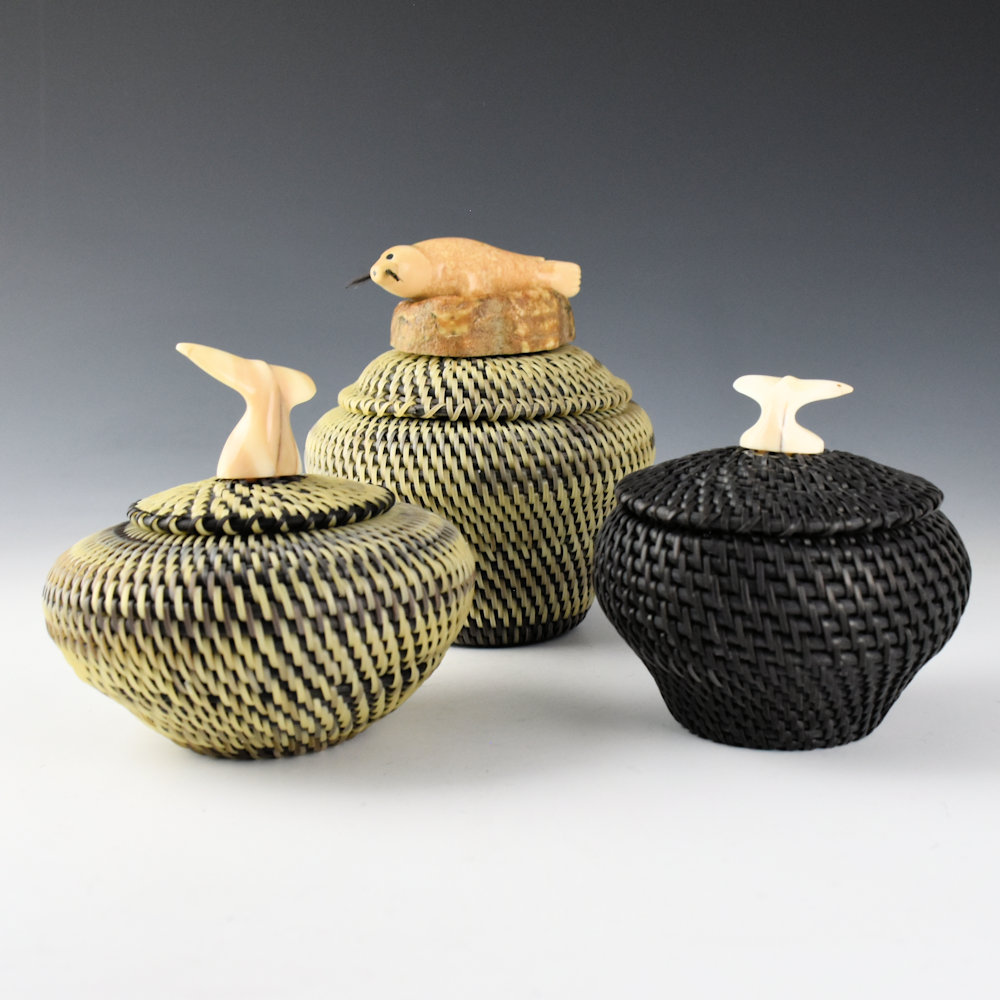
WOW! This is an exceptional baleen basket by Don Johnston (Aleut). Don was born in Ketchikan, Alaska. He apprenticed with James Omnik, Sr. a well-known baleen basket weaver. In the years since those first important lessons, Don has continued to improve and innovate his unique weaving style. For this piece, the entire basket is woven from baleen. It is very unusual for its larger size, as well as being made from both black and white baleen! Don has only made a few with the white baleen, as it is so rare. He says it only comes from an old female bowhead whale that is 65 years and older! Don said this is only the second time he has had this lighter colored blaeen available in his 24 years of making baskets. It ranges in color from gray to white and gives each basket an extraordinary appearance and coloration! The basket is woven with both the light and dark colorations of baleen. It is incredible the depth of coloration created in this piece and the tightness of the weave. The top of the lid is carved from fossilized ivory and it is a seal “in the water”. It is two pieces and the whiskers and eyes of the seal are also baleen. It is charming! There is an elegant simplicity to his basket forms carvings. The lid should be removed by the edge, not the finial. There is always a locking lip on the bottom inside of the lid.” Simply exceptional! It is signed, “Don Johnston” and was made in 2022. We are pleased to have his work at both our galleries in Santa Fe and Scottsdale!
What is baleen?
Baleen plates have hair-like structures that filter out tiny floating organisms and fish and are found in the mouth these plankton-eating whales. Baleen was originally used for indigenous objects like water cups, buckets, and sleds. The Bowhead whale has been subsistence hunted by Alaska Coastal Natives, including the Yup’ik and Inupiat for over 1,000 years, and no part of the whale is ever wasted. A butchered bowhead whale can yield thousands of pounds of food. The community shares of meat and blubber are apportioned equitably to ensure that everyone benefits from a successful hunt.
Out of stock
WOW! This is an exceptional baleen basket by Don Johnston (Aleut). Don was born in Ketchikan, Alaska. He apprenticed with James Omnik, Sr. a well-known baleen basket weaver. In the years since those first important lessons, Don has continued to improve and innovate his unique weaving style. For this piece, the entire basket is woven from baleen. It is very unusual for its larger size, as well as being made from both black and white baleen! Don has only made a few with the white baleen, as it is so rare. He says it only comes from an old female bowhead whale that is 65 years and older! The basket is woven with both the light and dark colorations of baleen. It is incredible the depth of coloration created in this piece and the tightness of the weave. The top of the lid is carved from fossilized ivory and it is a seal “in the water”. It is two pieces and the whiskers and eyes of the seal are also baleen. It is charming! There is an elegant simplicity to his basket forms carvings. The lid should be removed by the edge, not the finial. There is always a locking lip on the bottom inside of the lid.” Simply exceptional! It is signed, “Don Johnston” and was made in 2022. We are pleased to have his work at both our galleries in Santa Fe and Scottsdale!
What is baleen?
Baleen plates have hair-like structures that filter out tiny floating organisms and fish and are found in the mouth these plankton-eating whales. Baleen was originally used for indigenous objects like water cups, buckets, and sleds. The Bowhead whale has been subsistence hunted by Alaska Coastal Natives, including the Yup’ik and Inupiat for over 1,000 years, and no part of the whale is ever wasted. A butchered bowhead whale can yield thousands of pounds of food. The community shares of meat and blubber are apportioned equitably to ensure that everyone benefits from a successful hunt.
Brand
Johnston, Don
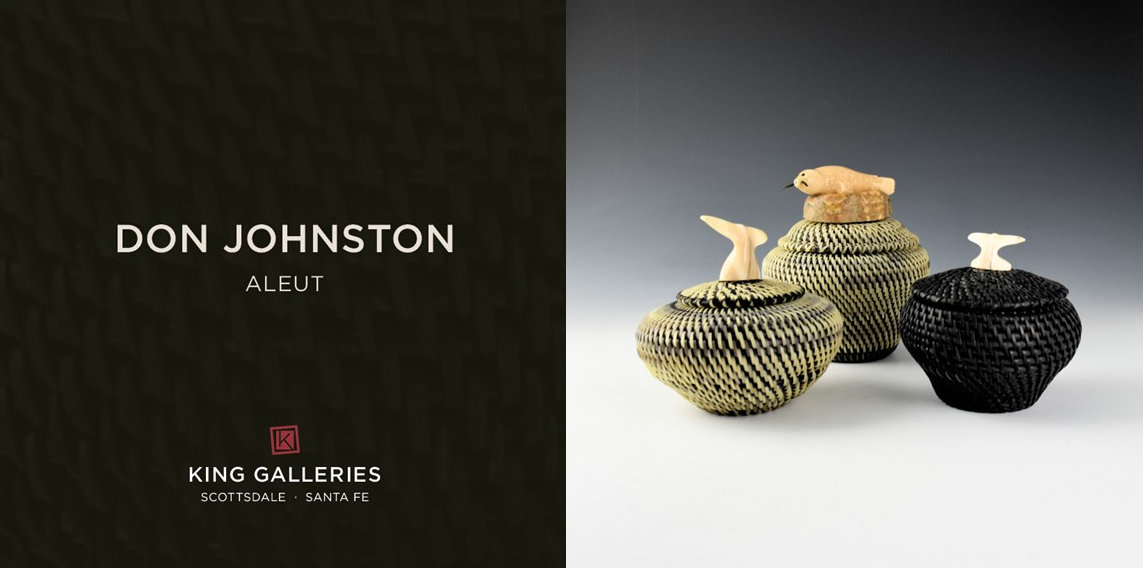 Don Johnston was born in Ketchikan, Alaska, and moved to Anchorage when he was 20. He apprenticed with James Omnik Sr., a well-known baleen basket weaver. In the years since those first important lessons, Don has continued to improve and innovate his unique weaving style.
Don's natural gifts for both carving walrus ivory and working with the challenging threads of baleen from traditionally harvested Bowhead whales have drawn the attention of collectors worldwide.
Baleen plates have hair-like structures that filter out tiny floating organisms and fish and are found in the mouth of these plankton-eating whales. Baleen was originally used for indigenous objects like water cups, buckets, and sleds. The Bowhead whale has been subsistence hunted by Alaska Coastal Natives, including the Yup'ik and Inupiat, for over 1,000 years, and no part of the whale is ever wasted. Instead, a butchered Bowhead whale can yield thousands of pounds of food. The community shares of meat and fat are apportioned equitably to ensure that everyone benefits from a successful hunt.
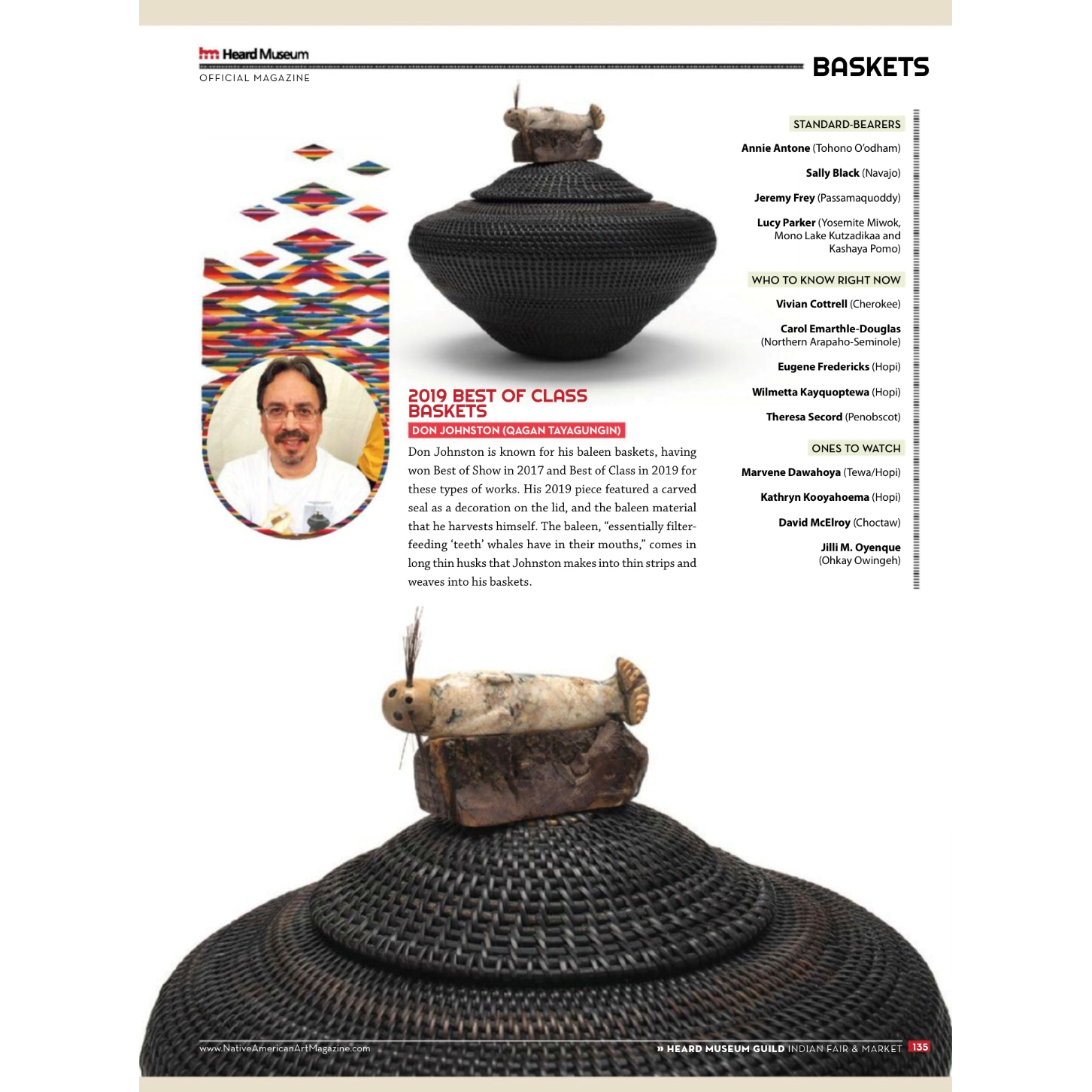
Don is one of a handful of baleen basket weavers. His works have won numerous awards, including Grand Champion and Judge's Choice at the Alaska State Fair, Best in Basketry at Los Angeles Autry Museum Show, Best in Show at the 2017 Heard Museum Show, Best in Category - Weaving at the 2018 Santa Fe Indian Market, and Best in Category, 2019 Heard Museum Show. In addition, a basket resides in the permanent collection of the Denver Art Museum.
Don Johnston was born in Ketchikan, Alaska, and moved to Anchorage when he was 20. He apprenticed with James Omnik Sr., a well-known baleen basket weaver. In the years since those first important lessons, Don has continued to improve and innovate his unique weaving style.
Don's natural gifts for both carving walrus ivory and working with the challenging threads of baleen from traditionally harvested Bowhead whales have drawn the attention of collectors worldwide.
Baleen plates have hair-like structures that filter out tiny floating organisms and fish and are found in the mouth of these plankton-eating whales. Baleen was originally used for indigenous objects like water cups, buckets, and sleds. The Bowhead whale has been subsistence hunted by Alaska Coastal Natives, including the Yup'ik and Inupiat, for over 1,000 years, and no part of the whale is ever wasted. Instead, a butchered Bowhead whale can yield thousands of pounds of food. The community shares of meat and fat are apportioned equitably to ensure that everyone benefits from a successful hunt.
Don is one of a handful of baleen basket weavers. His works have won numerous awards, including Grand Champion and Judge's Choice at the Alaska State Fair, Best in Basketry at Los Angeles Autry Museum Show, Best in Show at the 2017 Heard Museum Show, Best in Category - Weaving at the 2018 Santa Fe Indian Market, and Best in Category, 2019 Heard Museum Show. In addition, a basket resides in the permanent collection of the Denver Art Museum.